• Skip to main content
  • Skip to footer
  • Pacific Mobility Center Stairlifts and More - We Keep You Moving!
  • We Keep You Moving!
  • Call Us Today!
  • 760-471-8884
  • 866-786-2966

Pacific Mobility Center

Stairlifts - Lifts - Mobility Products

  • Stairlifts
    • Bruno Elan Stairlift
    • Bruno Elite – Curved Rail Stairlifts
    • Bruno Elite – Straight Rail Stairlift
    • Bruno Outdoor Curved Stairlifts
    • Bruno Outdoor Straight Stairlifts
    • Stairlift Rentals
  • Products
  • Gallery
    • Photo Gallery
    • Video Gallery
  • FAQ
  • About
    • About Us
    • Contact
    • Locations
    • Service Area
    • Testimonials
    • Reviews
    • Newsletter Subscription and Archives
  • Coupons
  • Blog

Blog Posts

Ramping vs. Porchlift

June 10, 2015 By Jeff Conner

If you need to facilitate wheelchair or handicap access to a home or structure that has a raised foundation, and stairs are not a viable option, essentially, you have two other choices: you can install either a ramp or a porch lift.                                                                                                  ramp     Porch Lift

In order to figure out if a ramp is a practical alternative, you’re going to have to do a lot of measuring and then perform some simple arithmetic. The first thing you need to determine is the extent of the rise between the ground and the structure’s entry level. In other words, what is the “rise?” Once you know the rise, then you can calculate how much ramping will be required.

According to the federal government’s Americans with Disabilities Act, the legal standard for the ratio of rise to ramping in public buildings is 1:12. In other words, for every inch of rise, the law requires twelve inches, or one foot, of ramping. Now, your home is not a public building and some municipal or county building codes might be more lenient requiring only, perhaps, 8 inches of ramping for every 1 inch of rise, so it’s important to check with your local government, if you need to build a steeper ramp. But the ADA ratio is considered the safest solution.

So, for example, if the rise between the ground and the entry level is 30 inches, you’re generally going to need 30 feet of ramping. Now that you know how many linear feet of ramping is necessary either for code or safety requirements, you’re going to have to measure again, this time to determine if you have 30 feet of room in which to put a ramp. If you don’t have a 30 foot straightaway, you’re going to need to break up the ramp with platforms, landings and/or turnarounds. Don’t try to estimate this essential element. Make sure that you have a solid plan that you can implement before you spend time and money installing a ramp.

If you decide that a ramp is doable, your material choices will likely be either wood or some type of metal – most probably aluminum. Wood may be less expensive, but aluminum generally requires less maintenance and can stand up better to inclement weather. Whatever material you choose, make sure that you apply some sort of non-skid surface to it. Also, make sure that the transition from the ground to the ramp is as smooth as possible. Bumps are difficult to navigate in a wheelchair.

If, for any reason, a ramp is not an acceptable option, your other choice is an exterior porch lift. While a porch lift will likely be more expensive than a ramp, it will always take up less space. In addition, a porch lift will often be the only choice if the rise is considerable. For example, a rise of 5 feet, or 60 inches, would require a 60 foot ramp. That amount of ramping simply might not be possible in any configuration on many pieces of property.

Before you decide on which alternative is the best one for your situation, you should seek out professional advice. Here at the Pacific Mobility Center, we can assist you in making the right decision for yourself or a loved one. Call us for a no-cost assessment and a member of our staff will work with you toward the most appropriate solution.

Jeff Conner
Jeff Conner

President, Husband, Father, Grandfather Graduate of UC Davis- Bio Sci Major- Go Aggies! Jeff has extensive experience in all of Pacific Mobility’s products and services, and specializes in accessibility products as well as stairlifts, ceiling lifts and custom wheel chairs. His hobbies include spending time with family, gardening, mountain biking, exercising and off road motorcycle riding.

24 years as Owner/President of Pacific Mobility Center – selling, installing, and servicing stairlifts, porch lifts, ceiling lifts, pool lifts, handicap ramping, specialty wheelchairs, scooters, power wheel chairs, and other power mobility devices
Certified Environmental Access Consultant since 2008
Licensed General Contractor since 1998
Certified Aging in Place Specialist since 2016
Board Member for Home Access Professionals
Member of Association of Members of the Accessibility Equipment Industry (AEMA)

www.linkedin.com/in/jeff-conner-14085616/

Filed Under: Blog Posts, Product Information Tagged With: disability, manual wheelchair, mobility, mobility assistive equipment, porch lift, ramp

Long-term Living Facility vs. Aging in Place Modifications

May 27, 2015 By Jeff Conner

As the Baby Boom generation ages, the pelderly-people-294088__180opulation of American seniors will double in size over the next 25 or so years. And like countless seniors before them, these now elderly individuals will need to make decisions about their long-term care, especially if age, sickness, or disability makes it difficult, or even impossible, for them to care for themselves.

Many studies reveal that a majority of seniors would prefer to stay in their homes as long as they are able, but this is not always possible. However, when faced with having to move into an assisted living facility or a nursing home, the costs can be prohibitive for many families.

According to a recent report by Genworth Financial, the median price for a private room in a nursing home is now $91,250 a year. And although long-term care insurance policies are available to help cover costs, Medicare, the federal government’s health insurance program for citizens over 65, does not cover extended stays in long-term care facilities.

When it becomes preferable to keep an aging senior at home, either because of desire or financial constraints, it may also be necessary to make modifications in the home environment in the interests of safety and the peace of mind of that senior’s loved ones.

Some common home alterations include the widening of doorways, and the installation of ramps, grab bars in the bathroom and/or shower, bed rails, and some type of stairlift in homes that contain more than one story. And in many cases, the costs for these home improvements are a lot less than what a family might have to spend for long-term care in an institution.

The term, “Aging in Place” is now a popular way of describing the shift away from expensive institutionalized care and toward the more affordable choice of staying at home for as long as practicable. As this trend continues, more home care companies will come into existence offering services such as housekeeping, meal preparation, bathing, and transportation to medical appointments, among other tasks.

In addition, companies that provide home modification products and services will also proliferate in order to meet the growing need of seniors who decide to “age in place.” At Pacific Mobility, we excel at helping our customers make practical and cost-effective decisions about how they can make their homes safer and more accessible for aging seniors. Give us a call or stop by our showroom for a first-hand experience.

Jeff Conner
Jeff Conner

President, Husband, Father, Grandfather Graduate of UC Davis- Bio Sci Major- Go Aggies! Jeff has extensive experience in all of Pacific Mobility’s products and services, and specializes in accessibility products as well as stairlifts, ceiling lifts and custom wheel chairs. His hobbies include spending time with family, gardening, mountain biking, exercising and off road motorcycle riding.

24 years as Owner/President of Pacific Mobility Center – selling, installing, and servicing stairlifts, porch lifts, ceiling lifts, pool lifts, handicap ramping, specialty wheelchairs, scooters, power wheel chairs, and other power mobility devices
Certified Environmental Access Consultant since 2008
Licensed General Contractor since 1998
Certified Aging in Place Specialist since 2016
Board Member for Home Access Professionals
Member of Association of Members of the Accessibility Equipment Industry (AEMA)

www.linkedin.com/in/jeff-conner-14085616/

Filed Under: Blog Posts Tagged With: elderly, grab bars, grab rails, home modification, long-term care, medicare, mobility assistive equipment, safety, senior citizens

Word of Mouth

May 23, 2015 By Jeff Conner

group-457336__180No doubt, you’ve heard the term: “Word of Mouth.” It wasn’t very long ago when a consumer would seek out information on a company or product by asking friends and associates their opinions about a particular purveyor of goods or services. Basically, the best, and sometimes the only way one could decide whether or not to do business with someone else, was to rely upon “word of mouth.”

Before going out to eat, Joe would ask Jim, “How’s the food at that place?” Ann would tell Marie, “Don’t shop at that store. They didn’t treat me well, at all.” Thus, the commentary network – word of mouth – was personal and vocal, and one generally relied upon a small coterie of well-known, like-minded individuals for a “thumbs up” or “thumbs down.”

But now, of course, we’re all connected via the internet and the world-wide-web, and there are many more ways to get information about a business or product other than relying upon word of mouth. Today, we can get the scoop from a variety of sources before entering into a business transaction with another party, simply by logging on and tuning in. “Word of Mouth” has become “Word of Byte.”

For example, the Better Business Bureau (BBB) founded in 1912, is a nonprofit organization focused on advancing marketplace trust. The BBB collects and provides free business reviews on more than four million American businesses, responding to over 123 million requests from consumers, every year. Its website ranks among the top 300 most-visited websites in the United States. That means that people all over the country are consistently checking out companies’ reputations, online, before buying a product or service.

Other websites are devoted entirely to consumer reviews. Perhaps the most famous of these is Yelp.com. Founded in 2004, in San Francisco, Yelp’s website is like a large online bulletin board featuring user-generated content, all geared toward personal reviews based on experiences at local businesses. Anyone with an internet connection can browse the Yelp site. And the reality is, more and more businesses, these days, are thriving or dying based on the types of reviews that appear on Yelp and other sites like it. It’s a very potent tool whose model is becoming increasingly ubiquitous in cyberspace.

In fact, most owner-operated business websites now feature a testimonial section – a place where web surfers can find out what customers who have done business with a company in the past, say about it. And businesses that have clean records, good reviews and/or positive testimonials are much more likely to increase their market share by gaining new customers who have done their research.

At Pacific Mobility, we encourage you to “check us out.” While we’re always happy to tell you, ourselves, that we offer our customers great products, great prices, and great service, you don’t simply have to take our word for it. Visit our website, type in the BBB’s URL, or go online to Yelp. We’re sure you’ll find that others will say the same.

Jeff Conner
Jeff Conner

President, Husband, Father, Grandfather Graduate of UC Davis- Bio Sci Major- Go Aggies! Jeff has extensive experience in all of Pacific Mobility’s products and services, and specializes in accessibility products as well as stairlifts, ceiling lifts and custom wheel chairs. His hobbies include spending time with family, gardening, mountain biking, exercising and off road motorcycle riding.

24 years as Owner/President of Pacific Mobility Center – selling, installing, and servicing stairlifts, porch lifts, ceiling lifts, pool lifts, handicap ramping, specialty wheelchairs, scooters, power wheel chairs, and other power mobility devices
Certified Environmental Access Consultant since 2008
Licensed General Contractor since 1998
Certified Aging in Place Specialist since 2016
Board Member for Home Access Professionals
Member of Association of Members of the Accessibility Equipment Industry (AEMA)

www.linkedin.com/in/jeff-conner-14085616/

Filed Under: Blog Posts Tagged With: BBB, mobility, Yelp

Buying Off the Internet vs. Buying From a Local Company

May 10, 2015 By Jeff Conner

Some people have a knack for seeing into the future. Years ago, a friend of mine predicted that internet shopping was going to be how people would someday buy all their goods and services. This was before the beginning of the dot.com revolution – only a very small percentage of the office-612532__180 (1)population even had a personal computer and the internet, itself, was just being born.

I thought it was a silly idea. Why would anyone want to buy anything that couldn’t be seen, touched, picked up, rattled or tested right in the mall, market or showroom? I was convinced that cyberspace would never replace the traditional brick and mortar, neighborhood store. Okay, some people don’t see very far ahead.

Because, today, of course, online buying makes up a considerable part of our national commerce. We even have a special date dedicated solely to computer consumerism – Cyber Monday, the Monday after Thanksgiving. This year, Americans will spend approximately $347 billion in online purchases, roughly 10 percent of the country’s total retail sales. And almost 20 percent of that amount will made on a phone or other mobile device.

Why do people buy online in such great numbers? Consumers, themselves, give the following reasons: saving time, more variety, lower prices, no crowds, less spending on gas, fewer taxes added.

But just as the internet giveth, it can also taketh away. The inherent danger of buying online is that the buyer and the seller are at great distances from, and virtually unknown to, one another. And much can happen between the time Ms. Consumer hits the buy button on her laptop and a package arrives at the front door. Scams and frauds abound – credit card numbers are stolen, products are not what they were promised to be, and customer service may be slight or completely non-existent.

In contrast, buying from a local company still has several advantages over buying online: you can test equipment before you buy; get immediate attention and expert advice from a knowledgeable salesperson; and have local support in the event you need it after a purchase is made. Plus, your time on hold, waiting to get assistance from a call center half a world away, is eliminated.

At Pacific Mobility, you get the best of both worlds: best pricing, best products, best service, and best support. For all your mobility needs, we invite you to visit us on the web at https://pacificmobility.com/. And then drop in to see us at our San Marcos, CA, brick and mortar location. We believe in the computer revolution – but we still like to do business with you face-to-face.

Jeff Conner
Jeff Conner

President, Husband, Father, Grandfather Graduate of UC Davis- Bio Sci Major- Go Aggies! Jeff has extensive experience in all of Pacific Mobility’s products and services, and specializes in accessibility products as well as stairlifts, ceiling lifts and custom wheel chairs. His hobbies include spending time with family, gardening, mountain biking, exercising and off road motorcycle riding.

24 years as Owner/President of Pacific Mobility Center – selling, installing, and servicing stairlifts, porch lifts, ceiling lifts, pool lifts, handicap ramping, specialty wheelchairs, scooters, power wheel chairs, and other power mobility devices
Certified Environmental Access Consultant since 2008
Licensed General Contractor since 1998
Certified Aging in Place Specialist since 2016
Board Member for Home Access Professionals
Member of Association of Members of the Accessibility Equipment Industry (AEMA)

www.linkedin.com/in/jeff-conner-14085616/

Filed Under: Blog Posts Tagged With: internet, mobility

What Value does a Licensed Contractor or Insured and Bonded Company Bring to the Consumer?

April 23, 2015 By Jeff Conner

First, some definitions – a licensed contractor is one who has received certification from a state licensing board attesting to the fact that this person is legally authorized to practice a profession or vocation, e.g. plumber, electrician, general contractor, etc., and is bound to comply with established procedures and standards set by the professionals in his or her industry and sanctioned by state law. Contractors who are not licensed, therefore, have not met the legal requirements to practice their trade within a particular jurisdiction.

An insured contractor or company is one that has purchased a general liability policy to cover damage to persons or property due to an accident or contractor negligence, while performing a contracted job. In addition, if a company has employees, it is further required to have workers’ compensation insurance to cover any job-related injury sustained by an employee in the performance of his or her work.

A bond is an escrow account that a contractor or company sets up with a bank or insurance company, setting money aside in the event that a project is not completed according to the contract between the company and a property owner. If the work is not completed as agreed, the bond will cover any expenses, up to the bond amount, required to complete the job satisfactorily. A contractor is normally required to have a general bond for a specified amount (depending upon the prevailing laws), but can also have what is known as a performance bond, which covers the full cost of the project with the added guarantee that a property owner will be compensated for any monetary losses if he or she needs to hire another contractor to finish an incomplete job.

So, what value does a licensed contractor or insured or bonded company bring to the consumer? The answer, in one word is, “protection.” Besides being illegal, unlicensed contractors lack any accountability, which places a consumer at significant risk. An unlicensed contractor may perform work that is substandard and not in compliance with local building codes. This can result in the property owner being fined, in addition to having to have a job re-done at his or her own expense.

Without insurance policies in place, a property owner can be held responsible for damages or injuries sustained on a job site. And without a bond in place, a contractor who goes out of business, or simply vanishes before a job is completed, leaves a property owner without recompense.

If you are contemplating hiring a contractor for any job, make sure that he or she is licensed, insured and bonded. You may think that you can save money by hiring some fly-by-night company that has given you a lower estimate for the work, but you are taking a giant risk that may come back to bite you.

https://www.youtube.com/watch?v=1kMCNkdJe90

Jeff Conner
Jeff Conner

President, Husband, Father, Grandfather Graduate of UC Davis- Bio Sci Major- Go Aggies! Jeff has extensive experience in all of Pacific Mobility’s products and services, and specializes in accessibility products as well as stairlifts, ceiling lifts and custom wheel chairs. His hobbies include spending time with family, gardening, mountain biking, exercising and off road motorcycle riding.

24 years as Owner/President of Pacific Mobility Center – selling, installing, and servicing stairlifts, porch lifts, ceiling lifts, pool lifts, handicap ramping, specialty wheelchairs, scooters, power wheel chairs, and other power mobility devices
Certified Environmental Access Consultant since 2008
Licensed General Contractor since 1998
Certified Aging in Place Specialist since 2016
Board Member for Home Access Professionals
Member of Association of Members of the Accessibility Equipment Industry (AEMA)

www.linkedin.com/in/jeff-conner-14085616/

Filed Under: Blog Posts Tagged With: contractor, home repair

Pros and Cons of stairlift Installations

March 29, 2015 By Jeff Conner

Chair lift

There’s no doubt that the technology of the modern stairlift has provided seniors, as well as other individuals with mobility challenges, more choices than were available to previous generations. And for the most part, the benefits of having a stairlift in one’s home outnumber their potential shortcomings. But the prudent consumer should always contemplate both the pros and cons of any purchase in order to make the wisest decision possible. So here are a few things to ponder:

The Pros

If you are a senior who can no longer navigate the stairs, the main reason to have a stairlift installed in your home is because it allows you to stay in your home long after your ability to go up and down the stairs has ended. Most seniors will tell you that staying at home, as opposed to transitioning to senior housing or assisted living, is extremely important to them, as it allows them to remain independent in the most emotionally supportive environment possible.

A stairlift is an accident preventer. The statistics are unambiguous – accidental falls, especially on stairs, are the number one cause of harm to seniors. stairlifts remove the potential for serious and even fatal blunders that can put an elderly person in the hospital, or worse.

stairlifts can carry both people and things. Generations ago, multistory houses had dumbwaiters which allowed for the transport of food, laundry, etc. from floor to floor. The stairlift can easily perform a similar role, as long as the intended object can fit on one’s lap.

For the relatives of seniors or any other individual with mobility challenges, a stairlift can provide piece of mind. Just knowing, for example, that an elderly parent no longer has to try and navigate stairs, can help relieve children of excess worry and concern.

The Cons

Probably the biggest concern that a consumer will have when contemplating the installation of a stairlift, is the cost. A quality lift, plus the installation itself, will run several thousand dollars. For some, that is a potential deal breaker. On the plus side, you might qualify for a medical expense tax deduction and/or the possibility of zero percent financing for up to 18 months.

Another concern: While most homes today have stairways that are wide enough to accommodate a stairlift without any issues, some older homes may have a very narrow stairway, and this is why having a professional assess the home is so important. Also, sometimes a person may have physical limitations in how he or she can sit in a stairlift chair. For example wearing a full leg cast that would cause one to to have to extend a leg may make it impossible to fit in the stairway, while sitting.

Finally, some believe that the installation of a stairlift too soon may create a dependency upon it by an otherwise healthy individual who would still benefit from the exercise of going up and down stairs. This seems a minor concern, as there are many ways in which a mobile senior can still find outlets for physical activity.

At Pacific Mobility, we will never sell or install a stairlift unless it is the right choice for you, your family, your home and your budget. Knowing the pros and cons will help you determine if a stairlift is the best option for you.

https://youtu.be/8s4EkLnQu8Q

Jeff Conner
Jeff Conner

President, Husband, Father, Grandfather Graduate of UC Davis- Bio Sci Major- Go Aggies! Jeff has extensive experience in all of Pacific Mobility’s products and services, and specializes in accessibility products as well as stairlifts, ceiling lifts and custom wheel chairs. His hobbies include spending time with family, gardening, mountain biking, exercising and off road motorcycle riding.

24 years as Owner/President of Pacific Mobility Center – selling, installing, and servicing stairlifts, porch lifts, ceiling lifts, pool lifts, handicap ramping, specialty wheelchairs, scooters, power wheel chairs, and other power mobility devices
Certified Environmental Access Consultant since 2008
Licensed General Contractor since 1998
Certified Aging in Place Specialist since 2016
Board Member for Home Access Professionals
Member of Association of Members of the Accessibility Equipment Industry (AEMA)
www.linkedin.com/in/jeff-conner-14085616/

Filed Under: Blog Posts Tagged With: mobility, mobility challenged, stairlift

High Pressure Sales Tactics – Got to Get the Sale!

February 22, 2015 By Jeff Conner


selling

There is an old adage in the world of sales: “People like to buy, but they don’t like to be sold.” The high pressure salesman does not believe strongly enough in this fact of human psychology. On the contrary, he is inclined to assume that people must be prodded and pushed and tricked into buying. So instead of unleashing the primary desire that most people have in the simple power of acquiring things based on their own needs, the high pressure salesman relies on various ways to manipulate his prospect into a sale that may not even be in the buyer’s best interests (and usually does not contribute to a long term relationship with the seller).

There are many techniques that can make saying “yes” to a sale, the easiest way to end the kind of stress-inducing interaction that is the hallmark of a high pressure sales routine. For example, a high pressure salesman might push a customer into a sale by stressing the fact that there is a looming deadline approaching and the price of his product or service is going to shoot up unless the sale is consummated immediately. Whether or not a deadline actually exists happens to be beside the point. The high pressure salesman is actually selling fear of losing something rather than suiting the sale to the buyer’s needs. He is forcing an emotional commitment before his prospect has time to think whether or not he or she can actually afford, or even needs to buy, what the salesman is selling.

In contrast, low pressure selling does not drive a prospect into a buying decision, but rather lets him reach the decision on his own terms. The low pressure salesman tries to ascertain the prospect’s wants and needs, and then tries to explain how his product or service can fit that want or need by demonstrating the relationship between the two.

At Pacific Mobility, we eschew the hard sell. We want to know how we can solve your problem, so we will spend our time with you asking you about your needs and absolutely no time at all in manipulating you into buying what we think we can make the most money on. Buying any one of our fine products needs to be the result of a calm and rational decision that you make on your own about how a purchase from us may benefit you – and not the other way around.

Jeff Conner
Jeff Conner

President, Husband, Father, Grandfather Graduate of UC Davis- Bio Sci Major- Go Aggies! Jeff has extensive experience in all of Pacific Mobility’s products and services, and specializes in accessibility products as well as stairlifts, ceiling lifts and custom wheel chairs. His hobbies include spending time with family, gardening, mountain biking, exercising and off road motorcycle riding.

24 years as Owner/President of Pacific Mobility Center – selling, installing, and servicing stairlifts, porch lifts, ceiling lifts, pool lifts, handicap ramping, specialty wheelchairs, scooters, power wheel chairs, and other power mobility devices
Certified Environmental Access Consultant since 2008
Licensed General Contractor since 1998
Certified Aging in Place Specialist since 2016
Board Member for Home Access Professionals
Member of Association of Members of the Accessibility Equipment Industry (AEMA)
www.linkedin.com/in/jeff-conner-14085616/

Filed Under: Blog Posts, Uncategorized Tagged With: benefit, mobility, sales

Struggles – Part Two

February 5, 2015 By Jeff Conner

In Struggles, Part One, I recounted how I had broken my ankle and was faced with the problem of navigating the stairs in my house and generally getting around without too much difficulty. Working with my crutches took a little practice, but after a few days, I got the hang of it. In actuality, the method is fairly simple: when going up the stairs, the trick was to move my good foot up one step at a time first, and then the crutches followed; when going down, the reverse was true – crutches first, then the healthy foot followed. Got it? Good.

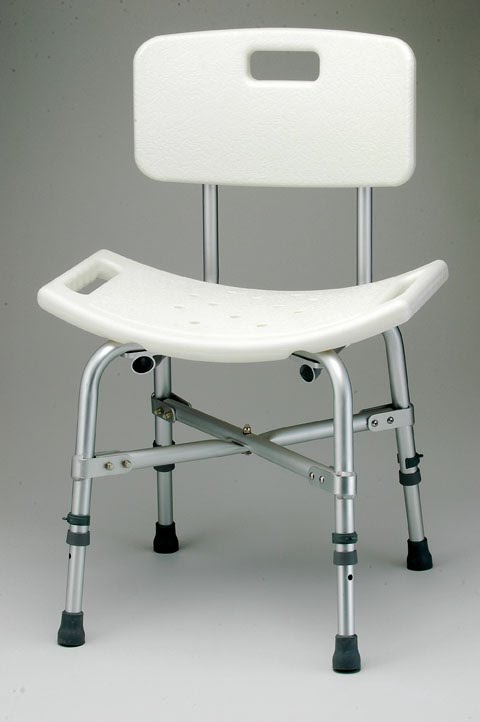
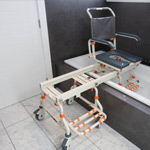
But now I had to figure out how I was going to shower without getting my cast wet and without slipping. The first dilemma was solved with a plastic bag and a little duct tape. In terms of safely showering, I had two options. The first was using a “Shower Buddy.” The shower chairshower buddy is a system that allows its user to transfer from the toilet to the tub or shower without having to stand up at all. Since I really didn’t need that much support, because I was still able to stand, albeit on one foot, I decided that grab bars installed near the toilet and in the tub would be sufficient, as long as I also had a shower chair on which to sit.

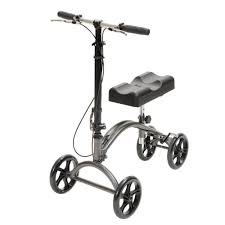
So, I learned how to go up and down stairs and to keep myself neat and clean. But I was getting pretty antsy to move around outside, as well, and the truth is, I still hated my crutches. They’re tiring to use and after awhile, they made my armpits pretty sore. Luckily, at Pacific Mobility, we have an extensive supply of Knee Walkers and Knee Scooters. The one I used allowed me to get around soooo much easier.

ArouKnee Walkernd Christmas time, I finally moved up to the Cadillac of mobility when my wife brought home a 4 wheel scooter from the store. At last I was able to do what I love doing most with my grand-kids: checking out all the Christmas lights around the neighborhood. It’s what I’ve been telling my customers for years – you don’t have to stay immobile anymore due to illness or injury. Whatever may be holding you back from doing the things you love, at Pacific Mobility, we have solutions to your problem. I know, because I’ve discovered them, myself.Jeff in Scooter

Jeff Conner
Jeff Conner

President, Husband, Father, Grandfather Graduate of UC Davis- Bio Sci Major- Go Aggies! Jeff has extensive experience in all of Pacific Mobility’s products and services, and specializes in accessibility products as well as stairlifts, ceiling lifts and custom wheel chairs. His hobbies include spending time with family, gardening, mountain biking, exercising and off road motorcycle riding.

24 years as Owner/President of Pacific Mobility Center – selling, installing, and servicing stairlifts, porch lifts, ceiling lifts, pool lifts, handicap ramping, specialty wheelchairs, scooters, power wheel chairs, and other power mobility devices
Certified Environmental Access Consultant since 2008
Licensed General Contractor since 1998
Certified Aging in Place Specialist since 2016
Board Member for Home Access Professionals
Member of Association of Members of the Accessibility Equipment Industry (AEMA)
www.linkedin.com/in/jeff-conner-14085616/

Filed Under: Blog Posts Tagged With: bathroom, grab bars, knee scooter, mobility challenged, power scooter, shower chair

  • « Go to Previous Page
  • Page 1
  • Interim pages omitted …
  • Page 7
  • Page 8
  • Page 9
  • Page 10
  • Page 11
  • Go to Next Page »

Footer

San Diego County Showroom

1355 Grand Ave Suite 102
San Marcos, CA 92078
Toll Free: 866-786-2966
Local: 760-471-8884

Riverside County Lift Sales

Pacific Mobility Center of Temecula
Toll Free: 866-786-2966
Local: 951-383-6845

Orange County Lift Sales

Pacific Mobility Center of Huntington Beach
Toll Free: 866-786-2966
Local: 714-907-4005

Office Hours

Monday-Thursday: 9:00am-5:00pm (closed 12:00-1:15 for lunch)

Friday: 8:30am-4:30pm (closed 12:00-1:15 for lunch)

Find Us on Social Media

Facebook Yelp BBB Angies List Twitter LinkedIn

Showroom Location


View Larger Map

  • Home
  • Coupons
  • Quote Request
  • About Us
  • Products
  • Careers
  • Blog
  • Gallery
  • FAQ
  • Contact
  • Service Area
  • Privacy Policy
  • Terms of Service
  • Disclaimer
  • Cookie Policy
  • Proposition 65 Warnings

Copyright © 2026 Pacific Mobility, All Rights Reserved.


Website by A Servant's Heart Web Design and Marketing

Schedule an Appointment

How can we help you?