• Skip to main content
  • Skip to footer
  • Pacific Mobility Center Stairlifts and More - We Keep You Moving!
  • We Keep You Moving!
  • Call Us Today!
  • 760-471-8884
  • 866-786-2966

Pacific Mobility Center

Stairlifts - Lifts - Mobility Products

  • Stairlifts
    • Bruno Elan Stairlift
    • Bruno Elite – Curved Rail Stairlifts
    • Bruno Elite – Straight Rail Stairlift
    • Bruno Outdoor Curved Stairlifts
    • Bruno Outdoor Straight Stairlifts
    • Stairlift Rentals
  • Products
  • Gallery
    • Photo Gallery
    • Video Gallery
  • FAQ
  • About
    • About Us
    • Contact
    • Locations
    • Service Area
    • Testimonials
    • Reviews
    • Newsletter Subscription and Archives
  • Coupons
  • Blog

Blog Posts

Going Up and Coming Down

December 29, 2014 By Jeff Conner

A recent news article tells a touching story about an elderly mother and her only daughter. The older woman lives in a second floor apartment and the daughter, some miles away. Anna, the mom, is a frail Alzheimer’s patient who cannot navigate the stairs to come down to the ground floor. The daughter, Michelle, suffers from multiple sclerosis and is wheelchair-bound. She can’t climb up the stairs to visit her mother. They can still chat on the phone, but they can’t hold hands or talk face to face.

How different life could be for these two women if there was a permanent and safe way for one to go up – or the other to come down. How sad that illness and incapacitation has become such a barrier to their need to spend time together. The story is a poignant reminder that, for some, even a short flight of stairs can be a distance greater than miles.

In the case of these two loving relatives there was a happy, if all too brief, ending to the story, when a local charitable organization paid for one ambulette visit, so that Michelle, who had to be carried upstairs in her wheelchair by two strong men, could spend a few hours with her mom. The bad news, of course, was that it was a one-time only event.

Options for Going Up and Coming Down

The good news is that, for many others who face a similar challenge of going up and coming down in their own homes, there are options that can bridge the distance between floors. They include: stairlifts, platform lifts and elevators. Depending on your needs, your physical condition, your home layout, and your budget, one of these devices may be the answer to your in-home mobility problems.

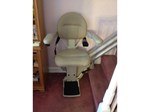
stairlifts – A stairlift is essentially a seat that is attached to a rail or track which is attached to the stairs, themselves, or the wall beside them. It is a good option for a person who can walk, but cannot manage ascending or descending stairs, for any reason. It’s the least expensive option, with the cost of buying and installing one, around $3,000 to $4,000 (more, of course, if the staircase is longer than usual or curved.) It requires that least amount of home modification, but it is not always suitable for people with advanced mobility needs.

Wheelchair Platform Lifts – There are two basic types of wheelchair lifts: inclined and vertical. An inclined wheelchair lift is similar to a chair lift, except that instead of a chair attached to the stair glide, there is a platform that can accommodate a wheelchair. Because it is bigger than a chair lift, it requires more space – a staircase that is, at least, 36 inches wide. It’s also slightly more expensive than a regular chair lift due to its enhanced load capacity.

A vertical wheelchair platform lift is like a small elevator, in that it goes straight up and down. It can be designed to take its user from one floor to another or just a few feet – wherever an inclined wheelchair lift is unsuitable. Unlike an elevator, it doesn’t have a shaft, so it doesn’t require a major home renovation. Platform lifts cost from $3,500 to $5,500 plus installation.

Elevators – An in-home elevator is the most versatile alternative for someone who needs to travel between floors in a wheelchair, and may also want the ability to carry other objects such as medical equipment, or be accompanied by another rider. Because it’s enclosed, it’s also the most aesthetically pleasing among all the options.

However, an elevator is also the most expensive choice and can run between $15,000 and $20,000, when you factor in the cost of the unit, itself, and the necessary structural renovations to your home. It is only an option in a building that has adequate space for a shaft and the requisite machinery to run it.

Consider the Alternatives

Before deciding on the best option, you need to consider all of the alternatives, and then choose the option that fits your needs, your home, and your budget. At Pacific Mobility Center, we can help you make the most appropriate choice for you and your loved ones. It’s part of our promise to “Keep You Moving.”

Jeff Conner
Jeff Conner

President, Husband, Father, Grandfather Graduate of UC Davis- Bio Sci Major- Go Aggies! Jeff has extensive experience in all of Pacific Mobility’s products and services, and specializes in accessibility products as well as stairlifts, ceiling lifts and custom wheel chairs. His hobbies include spending time with family, gardening, mountain biking, exercising and off road motorcycle riding.

24 years as Owner/President of Pacific Mobility Center – selling, installing, and servicing stairlifts, porch lifts, ceiling lifts, pool lifts, handicap ramping, specialty wheelchairs, scooters, power wheel chairs, and other power mobility devices
Certified Environmental Access Consultant since 2008
Licensed General Contractor since 1998
Certified Aging in Place Specialist since 2016
Board Member for Home Access Professionals
Member of Association of Members of the Accessibility Equipment Industry (AEMA)

www.linkedin.com/in/jeff-conner-14085616/

Filed Under: Blog Posts Tagged With: elevator, mobility, stairlift, wheelchair

Using Stairlifts on Various Stair Layouts

December 1, 2014 By Jeff Conner

A stairlift can be made to work on any stairway, but you must always consider the costs. Generally, stairlifts are great for added mobility because they offer significant functionality at relatively low cost. Straight stairways are the most common, and the easiest to install a stairlift to. Though slightly more complex, stairways with bends such as 90-degree turns or 180-degree turns are still simple, although more expensive due to the requirement for custom rail features. At the end of the day, curved or winding staircases are the toughest and the most expensive.

The most common stairlifts are made for straight stairways. The track that the stairlift rides upon is manufactured in sections which are then installed together along the side of the staircase. At the top of the stairs, the rail is cut to perfectly fit along the staircase, and not stick out too much. If there are doors at the immediate top or bottom of the stairway, the track is raised slightly to allow the door to close. Since you’re only installing a straight rail with no bends or other surprises, straight stairlifts will always be the cheapest option.

If you have a curved staircase, chances are that you’ll be looking at a custom stairlift installation. As you can imagine, the stairlift track must be bent to the appropriate angle and joined seamlessly to achieve the perfect angle of your staircase. This alone makes it not ideal for a homeowner to measure their own stairs and attempt their own installation. Due to the custom nature of curved stairlift installations, they generally cost more than their straight-rail counterparts.

Outdoor stairlifts are also a great option for homeowners with an outdoor staircase. Outdoor stairlifts are specifically designed for exterior use, providing you with the same quality, comfort and convenience available in the indoor variety. All in all, they are about the same as the indoor models, aside from the fact that they come with more rugged and durable features designed to withstand the elements.

Jeff Conner
Jeff Conner

President, Husband, Father, Grandfather Graduate of UC Davis- Bio Sci Major- Go Aggies! Jeff has extensive experience in all of Pacific Mobility’s products and services, and specializes in accessibility products as well as stairlifts, ceiling lifts and custom wheel chairs. His hobbies include spending time with family, gardening, mountain biking, exercising and off road motorcycle riding.

24 years as Owner/President of Pacific Mobility Center – selling, installing, and servicing stairlifts, porch lifts, ceiling lifts, pool lifts, handicap ramping, specialty wheelchairs, scooters, power wheel chairs, and other power mobility devices
Certified Environmental Access Consultant since 2008
Licensed General Contractor since 1998
Certified Aging in Place Specialist since 2016
Board Member for Home Access Professionals
Member of Association of Members of the Accessibility Equipment Industry (AEMA)

www.linkedin.com/in/jeff-conner-14085616/

Filed Under: Blog Posts

Most Common Safety Features of Stairlifts

November 15, 2014 By Jeff Conner

Stairlifts are an important, yet convenient device for the many people who may have mobility issues. stairlifts could be used for many reasons, but it is critically important that each method of use is safe for the user. Safety features of stairlifts need to be considered when searching for the right equipment for your home.

There are different kinds of stairlifts. They can be used inside or outside. They can be used on straight stairs or curved and custom stairs. They can also come as wheelchair accessible, a chair or a standing option. They give a person with mobility issues more freedom, but it is important that they are safe as well. Depending on your stair configuration and your needs, you may require unique features, or additional safety features.

SRE-3000_topSafety restraints, such as seat belts or restraints to secure wheelchairs are standard safety options, meaning these features come with the devices upon purchasing. Safety belts and harnesses are used while the stairlift is in motion to help prevent falling or other injuries. Other options that, at first glance, might not be considered a safety feature are adjustable footrests and seats. These can not only be adjusted to help the person be more comfortable, but the footrest and seat can be folded out of the way when not used. This helps prevent those walking up and down the stairs from getting hurt by crashing into them.

Arguably the most important safety feature of new stairlifts is the emergency features. Each stairlift has emergency safety features. One of the most important safety features is to make sure the stairlift stops motion when something is in the way of the rail. If the path is obstructed in any way, the stairlift will stop. These devices are often placed on the seat as well as the footrest to help them be effective. A battery backup is also vital because this insures that the chair will always be in proper working order. If the electricity goes out the person won’t be stuck, as the stairlift would continue to work on the backup battery until power is restored.

Jeff Conner
Jeff Conner

President, Husband, Father, Grandfather Graduate of UC Davis- Bio Sci Major- Go Aggies! Jeff has extensive experience in all of Pacific Mobility’s products and services, and specializes in accessibility products as well as stairlifts, ceiling lifts and custom wheel chairs. His hobbies include spending time with family, gardening, mountain biking, exercising and off road motorcycle riding.

24 years as Owner/President of Pacific Mobility Center – selling, installing, and servicing stairlifts, porch lifts, ceiling lifts, pool lifts, handicap ramping, specialty wheelchairs, scooters, power wheel chairs, and other power mobility devices
Certified Environmental Access Consultant since 2008
Licensed General Contractor since 1998
Certified Aging in Place Specialist since 2016
Board Member for Home Access Professionals
Member of Association of Members of the Accessibility Equipment Industry (AEMA)

www.linkedin.com/in/jeff-conner-14085616/

Filed Under: Blog Posts

Medicare Coverage for Mobility Equipment, Explained

October 15, 2014 By Jeff Conner

One of the first questions many folks ask when they are facing mobility issues is how they will pay for the mobility equipment they need. For most, Medicare is the first place they look for coverage. However, when it comes to Medicare benefits, questions abound. In this article, we will cover the ins and outs of Medicare coverage for wheelchairs and scooters, explain the process, and answer some of the more common question questions regarding this benefit.

Medicare classifies wheelchairs and scooters, as well as many other mobility products, as Durable Medical Equipment (DME). There is a Medicare benefit covering DME, but there are some conditions and limitations. Generally speaking, as long as these conditions are met, Medicare will pay for 80 percent of the cost of the equipment. Private insurance may help cover some or all of the remaining balance.

The first step in getting your DME covered is visiting your doctor. Your doctor must be enrolled in the Medicare program. He or she will examine you and determine what kind of medical equipment your condition requires. At this point, they will then prescribe the equipment for your use. Getting this prescription is important for receiving your DME Medicare benefit. While some medical equipment is available for private purchase without a prescription, most requires one, and regardless, to receive Medicare coverage, a doctor must prescribe the equipment for your in-home use.

Once you have the prescription, it’s time to find a dealer. This dealer must be enrolled in Medicare in order for you to receive coverage for the DME. Your dealer isn’t required to accept assignment, but if they do not, you may be required to pay the entire bill (both your share and Medicare’s) at the time of purchase, and then file for reimbursement.

It’s important to note that Medicare does not limit what suppliers are allowed to charge you, but they do limit their benefit. They will only cover 80 percent of the Medicare-approved amount, leaving you to cover any remainder. The San Diego area, including Carlsbad and San Marcos, is in a Medicare competitive bidding area, which further limits the amount Medicare will pay towards your DME.

For these reasons, it’s important to buy from a reputable dealer who understands the DME benefit and the intricacies of Medicare’s requirements, and who will take the time to sit down with you and clearly explain their price and your share. Your dealer should also be able to work with your private insurance, if you have any, and make sure you are also receiving the maximum benefit from that insurance. When Medicare and private insurance benefits are combined properly, you may end up having to pay little or nothing out of pocket.

Here at Pacific Mobility Center, we have a wide range of scooters and powerchairs to fit your needs, but more importantly than that, because we have been in business for over 20 years, we have the knowledge and skills to help navigate the Medicare and insurance process. We will help you determine what your coverage is, and clearly explain your benefits, as well as your out-of-pocket costs. We help with the paperwork, and do what it takes to make purchasing your new powerchair or scooter a breeze. We also guarantee the lowest prices in the San Diego area, so you can be sure you’re getting a great deal. Because we also live locally, we care about our clients and do everything in our power to make sure the buying process is easy, fair, transparent, and satisfying. Come see what a difference family ownership, experience, and a local connection to the community makes. Contact us or come on in to our beautiful showroom today!


Jeff Conner
Jeff Conner

President, Husband, Father, Grandfather Graduate of UC Davis- Bio Sci Major- Go Aggies! Jeff has extensive experience in all of Pacific Mobility’s products and services, and specializes in accessibility products as well as stairlifts, ceiling lifts and custom wheel chairs. His hobbies include spending time with family, gardening, mountain biking, exercising and off road motorcycle riding.

24 years as Owner/President of Pacific Mobility Center – selling, installing, and servicing stairlifts, porch lifts, ceiling lifts, pool lifts, handicap ramping, specialty wheelchairs, scooters, power wheel chairs, and other power mobility devices
Certified Environmental Access Consultant since 2008
Licensed General Contractor since 1998
Certified Aging in Place Specialist since 2016
Board Member for Home Access Professionals
Member of Association of Members of the Accessibility Equipment Industry (AEMA)

www.linkedin.com/in/jeff-conner-14085616/

Filed Under: Blog Posts, How To's, Product Information Tagged With: dme, insurance, medicare, powerchair, scooter, wheelchair

Deciding if Your Mobility Issues Warrant Leaving Your Home

September 15, 2014 By Jeff Conner

When a person first develops mobility issues, they and their family are often faced with a tough decision. Should they remain in their own home or move into an assisted-care facility? Unless the person with mobility issues already lives in a house equipped with mobility aides, to stay in their own home, it must be properly equipped for their safety. While this process costs money, assisted-living facilities are often also expensive. Making a proper price comparison takes a thorough analysis of the costs involved with both. While this analysis can be tricky, using this easy, step-by-step guide will simplify the process and allow a decision to be made with confidence.

      1. Determine the Assistance Needs of the Person

        Mobility challenges, like the people who experience them, are unique and vary widely. Some people may be able to navigate most of the house safely, but need safety devices in the bathrooms. Other people may need the full-time use of a powerchair. Many will fall somewhere in between these extremes. Knowing what the person requires to overcome their mobility challenges allows a proper assessment to be made of the house and the equipment it needs.

      2. Determine What Equipment the House Needs

        Like people, houses are unique. Each house needs an assessment to be made of its unique requirements. Does it have a staircase? Are the doors wide enough to permit wheelchairs? Is there a large drop from the front door to the stoop? Additionally, not all areas of the house may need to be made accessible. For instance, if the house has a pool, but that pool is rarely used or unlikely to be used for a long period, a pool lift may not be necessary. Consequently, this may mean the back patio also wouldn’t need to be made accessible. Examine the house with an eye towards determining what to areas the person needs access and what challenges the person faces when accessing these areas.

      3. Get Quotes

        Once a comprehensive list of what changes to the house are needed, a proper quote can be obtained. A reputable mobility company will offer free quotes, and a knowledgeable company will be able to suggest an array solutions to many issues. For instance, a short flight of front steps may be made accessible with either a ramp or a porch lift. A good company will walk you through the pros and cons of each solution, along with the price of each, and ensure you feel comfortable with the equipment selected. Remember that prices for these products are usually negotiable. Shop around to make sure you are getting the lowest price in the area.

        This is also the time to determine the cost of an assisted living facility. Visit a range of facilities, and if possible, visit each multiple times at different times of the day and week. Visit unannounced if possible. This will provide a more comprehensive and accurate view of what the facility is like. Once a few viable candidates are determined, get quotes on prices. Remember, these prices are often negotiable. Determine what the realistic costs of the facility will be.

      4. Compare Prices

        With good quotes for both an assisted-living facility and for equipping the home, a fair comparison can be made. One important factor in this comparison is examining the out-of-pocket costs associated with both options. The amount Medicare and private insurance will pay towards both these options will vary, so be sure out-of-pocket costs are being used for comparison. A reputable mobility products company will help you determine these costs for outfitting your home, and a reputable assisted living facility will likewise determine what your share of the cost will be.

One final thing to keep in mind when making a decision, however, are the intangibles of each option. Family members may feel safer knowing a person is at a facility where additional, around-the-clock care is available. On the other hand, staying in the home is an option many prefer because of both sentiment and ease. After all, moving into an assisted living facility requires going through the expensive, burdensome, and time-consuming process of sorting and packing belongings, and often requires downsizing those possessions. Assisted living also lacks the happy memories and comfort of living in one’s own home.

At Pacific Mobility Center, we are happy to help throughout this process. We give free quotes and our trained staff offer expert advice when determining what equipment is needed for a home. We also offer the lowest prices anywhere in the San Diego area.

If you or a loved one is faced with the difficult decision of whether to refit your home for enhanced mobility and safety or move into an assisted-living facility, think of us first. We will walk you through the process of determining what equipment is needed, and give you the confidence that comes from knowing your quote is the lowest in town. If you decide staying in the home is the best option, our certified and licensed techs will install the needed equipment quickly and properly, making the entire process from beginning to end a breeze. Don’t face this difficult decision alone. Come in or contact us today.

The founder of angieslist.com discusses making a home accessible in this short video:

Jeff Conner
Jeff Conner

President, Husband, Father, Grandfather Graduate of UC Davis- Bio Sci Major- Go Aggies! Jeff has extensive experience in all of Pacific Mobility’s products and services, and specializes in accessibility products as well as stairlifts, ceiling lifts and custom wheel chairs. His hobbies include spending time with family, gardening, mountain biking, exercising and off road motorcycle riding.

24 years as Owner/President of Pacific Mobility Center – selling, installing, and servicing stairlifts, porch lifts, ceiling lifts, pool lifts, handicap ramping, specialty wheelchairs, scooters, power wheel chairs, and other power mobility devices
Certified Environmental Access Consultant since 2008
Licensed General Contractor since 1998
Certified Aging in Place Specialist since 2016
Board Member for Home Access Professionals
Member of Association of Members of the Accessibility Equipment Industry (AEMA)

www.linkedin.com/in/jeff-conner-14085616/

Filed Under: Blog Posts, How To's Tagged With: Assisted Living, bathroom, Home, Lifts, mobility, Ramps, Renovation

5 Must-Have Mobility Products for San Diego Summers

July 14, 2014 By Jeff Conner

Summer is here in full force. It’s a great time of year to get outside, be active, and enjoy nature. Unfortunately, many who struggle with mobility allow these challenges to prevent them from enjoying summer the way it was meant to be enjoyed. Here at Pacific Mobility Center, we have a surprisingly wide array of products designed to help you get out there and claim your independence.


Scooters and Powerchairspursuit

Scooters and powerchairs are both designed to give users who need powered mobility assistance with a reliable way to get around. We’ve covered the difference between them in more detail here, but suffice it to say that scooters tend to be better outdoors and for users who don’t always need the use of a chair, while powerchairs are better in tight confines or for users who use a chair full time. Either way, being able to go on summer adventures with confidence is the first step to actually having those exciting times all season.

Vehicle Controlshand control

The road trip is a staple of summer, but sometimes mobility issues make controlling a car difficult or frightening. Regain your confidence and control with our wide array of vehicle controls designed to make driving possible and safe again. Our installation technicians are factory trained and have the skills to quickly install the correct controls for your car and we have demo models available in our showroom. BONUS: Don’t forget the turning seats and vehicle lifts to get you and your equipment into and out of your car in safety with ease.

Porch and stairliftsporch lift

Summer is a great time to sit out on the porch or patio and enjoy the weather while sipping an ice cold beverage. Reclaim all those wonderful outdoor places of your home that have lain unused and neglected through the cold winter months with our line of porch lifts and stairlifts, designed to help you regain access to those areas of your home that were previously too dangerous or difficult to manage. BONUS: For a limited time, get $200 off the installation of a new Bruno stairlift!

Pool Liftspool lift

It’s so hot, and the pool looks inviting. Being in the water is much easier on the joints, and swimming is also great exercise. Unfortunately, getting into and out of a pool may be difficult or dangerous for some with mobility trouble. Good news: our line of pool lifts are designed to help you get into and out of your pool or hot tub safely and confidently. With our pool lifts, you can finally partake again in that most quintessential summer activity, swimming. Start enjoying your pool again with a pool lift.

Grab Barsgrab bars

After all that hot, sweaty, relaxing summer fun, nothing hits the spot like a shower. For those with mobility issues, however, the bathroom is the most dangerous area of the home. 85 percent of falls seniors experience take place in the bathroom. Grab bars help those with mobility issues regain their safety and dignity in the bathroom by providing a safe place to lift, lower, and steady yourself. BONUS: For a limited time, buy three grab bars and get a fourth free.


At Pacific Mobility Center, we want summer fun to be yours again. Our locally owned and operated business has nearly 20 years of experience getting residents of San Diego and Orange County the mobility products they need, with the most knowledgeable and friendly sales staff and the lowest prices, guaranteed. We also offer rentals and demo models so you can try before you buy, and free quotes from our licensed and certified installers once we find you a product you love. So, if you’re ready to take the plunge and make this summer the summer you regained your independence and freedom, contact us today. You’ll be glad you did.

See our porchlifts in action:

Jeff Conner
Jeff Conner

President, Husband, Father, Grandfather Graduate of UC Davis- Bio Sci Major- Go Aggies! Jeff has extensive experience in all of Pacific Mobility’s products and services, and specializes in accessibility products as well as stairlifts, ceiling lifts and custom wheel chairs. His hobbies include spending time with family, gardening, mountain biking, exercising and off road motorcycle riding.

24 years as Owner/President of Pacific Mobility Center – selling, installing, and servicing stairlifts, porch lifts, ceiling lifts, pool lifts, handicap ramping, specialty wheelchairs, scooters, power wheel chairs, and other power mobility devices
Certified Environmental Access Consultant since 2008
Licensed General Contractor since 1998
Certified Aging in Place Specialist since 2016
Board Member for Home Access Professionals
Member of Association of Members of the Accessibility Equipment Industry (AEMA)
www.linkedin.com/in/jeff-conner-14085616/

Filed Under: Blog Posts, Product Information Tagged With: deals, fun, grab bars, mobility, pool lifts, porch lifts, powerchair, San Diego, scooter, stairlifts, summer, turning seats, vehicle controls, vehicle lifts

Hip Fracture Patients' Mobility Benefits From Home-Based Exercises

June 15, 2014 By Jeff Conner

hipfractureOver 250,000 people in the United States experience a hip fracture every year, many of them elderly. Unfortunately, according to a new study published in The Journal of the American Medical Association, over 80 percent who could previously walk without assistance and climb stairs do not regain those abilities after 2 years. According to physical therapist Nancy K. Latham, a research assistant professor at the Health and Disability Research Institute at the Boston University School of Public Health, “The epidemiological data is so strong [and shows] that most of them never get close to where they were with walking and mobility before the fracture.” Because most of these fractures are caused by falls, many patients become fearful of further falls. Patients often allow this fear, combined with the limited mobility they experience following the fracture, to trap them into a mindset of worry over another fall, leading them to become permanently immobilized. “People experience a huge loss of self-confidence over [a hip fracture] that can start a spiral of inactivity where people become very fearful of moving,” Latham said.

To combat these fears, the authors of the study had participants view a video that addressed fears of falling and engage in a home-based exercise program with goals and rewards. These programs were designed by qualified physical therapists, who visited participants in their homes several times to help them get started. The authors weren’t aiming for returning the participants to top-notch physical fitness; they merely tried to help the participants regain the ability to move in ways common in daily living, such as sitting and standing, walking, reaching, and climbing stairs. Accordingly, the exercises were designed to mimic these activities in order to build the strength and confidence of the participants.

After six months, the study participants, who averaged between 78 and 79 years old, experienced significant improvement in functional mobility and balance. Three months after the study ended, researches followed up with participants, and found that the majority kept gains in mobility and many had experienced even greater gains since the study’s end.

Recovery isn’t an overnight process, however, and in the meantime, victims of hip fractures often benefit from the use of mobility and safety products such as chair lifts, shower grab bars, walkers, and stairlifts. These products enhance the safety of those with a history or risk of falling or who have other mobility challenges. They allow people to stay in or return earlier to their homes, enhancing their quality of life and saving the massive expense of assisted living, nursing, or rehabilitation facilities.

Pacific Mobility Center is San Diego’s top choice for state-of-art mobility products. Our family owned-and-run business offers the largest local selection of products from top manufacturers at the guaranteed lowest price. We also offer same-day installation from our certified technicians, allowing you and your loved ones peace of mind. Come in to either of our showrooms or contact us today for a free quote and see what we can do for you!

This video explains more about hip fracture symptoms and treatment:

Jeff Conner
Jeff Conner

President, Husband, Father, Grandfather Graduate of UC Davis- Bio Sci Major- Go Aggies! Jeff has extensive experience in all of Pacific Mobility’s products and services, and specializes in accessibility products as well as stairlifts, ceiling lifts and custom wheel chairs. His hobbies include spending time with family, gardening, mountain biking, exercising and off road motorcycle riding.

24 years as Owner/President of Pacific Mobility Center – selling, installing, and servicing stairlifts, porch lifts, ceiling lifts, pool lifts, handicap ramping, specialty wheelchairs, scooters, power wheel chairs, and other power mobility devices
Certified Environmental Access Consultant since 2008
Licensed General Contractor since 1998
Certified Aging in Place Specialist since 2016
Board Member for Home Access Professionals
Member of Association of Members of the Accessibility Equipment Industry (AEMA)

www.linkedin.com/in/jeff-conner-14085616/

Filed Under: Blog Posts, News and Views

Motorized Mobility: Scooter or Powerchair?

April 17, 2014 By Jeff Conner

Mobility trouble can be extremely challenging. Many times, those with mobility issues often not only have trouble walking, but also have trouble pushing themselves in a wheelchair. In these cases, a motorized transport such as a scooter or powerchair is often the best solution. But which to choose? Knowing the difference between a powerchair and a scooter and deciding correctly which is best for you can save you money and frustration and ensure that you get the best experience out of your purchase. Let’s take a look at the two types of motorized mobility vehicles and review how to choose the best one for your situation.

Mobility Scooters

scooter

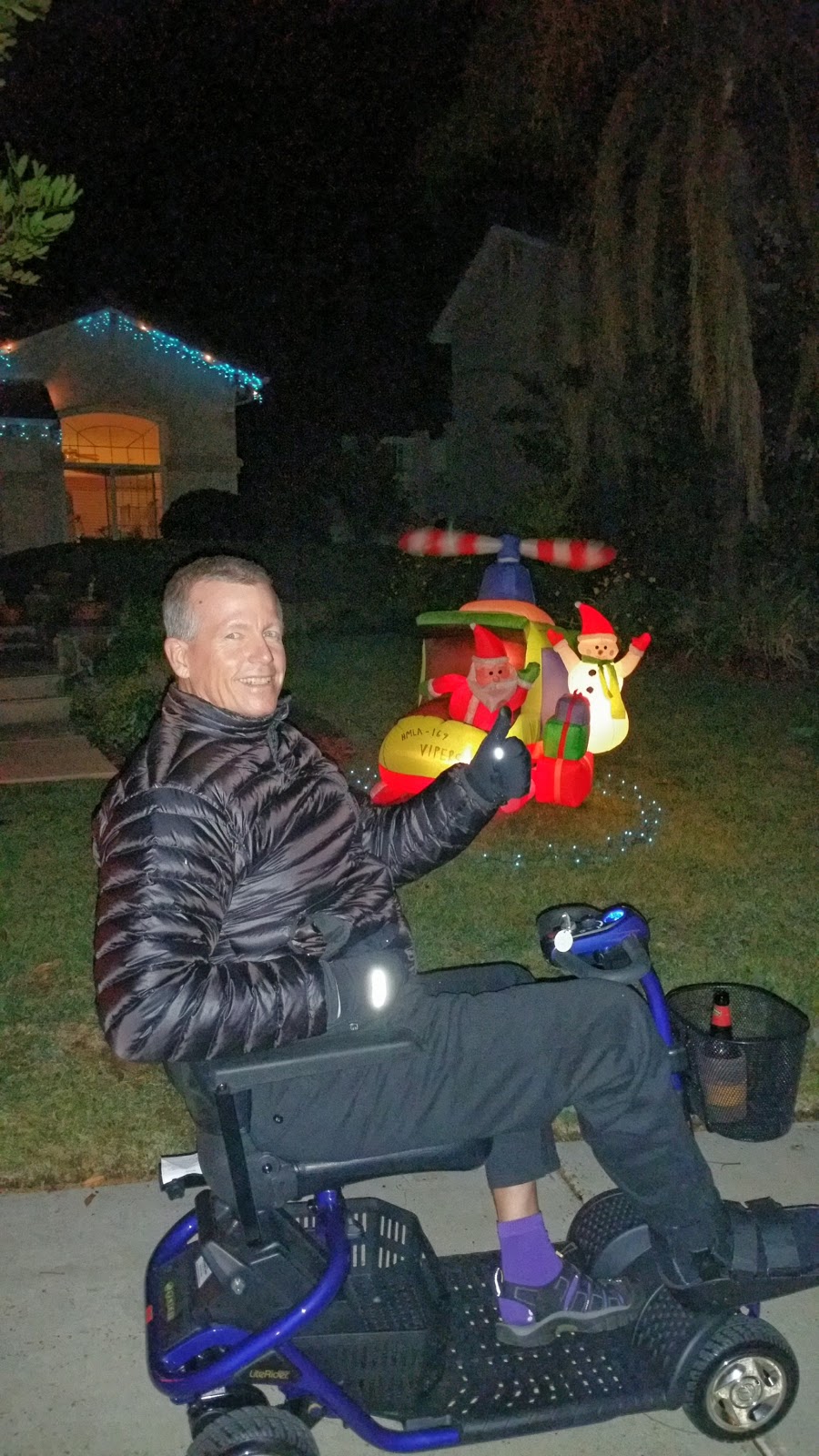
The first type of motorized mobility vehicle is called a mobility scooter. An electric mobility scooter is usually controlled with handlebars similar to those found on bicycles. Mobility scooters can reach speeds of up to 10 miles per hour, and some models can be used on roads, across fields, and up steep hills. Mobility scooters come in a variety of types, including three-wheeled models, four-wheeled models, and compact models. Each has its advantages. A four-wheel mobility scooter is more stable and generally supports more weight than other models. A three-wheel mobility scooter offers a tight turning radius and thus has improved maneuverability. A compact mobility scooter can be easily folded or disassembled for transportation in the trunk of a car. Compact mobility scooters are also a good choice if the storage room in your home is limited. These vehicles can be easily kept in an out-of-the-way corner or closet.

Mobility scooters are usually lower-cost than powerchairs, and are often much more rugged in design, allowing the user to tackle more difficult terrain. Additionally, scooters have a psychological advantage in the minds of some users since they appear so different from wheelchairs. Sometimes, not feeling confined to a wheelchair can make all the difference. Scooters do have drawbacks, however. Scooters are generally larger than powerchairs, and thus can be difficult to maneuver indoors or in tight spaces. In worst case scenarios, this makes a user have to get up from the chair and walk, negating the purpose of owning the vehicle in the first place.

Powerchairs

powerchair Powerchairs, also known as power wheelchairs or electric wheelchairs, are high-tech devices packed with features to make mobility a cinch. Although more expensive than scooters, they offer a wider range of features. Powerchairs generally have either four or six wheels, offer zero-radius turning for increased maneuverability, and are controlled with a joystick. Electric wheelchairs have advanced abilities such as motorized stand, recline, and tilt features to make getting into and out of them easier and to provide greater comfort to the user. They also offer the best support to users with posture issues.

Powerchairs do not fair as well as scooters on rough terrain, and are primarily made for use indoors or on smooth paved surfaces, which limits their usefulness to some users. Additionally, they are very heavy and do not usually fold, making their ability to be transported and used on lifts problematic.

 Choosing the Right Vehicle

 Which type of electric mobility vehicle is right for you depends largely on the use for which you need it. Do you intend to use it primarily as an aid for normal walking, or do you intend to use it continuously or for long periods of time? Because of their advanced comfort, powerchairs are best for longer use, but due to their weight and increased expensive should only be used in situations where a scooter will not be sufficient. Still confused? At Pacific Mobility Center, our highly-trained and knowledgeable sales staff has the ability and takes the time to get to know your situation and recommend the best scooter or chair for your circumstances or budget. This is just one more advantage of dealing with a local, family-owned and-operated company. Come see what a difference that makes for your shopping and buying experience.
Contact us
today!

Check out the Victory 10 Pride Mobility Scooter:

Jeff Conner
Jeff Conner

President, Husband, Father, Grandfather Graduate of UC Davis- Bio Sci Major- Go Aggies! Jeff has extensive experience in all of Pacific Mobility’s products and services, and specializes in accessibility products as well as stairlifts, ceiling lifts and custom wheel chairs. His hobbies include spending time with family, gardening, mountain biking, exercising and off road motorcycle riding.

24 years as Owner/President of Pacific Mobility Center – selling, installing, and servicing stairlifts, porch lifts, ceiling lifts, pool lifts, handicap ramping, specialty wheelchairs, scooters, power wheel chairs, and other power mobility devices
Certified Environmental Access Consultant since 2008
Licensed General Contractor since 1998
Certified Aging in Place Specialist since 2016
Board Member for Home Access Professionals
Member of Association of Members of the Accessibility Equipment Industry (AEMA)

www.linkedin.com/in/jeff-conner-14085616/

Filed Under: Blog Posts, Product Information

  • « Go to Previous Page
  • Page 1
  • Interim pages omitted …
  • Page 8
  • Page 9
  • Page 10
  • Page 11
  • Go to Next Page »

Footer

San Diego County Showroom

1355 Grand Ave Suite 102
San Marcos, CA 92078
Toll Free: 866-786-2966
Local: 760-471-8884

Riverside County Lift Sales

Pacific Mobility Center of Temecula
Toll Free: 866-786-2966
Local: 951-383-6845

Orange County Lift Sales

Pacific Mobility Center of Huntington Beach
Toll Free: 866-786-2966
Local: 714-907-4005

Office Hours

Monday-Thursday: 9:00am-5:00pm (closed 12:00-1:15 for lunch)

Friday: 8:30am-4:30pm (closed 12:00-1:15 for lunch)

Find Us on Social Media

Facebook Yelp BBB Angies List Twitter LinkedIn

Showroom Location


View Larger Map

  • Home
  • Coupons
  • Quote Request
  • About Us
  • Products
  • Careers
  • Blog
  • Gallery
  • FAQ
  • Contact
  • Service Area
  • Privacy Policy
  • Terms of Service
  • Disclaimer
  • Cookie Policy
  • Proposition 65 Warnings

Copyright © 2026 Pacific Mobility, All Rights Reserved.


Website by A Servant's Heart Web Design and Marketing

Schedule an Appointment

How can we help you?