• Skip to main content
  • Skip to footer
  • Pacific Mobility Center Stairlifts and More - We Keep You Moving!
  • We Keep You Moving!
  • Call Us Today!
  • 760-471-8884
  • 866-786-2966

Pacific Mobility Center

Stairlifts - Lifts - Mobility Products

  • Stairlifts
    • Bruno Elan Stairlift
    • Bruno Elite – Curved Rail Stairlifts
    • Bruno Elite – Straight Rail Stairlift
    • Bruno Outdoor Curved Stairlifts
    • Bruno Outdoor Straight Stairlifts
    • Stairlift Rentals
  • Products
  • Gallery
    • Photo Gallery
    • Video Gallery
  • FAQ
  • About
    • About Us
    • Contact
    • Locations
    • Service Area
    • Testimonials
    • Reviews
    • Newsletter Subscription and Archives
  • Coupons
  • Blog

Uncategorized

Stairlift Rentals in Southern California

March 31, 2016 By Jeff Conner

If you have significant mobility challenges and getting up and down stairs is difficult, buying and installing a permanent stairlift in your home can allow you to navigate between floors safely and efficiently. However, there are times when buying a stairlift may not be the best solution for you or a loved one. Depending upon the circumstances, renting a stairlift might actually be a more prudent choice.

elan-stairlift3stairlift rental is preferable for people who are recovering from an accident or surgery and who will, at some point, regain their mobility. Rental is also a good choice for houseguests who cannot walk up and down stairs, or for anyone who isn’t sure how long they might need a mechanical lift to help them. In addition, renting a stairlift will usually be less expensive than buying one, providing the rental period is not prolonged. Another benefit of renting a stairlift is the fact that any maintenance and repairs will generally be borne by the rental company.

Also, when you rent a stairlift, it gives you time to decide if it is the right one to eventually buy. Not all stairlifts are appropriate for all people – they come in many different configurations and designs, with a wide array of different controls and accessories. In addition, not every stairlift will be the best fit for every house. So, trying out a lift before buying it can prevent you from making an expensive mistake. Finally, in most cases, if you do decide to buy the lift you rented, a good percentage of the rental fees can be applied to the purchase price.

At Pacific Mobility, we have a rental program for our straight stairlifts that just might be the right choice for folks with temporary injuries, or for any other situation that does not require a permanent installation. Renting from us can save you money, and if you do decide to buy, your payment process will be easy to manage. Call or visit us today, for more information.

Jeff Conner
Jeff Conner

President, Husband, Father, Grandfather Graduate of UC Davis- Bio Sci Major- Go Aggies! Jeff has extensive experience in all of Pacific Mobility’s products and services, and specializes in accessibility products as well as stairlifts, ceiling lifts and custom wheel chairs. His hobbies include spending time with family, gardening, mountain biking, exercising and off road motorcycle riding.

24 years as Owner/President of Pacific Mobility Center – selling, installing, and servicing stairlifts, porch lifts, ceiling lifts, pool lifts, handicap ramping, specialty wheelchairs, scooters, power wheel chairs, and other power mobility devices
Certified Environmental Access Consultant since 2008
Licensed General Contractor since 1998
Certified Aging in Place Specialist since 2016
Board Member for Home Access Professionals
Member of Association of Members of the Accessibility Equipment Industry (AEMA)

www.linkedin.com/in/jeff-conner-14085616/

Filed Under: Blog Posts, Uncategorized

What Type of Power Mobility Device (PMD) is the Right Piece of Equipment?

March 1, 2016 By Jeff Conner

Power Mobility Devices (PMDs) help mobility-challenged individuals conserve energy because they require less physical effort to operate than walking or propelling a manual wheelchair. When choosing the best type of PMD, many factors need to be considered, including a person’s:

  • Medical condition
  • Physical status
  • Functional abilities
  • Performance of daily activities
  • Home and work environment
  • Transportation options

Two of the most common PMDs are motorized scooters and power wheelchairs.

Motorized scooters allow mobility-challenged persons to travel long distances, independently. They are available with three or four wheels and come in different sizes with different weight capacities. They are a good choice for those who can sit down and stand up from a chair, safely, and have good trunk control and balance while sitting. Motorized scooters are battery-powered devices that operate by pressing hand throttles and they are controlled through a mechanical tiller system. So in order to navigate one, an individual must have good hand and finger strength and coordination. Motorized scooters can often be disassembled for easy transport.

Some drawbacks of motorized scooters include their size – the length of some types can make it difficult to turn around in small places; and some offer limited seating options which can’t be modified if an individual’s physical condition changes.

A Power wheelchair is a good option for individuals who don’t have the strength or capacity to propel a manual wheelchair, nor the trunk support to maintain proper balance and posture required for a scooter. They are a good choice for those who have been using a scooter, but become unable to because of a decline in their physical condition.

Power wheelchairs come in three different types according to the location of the drive wheels – rear-wheel, mid-wheel, and front-wheel. They have a wide range of seating systems depending upon an individual’s needs and comfort requirements. Power wheelchairs are generally operated with a set of buttons and a joystick mounted on one of its armrests, however the control interface can be customized and many different options are available.

Power wheelchairs make it less problematic to go over difficult terrain and they are generally easier than a scooter to maneuver in different environments because their turning radius is often much smaller. Their limitations include their weight and the fact that they cannot normally be disassembled for transport, generally requiring the use of a ramp or automated lift in order to get them into a van.

A third option for some people is the pushrim-activated power-assist wheelchair (PaPAW). These devices were developed to help people who have difficulty propelling a manual wheelchair over surfaces encountered on a daily basis, such as ramps, carpets, grass, curb cuts, and gravel. They are a good option for people with enough strength to propel themselves in most environments, but need some assistance to navigate difficult terrains.

PaPaWs are units that attach to manual wheelchairs and include specialized wheels with battery-operated motors mounted on the frame. They have sensors on the wheels’ pushrims that amplify the user’s strength when propelling the chair. Their drawbacks include their added weight and the fact that they add an inch or two to the width of a manual wheelchair.

If you require a PMD, you should visit us at Pacific Mobility. We have the expertise to help you decide which PMD is best suited for your particular situation and we will work with you to evaluate and assess your needs in order to find the right device for the right price.

Jeff Conner
Jeff Conner

President, Husband, Father, Grandfather Graduate of UC Davis- Bio Sci Major- Go Aggies! Jeff has extensive experience in all of Pacific Mobility’s products and services, and specializes in accessibility products as well as stairlifts, ceiling lifts and custom wheel chairs. His hobbies include spending time with family, gardening, mountain biking, exercising and off road motorcycle riding.

24 years as Owner/President of Pacific Mobility Center – selling, installing, and servicing stairlifts, porch lifts, ceiling lifts, pool lifts, handicap ramping, specialty wheelchairs, scooters, power wheel chairs, and other power mobility devices
Certified Environmental Access Consultant since 2008
Licensed General Contractor since 1998
Certified Aging in Place Specialist since 2016
Board Member for Home Access Professionals
Member of Association of Members of the Accessibility Equipment Industry (AEMA)

www.linkedin.com/in/jeff-conner-14085616/

Filed Under: Blog Posts, Uncategorized

How Important is Sleep as you Age?

February 5, 2016 By Jeff Conner

No matter your age, sleeping well is essential to your physical and emotional well-being. In fact, many physicians consider a person’s sleeping habits to be a valid barometer of his or her overall health. Sleep allows the body to repair any cell damage that may have occurred during the day; it refreshes the immune system and helps prevent disease. Sleep is also important for keeping the mind sharp, improving both concentration and memory.

While sleep requirements vary from person to person, most children and adolescents need more sleep than young and middle-aged adults. However, older adults generally begin to need more sleep as they age – from seven to nine hours per night. Unfortunately, many older adults often get less sleep than they should for a variety of reasons.

One reason is that as we age, our bodies tend to produce and secrete lower levels of melatonin, the hormone that promotes sleep. But age alone does not cause the majority of sleep problems; instead the following are the most common causes of insomnia and sleep problems in older adults:

  • Poor sleep habits – irregular sleep hours, consumption of food or alcohol before bedtime, falling asleep in front of the TV
  • Pain or medical conditions – having to urinate frequently, arthritis, asthma, diabetes, heartburn, hypertension, menopause, Alzheimer’s disease
  • Medications – combinations of certain drugs, as well as their side-effects can impair sleep
  • Lack of exercise – being too sedentary can cause one to either never feel sleepy, or conversely, to feel sleepy during the day
  • Untreated stress or psychological disorders – anxiety, sadness, or emotional trauma can keep one awake
  • Physical sleep disorders – snoring and sleep apnea occur more frequently in older adults

And sleeplessness, itself, can cause a variety of other problems, some of them merely annoying, like excessive daytime sleepiness, and some of them more serious, including an increased risk of cardiovascular disease, diabetes, weight problems, and breast cancer in women.

While some changes in an older person’s sleep habits, such as wanting to go to sleep earlier in the evening and waking up earlier in the morning are considered normal and non-problematic, other changes may suggest a sleep disorder that needs to be addressed. Common symptoms that should be checked by a physician include:

  • Having trouble falling asleep even though you feel tired
  • Having trouble getting back to sleep when awakened
  • Not feeling refreshed after a night’s sleep
  • Feeling irritable or sleepy during the day
  • Having difficulty staying awake when sitting still, watching television, or driving
  • Having difficulty concentrating during the day
  • Relying on sleeping pills or alcohol to fall asleep
  • Having trouble controlling your emotions

There is no reason for an older adult to forego a good night’s sleep simply because he or she is aging. Because regular sleep patterns are so important, in order to maintain good health, vitality, and emotional well-being, older adults should attempt to practice those habits that promote the necessary and uninterrupted hours needed by mind and body. These include:

  • Limiting caffeine intake late in the day
  • Avoiding alcohol before bedtime
  • Avoiding big meals or spicy foods before bedtime
  • Minimizing liquid intake before sleep
  • Exercising regularly
  • Limiting mental stress and worry as much as possible, especially at night
  • Remembering to get some sunlight during the day (bright sunlight helps regulate melatonin production and the body’s circadian rhythms, or sleep-wake cycles)
  • Keeping the bedroom cool, dark, and quiet
  • Developing sleep-inducing bedtime rituals such as taking a warm bath, listening to calming music, or practicing stress management techniques, such as deep breathing, meditation, getting a massage, or engaging in sexual activity
  • Limiting the use of sleeping aids and pills
  • Talking with a therapist to deal with emotional trauma or depression

Getting a good night’s sleep and maintaining a regular sleep pattern is something all folks should strive toward accomplishing. The benefits are well worth all of us taking the time to review our sleep habits. Sleep Well!

Jeff Conner
Jeff Conner

President, Husband, Father, Grandfather Graduate of UC Davis- Bio Sci Major- Go Aggies! Jeff has extensive experience in all of Pacific Mobility’s products and services, and specializes in accessibility products as well as stairlifts, ceiling lifts and custom wheel chairs. His hobbies include spending time with family, gardening, mountain biking, exercising and off road motorcycle riding.

24 years as Owner/President of Pacific Mobility Center – selling, installing, and servicing stairlifts, porch lifts, ceiling lifts, pool lifts, handicap ramping, specialty wheelchairs, scooters, power wheel chairs, and other power mobility devices
Certified Environmental Access Consultant since 2008
Licensed General Contractor since 1998
Certified Aging in Place Specialist since 2016
Board Member for Home Access Professionals
Member of Association of Members of the Accessibility Equipment Industry (AEMA)

www.linkedin.com/in/jeff-conner-14085616/

Filed Under: Blog Posts, Uncategorized

Different Types of stairlifts and Their Benefits

June 24, 2015 By Jeff Conner

Chair-lift

For mobility challenged individuals who need a way to go up and down a flight of stairs in their homes, there are several different types of stairlifts available. The most recognizable type is the straight stairlift that attaches to the stair treads by way of a straight rail on which a chair can glide up and down. These lifts are suitable for those users who can walk, but not climb, and don’t need to transport anything up and down but themselves, and maybe items that can be held on their lap.

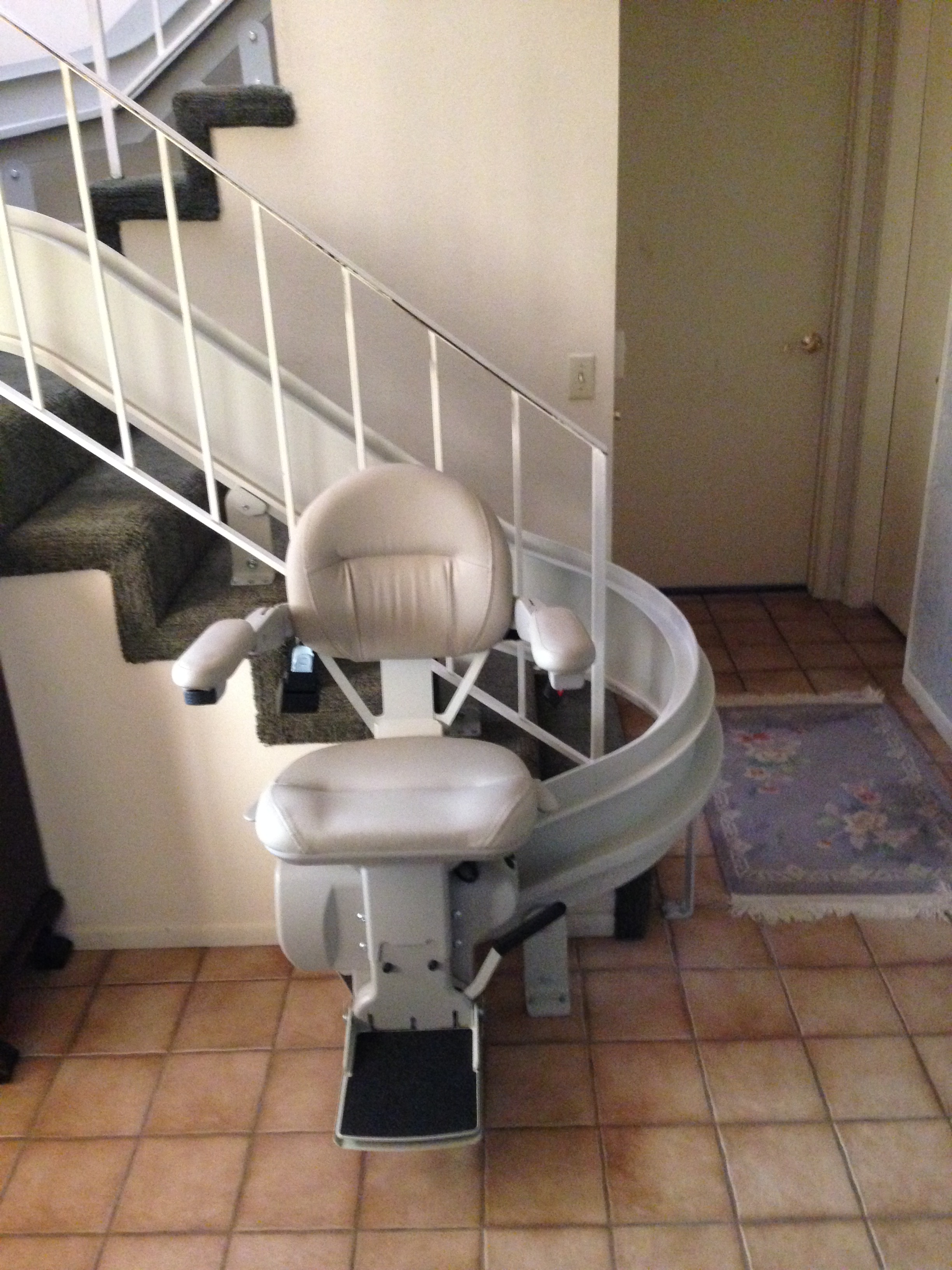
The standard variation of the straight stairlift is the curved model that has a rail that can fit the shape of a winding or curved staircase. Both the straight and curved stairlift most commonly have a seat that is either fixed, folds up and down, or swivels toward or away from the wall. The kind of seat installed will depend both on the needs of the user and the space available on the stairs and landings of a particular home.

stairlifts can be operated either by battery or by a home’s electrical system. While batteries will have to be replaced every few years, those running on house current will never need that type of maintenance. On the other hand, electrical lifts won’t work if there is a power failure.

The standing stairlift is a variation of the lift device. It can be used by people who can’t sit but are able to stand. In order for a standing stairlift to operate effectively, there must be enough headroom in the staircase for a standing individual to travel safely. The standing lift is also suitable for homes with very narrow staircases or ones that for some reason can’t accommodate a seated lift.

Platform stairlifts are another variation. They are designed to be large and strong enough to hold a wheelchair, or in some cases, a small or mid-sized scooter. They are appropriate for individuals who can’t transfer from a sitting position in a chair or scooter to a chair in a standard stairlift. They are also ideal for older and disabled people who are wheelchair bound and need to stay in their chairs no matter what floor they are on.

Finally, although not considered a stairlift, per se, the vertical “through floor” lift has a track that can attach to a wall as it traverses through a hole in the ceiling/floor. It is an option for a home that cannot accommodate an ordinary lift, for example, one whose staircase is too narrow or has a spiral shape design.

At Pacific Mobility, we will help you choose the best stairlift option for your home by carefully explaining the benefits of all the different types we offer.

Jeff Conner
Jeff Conner

President, Husband, Father, Grandfather Graduate of UC Davis- Bio Sci Major- Go Aggies! Jeff has extensive experience in all of Pacific Mobility’s products and services, and specializes in accessibility products as well as stairlifts, ceiling lifts and custom wheel chairs. His hobbies include spending time with family, gardening, mountain biking, exercising and off road motorcycle riding.

24 years as Owner/President of Pacific Mobility Center – selling, installing, and servicing stairlifts, porch lifts, ceiling lifts, pool lifts, handicap ramping, specialty wheelchairs, scooters, power wheel chairs, and other power mobility devices
Certified Environmental Access Consultant since 2008
Licensed General Contractor since 1998
Certified Aging in Place Specialist since 2016
Board Member for Home Access Professionals
Member of Association of Members of the Accessibility Equipment Industry (AEMA)

www.linkedin.com/in/jeff-conner-14085616/

Filed Under: Blog Posts, Product Information, Uncategorized Tagged With: mobility, mobility assistive equipment, stairlift, wheelchair

The Importance of stairlifts for Seniors

March 6, 2015 By Jeff Conner

finazzo1According to a survey taken by the American Association of Retired Persons (AARP), nearly 90 percent of people over age 65, when asked, said that they would prefer to live in their homes as long as possible, and 80 percent of them believe that their current home is where they will, in fact, always live until they pass away.

The desire that most seniors have for remaining in their homes and not moving to a senior care community, or an assisted living environment, speaks volumes about their need for independence even as their bodies continue to age and, in some cases, become increasingly frail. For it is quite well known that for all of us – seniors included – our homes provide us with deep and abiding emotional and psychological connections to our past, our families and our sense of security.

But for some seniors, that security can easily be jeopardized if they live in homes that have steep stairs or other structural features that are difficult for their aging bodies to safely navigate. The grim truth is that, each year, millions of elderly adults in America sustain moderate to severe injuries, such as broken bones, hip fractures, and head traumas, due to falls. In fact, according to the federal government’s Centers for Disease Control and Prevention (CDC), one out of three adults, age 65 or older, falls each year. And falling down stairs is the leading cause of serious injury among the elderly.

There are many sensible ways for seniors to help prevent accidental falls in the home, such as adding grab bars in showers and bathrooms, and removing tripping hazards such as loose rugs. But for seniors who live in two-story homes, installing a stairlift may be the most practical and affordable way to stay safe while postponing the need to make a premature transition to a senior care facility.

stairlifts allow seniors with mobility challenges to go up and down their stairs safely. They also help combat the fear of falling that not only often gets worse with age, but, paradoxically, actually increases the risk of falling in the first place.

The desire for independence and self-sufficiency doesn’t decrease with age – it is an essential aspect of a quality life whether one is at the beginning, or nearing the end, of one’s days. Happily, we live in a time when our technology affords our senior population the ability to remain both independent and self-sufficient, while still living at home. And the modern stairlift has become an important part of that equation.

https://www.youtube.com/watch?v=c8D0VRsnlBM

Jeff Conner
Jeff Conner

President, Husband, Father, Grandfather Graduate of UC Davis- Bio Sci Major- Go Aggies! Jeff has extensive experience in all of Pacific Mobility’s products and services, and specializes in accessibility products as well as stairlifts, ceiling lifts and custom wheel chairs. His hobbies include spending time with family, gardening, mountain biking, exercising and off road motorcycle riding.

24 years as Owner/President of Pacific Mobility Center – selling, installing, and servicing stairlifts, porch lifts, ceiling lifts, pool lifts, handicap ramping, specialty wheelchairs, scooters, power wheel chairs, and other power mobility devices
Certified Environmental Access Consultant since 2008
Licensed General Contractor since 1998
Certified Aging in Place Specialist since 2016
Board Member for Home Access Professionals
Member of Association of Members of the Accessibility Equipment Industry (AEMA)

www.linkedin.com/in/jeff-conner-14085616/

Filed Under: Uncategorized Tagged With: elderly, mobility, mobility assistive equipment, senior citizens, stairlift

High Pressure Sales Tactics – Got to Get the Sale!

February 22, 2015 By Jeff Conner


selling

There is an old adage in the world of sales: “People like to buy, but they don’t like to be sold.” The high pressure salesman does not believe strongly enough in this fact of human psychology. On the contrary, he is inclined to assume that people must be prodded and pushed and tricked into buying. So instead of unleashing the primary desire that most people have in the simple power of acquiring things based on their own needs, the high pressure salesman relies on various ways to manipulate his prospect into a sale that may not even be in the buyer’s best interests (and usually does not contribute to a long term relationship with the seller).

There are many techniques that can make saying “yes” to a sale, the easiest way to end the kind of stress-inducing interaction that is the hallmark of a high pressure sales routine. For example, a high pressure salesman might push a customer into a sale by stressing the fact that there is a looming deadline approaching and the price of his product or service is going to shoot up unless the sale is consummated immediately. Whether or not a deadline actually exists happens to be beside the point. The high pressure salesman is actually selling fear of losing something rather than suiting the sale to the buyer’s needs. He is forcing an emotional commitment before his prospect has time to think whether or not he or she can actually afford, or even needs to buy, what the salesman is selling.

In contrast, low pressure selling does not drive a prospect into a buying decision, but rather lets him reach the decision on his own terms. The low pressure salesman tries to ascertain the prospect’s wants and needs, and then tries to explain how his product or service can fit that want or need by demonstrating the relationship between the two.

At Pacific Mobility, we eschew the hard sell. We want to know how we can solve your problem, so we will spend our time with you asking you about your needs and absolutely no time at all in manipulating you into buying what we think we can make the most money on. Buying any one of our fine products needs to be the result of a calm and rational decision that you make on your own about how a purchase from us may benefit you – and not the other way around.

Jeff Conner
Jeff Conner

President, Husband, Father, Grandfather Graduate of UC Davis- Bio Sci Major- Go Aggies! Jeff has extensive experience in all of Pacific Mobility’s products and services, and specializes in accessibility products as well as stairlifts, ceiling lifts and custom wheel chairs. His hobbies include spending time with family, gardening, mountain biking, exercising and off road motorcycle riding.

24 years as Owner/President of Pacific Mobility Center – selling, installing, and servicing stairlifts, porch lifts, ceiling lifts, pool lifts, handicap ramping, specialty wheelchairs, scooters, power wheel chairs, and other power mobility devices
Certified Environmental Access Consultant since 2008
Licensed General Contractor since 1998
Certified Aging in Place Specialist since 2016
Board Member for Home Access Professionals
Member of Association of Members of the Accessibility Equipment Industry (AEMA)
www.linkedin.com/in/jeff-conner-14085616/

Filed Under: Blog Posts, Uncategorized Tagged With: benefit, mobility, sales

Pacific Mobility Supports the Wounded Warrior Project

June 21, 2013 By Jeff Conner

Temecula Rotary Club called Pacific Mobility Center and spoke with Jeff Conner (Owner) for help getting a Wounded Warrior up and down his stairs at his temporary home he is living at until his new residence is built. Jeff Conner called Mike Bruno, President of Bruno Independent Living Aids (Largest US Stairlift Manufacturer located in Wisconsin). Mike was eager to help by donating 2 new home stairlift units. Mark Holat from Bruno made a special trip to California to help out. The Temecula Rotary club was also ready to help out and our team was set. We then put a plan into action and proceeded forward with helping out a truly great person.

We were fortunate enough to have Jim Brunotte and wife Gerry, make a guest appearance. Jim was wounded in Vietnam and lost both legs, a hand and an eye. What a wonderful group of folks all coming together to help out. Pacific Mobility Center’s technicians, with Brian Conner in charge did an incredible job installing the 2 New Bruno Stairlifts in the home. Grab bars and other items were also provided.

jonshumacherBackground
Corporal Jonathan Schumacher, from 3/7 India Company, was serving his second tour in Afghanistan when the unthinkable happened. On October 30, 2011, while on a security patrol in Sangin, Afghanistan in the Helmand province, Cpl. Schumacher stepped on an IED and his life was forever changed. His brothers from his squad and platoon rushed to his side to cover Jon and aided in a rescue operation. Navy corpsman Ryan Davis performed life-saving procedures until a medical evacuation helicopter arrived. When the Marines called the attack in, they classified Jon’s injuries as a three-limb amputee. A statement from his Captain read, “even while Jonathan was being treated, he led his Marines to ensure their safety. At one point, he sat up on his own power to direct the area they should clear and the places they were to watch as enemy combatants attempted to maneuver on their position. It is truly a testament to his courage and bravery that even under the most chaotic conditions he still worried about the safety of his brothers before his own injuries.” Jon was loaded onto the helicopter and taken to Camp Bastion, Afghanistan which had the closest field hospital then to Baghram air field. After being stabilized, he was moved to Germany where surgeons performed outstanding operations to save his left arm. Jon then was moved to Bethesda Naval hospital in Maryland. His wife Courtney, arrived the next day while eight months pregnant with their second son.

Recovery
Jon was blessed to be by his wife’s side when she gave birth to Easton on December 17, 2011. On January 21, 2012, Jon and his family, including eldest son Ethan, were transferred to Balboa Naval hospital in San Diego, California. After countless surgeries, Jon has been working with both physical and occupational therapists to learn to walk again and to perfect using the fingers he still has. Along with the therapy, Cpl. Schumacher has had numerous medical appointments helping him recover from the blast and prepare for his transition to life after injury. With many steps forward, the Schumachers have had a few setbacks including lingering infections that forced Jon into a chair and not allowing him to walk for nine months after the attack.

Next Steps
Jon has had difficulty walking with the prosthetics due to his legs being amputated at different lengths. In March 2013, Jon underwent another surgery to shorten his longer leg. The recovery time will be six weeks and he should be back on his prosthetics in eight weeks. He and his family are preparing for his medical retirement from the Marines in the summer of 2013 at which time they are hoping to move to the northern San Diego area where Jon will be able to continue his rehabilitation.

Why Your Support is Needed
The First Annual Corporal Jonathan Schumacher Golf Tournament was a huge success, but in order for the family to gain more independence, more financial support is needed.

Jon and Courtney are awaiting approval to be selected by an organization that builds homes for wounded warriors. The home will be a basic structure; additional monies are needed to make the house a home. Before the home is built they will be renting a house that needs to be retrofitted to accommodate his needs.

Jon is in need of an adaptive truck that is better suited for his family’s activities.

Jon’s desire to go back to school will be paid for by the GI Bill. They will pay for the first four years, but he is ambitious and is pursuing a degree in mechanical or structural engineering. Courtney is also pursuing a different career path and will be attending school. With both parents in school, funds are needed for daycare and everyday life expenses.

Whiskey, their four year old black lab is now being trained to be a qualified service dog to aid Jon.

Jeff Conner
Jeff Conner

President, Husband, Father, Grandfather Graduate of UC Davis- Bio Sci Major- Go Aggies! Jeff has extensive experience in all of Pacific Mobility’s products and services, and specializes in accessibility products as well as stairlifts, ceiling lifts and custom wheel chairs. His hobbies include spending time with family, gardening, mountain biking, exercising and off road motorcycle riding.

24 years as Owner/President of Pacific Mobility Center – selling, installing, and servicing stairlifts, porch lifts, ceiling lifts, pool lifts, handicap ramping, specialty wheelchairs, scooters, power wheel chairs, and other power mobility devices
Certified Environmental Access Consultant since 2008
Licensed General Contractor since 1998
Certified Aging in Place Specialist since 2016
Board Member for Home Access Professionals
Member of Association of Members of the Accessibility Equipment Industry (AEMA)
www.linkedin.com/in/jeff-conner-14085616/

Filed Under: Uncategorized

Happy Holidays from Pacific Mobility!

November 28, 2012 By Jeff Conner

The holidays are a time of family, giving and thanksgiving. My family has a tradition: every year at Thanksgiving, before we eat, we circle up and everyone goes around and says a few things they are grateful for. As I reflected this year on what I was going to say, one thing was very easy for me. I am very thankful for the wonderful opportunity I have to serve you, my customers, doing what I love and doing it surrounded by my family and friends. Many years ago when this business was started, I had a vision to build a successful business giving people their lives back and doing it by being friendly, helpful, neighborly, and by having the lowest prices around. Now, years later, that has really paid off. As a family owned and operated business, I get to work every day with my family and close friends, and I get to serve my customers, many of whom are my neighbors, by giving them the best prices and best service around. It has been a very rewarding experience for me, and I have finally learned the truth behind that old adage that if you do something you love, you never work a day in your life.

With the holidays upon us, family becomes the focus and spending time with family is the whole point of the season. Please do not let limited mobility hold you back from that. Come in and see us today and experience the difference that a family owned and operated local business can make on your buying experience. We love what we do and it shows in everything that we do!

Jeff Conner
Jeff Conner

President, Husband, Father, Grandfather Graduate of UC Davis- Bio Sci Major- Go Aggies! Jeff has extensive experience in all of Pacific Mobility’s products and services, and specializes in accessibility products as well as stairlifts, ceiling lifts and custom wheel chairs. His hobbies include spending time with family, gardening, mountain biking, exercising and off road motorcycle riding.

24 years as Owner/President of Pacific Mobility Center – selling, installing, and servicing stairlifts, porch lifts, ceiling lifts, pool lifts, handicap ramping, specialty wheelchairs, scooters, power wheel chairs, and other power mobility devices
Certified Environmental Access Consultant since 2008
Licensed General Contractor since 1998
Certified Aging in Place Specialist since 2016
Board Member for Home Access Professionals
Member of Association of Members of the Accessibility Equipment Industry (AEMA)

www.linkedin.com/in/jeff-conner-14085616/

Filed Under: Uncategorized

  • « Go to Previous Page
  • Page 1
  • Interim pages omitted …
  • Page 16
  • Page 17
  • Page 18
  • Page 19
  • Go to Next Page »

Footer

San Diego County Showroom

1355 Grand Ave Suite 102
San Marcos, CA 92078
Toll Free: 866-786-2966
Local: 760-471-8884

Riverside County Lift Sales

Pacific Mobility Center of Temecula
Toll Free: 866-786-2966
Local: 951-383-6845

Orange County Lift Sales

Pacific Mobility Center of Huntington Beach
Toll Free: 866-786-2966
Local: 714-907-4005

Office Hours

Monday-Thursday: 9:00am-5:00pm (closed 12:00-1:15 for lunch)

Friday: 8:30am-4:30pm (closed 12:00-1:15 for lunch)

Find Us on Social Media

Facebook Yelp BBB Angies List Twitter LinkedIn

Showroom Location


View Larger Map

  • Home
  • Coupons
  • Quote Request
  • About Us
  • Products
  • Careers
  • Blog
  • Gallery
  • FAQ
  • Contact
  • Service Area
  • Privacy Policy
  • Terms of Service
  • Disclaimer
  • Cookie Policy
  • Proposition 65 Warnings

Copyright © 2026 Pacific Mobility, All Rights Reserved.


Website by A Servant's Heart Web Design and Marketing

Schedule an Appointment

How can we help you?