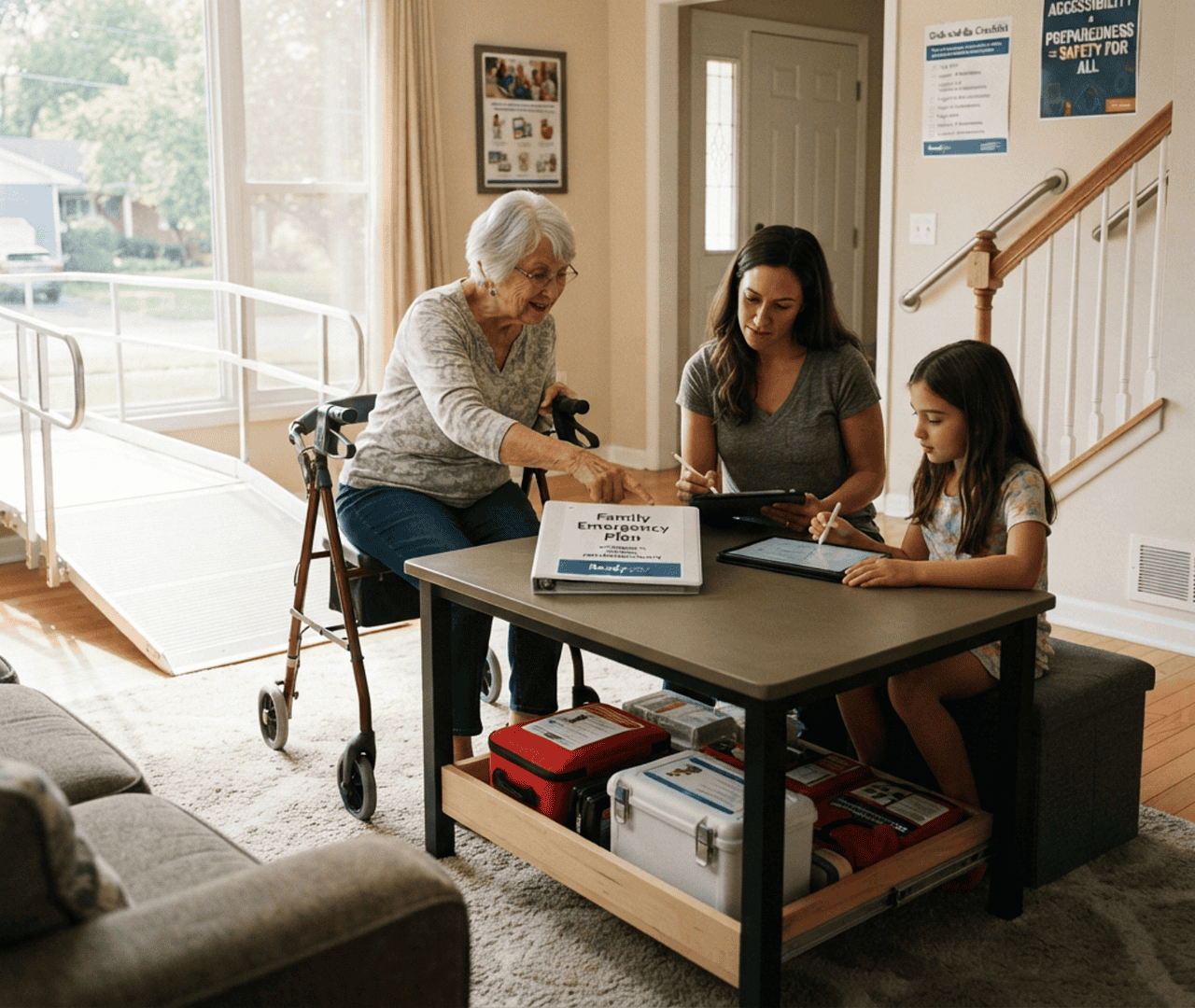
Families should plan accessibility upgrades during National Preparedness Month because a safer and more accessible home can help older adults move around with greater confidence and remain prepared for changing needs. Simple improvements such as wheelchair ramps, stairlifts, grab bars, better lighting, and clearer walkways can make everyday activities easier while helping families prepare for emergencies and long-term aging at home.
National Preparedness Month, observed in September, is a useful reminder for families to think beyond emergency supplies. Preparing a home also means considering whether everyone can safely enter, exit, and move through the property when circumstances change.
Why Does Accessibility Matter?
A home that works well today may become difficult to navigate as mobility needs change. Planning improvements early gives families more time to identify potential barriers and choose suitable solutions.
Accessibility upgrades can help:
- Improve movement around the home
- Support greater independence
- Make entrances easier to access
- Improve everyday convenience
- Support aging in place
- Prepare households for changing mobility needs
Every home has different requirements, so improvements should be based on the individual’s needs and the home’s layout.
Start With a Home Accessibility Check
Families can begin by walking through the home and looking for areas that may be difficult to use.
Check:
- Front and back entrances
- Hallways
- Stairways
- Bathrooms
- Bedrooms
- Kitchen areas
- Outdoor walkways
Ask whether an older adult using a walker, wheelchair, or other mobility aid could safely navigate each area.
Consider Wheelchair Ramps
Steps at entrances can create a barrier for people using wheelchairs, walkers, or other mobility equipment.
A properly planned ramp can provide:
- Easier entry and exit
- Better accessibility
- Greater convenience for caregivers
- Improved access for visitors
- A more practical entrance for mobility equipment
Families should have ramps properly evaluated and installed according to applicable safety requirements.
Explore Stairlift Options
Stairs can become challenging when mobility or balance changes.
A stairlift may help an eligible individual move between floors without having to repeatedly climb stairs. Before choosing a solution, families should consider:
- Stairway design
- Available space
- User mobility
- Installation requirements
- Emergency access needs
- Professional assessment
The right accessibility solution depends on the home’s structure and the individual’s needs.
Improve Lighting
Good lighting is an important part of home accessibility and preparedness.
Families can improve visibility by:
- Adding brighter lighting where appropriate
- Installing nightlights
- Illuminating stairways
- Improving bathroom lighting
- Keeping entrances well lit
- Replacing damaged or unreliable light fixtures
Better visibility can make everyday movement easier.
Keep Walkways Clear
Clutter can make mobility more difficult and may create unnecessary obstacles.
Regularly check for:
- Loose rugs
- Boxes
- Electrical cords
- Small furniture
- Unnecessary decorations
- Items blocking doorways
Keeping paths clear makes it easier to move through the home and can also help caregivers assist older adults.
Improve Bathroom Accessibility
Bathrooms are important areas to review because they can present several accessibility challenges.
Families may consider:
- Grab bars
- Handheld shower options
- Non-slip surfaces
- Accessible seating
- Improved lighting
- Easier-to-use fixtures
Any modification should be appropriate for the person’s needs and properly installed.
Think About Emergency Preparedness
Accessibility is especially important during an emergency.
Families should consider how an older adult would:
- Exit the home
- Reach an emergency meeting area
- Move between rooms
- Communicate with others
- Access important supplies
- Receive assistance if mobility is limited
An emergency plan should account for the abilities of everyone in the household.
Prepare for Autumn Weather
National Preparedness Month takes place in September, making autumn a good time to inspect outdoor areas before seasonal weather changes.
Check:
- Walkways
- Driveways
- Steps
- Ramps
- Handrails
- Outdoor lighting
- Drainage areas
Leaves, moisture, and other seasonal conditions can make outdoor surfaces more difficult to navigate.
Involve Older Adults in Planning
Accessibility upgrades should focus on the person who will use them.
Families can ask older adults:
- Which areas feel difficult to access?
- What activities have become harder?
- Which rooms are used most often?
- What would make daily routines easier?
- What changes would provide greater confidence?
Including seniors in decisions helps ensure improvements address their actual needs and preferences.
Plan Before an Urgent Need Develops
Waiting until accessibility becomes an emergency can create unnecessary stress. Planning ahead gives families time to compare options, discuss budgets, and arrange professional assessments when needed.
A proactive approach may include:
- Identifying current barriers
- Prioritizing important improvements
- Creating a home safety checklist
- Researching accessibility solutions
- Planning future modifications
- Reviewing emergency procedures
Small improvements can often make a meaningful difference.
Final Thoughts
National Preparedness Month provides a valuable opportunity for families to look at home accessibility from both a daily living and emergency preparedness perspective. Wheelchair ramps, stairlifts, improved lighting, bathroom modifications, and clear pathways can help create a more accessible environment for older adults. By identifying barriers early and planning appropriate upgrades, families can support safer movement, greater independence, and greater confidence as their loved ones continue aging at home.
Legal Disclaimer: This post is strictly for educational use and should not be construed as professional advice (medical, legal, financial, or otherwise).


