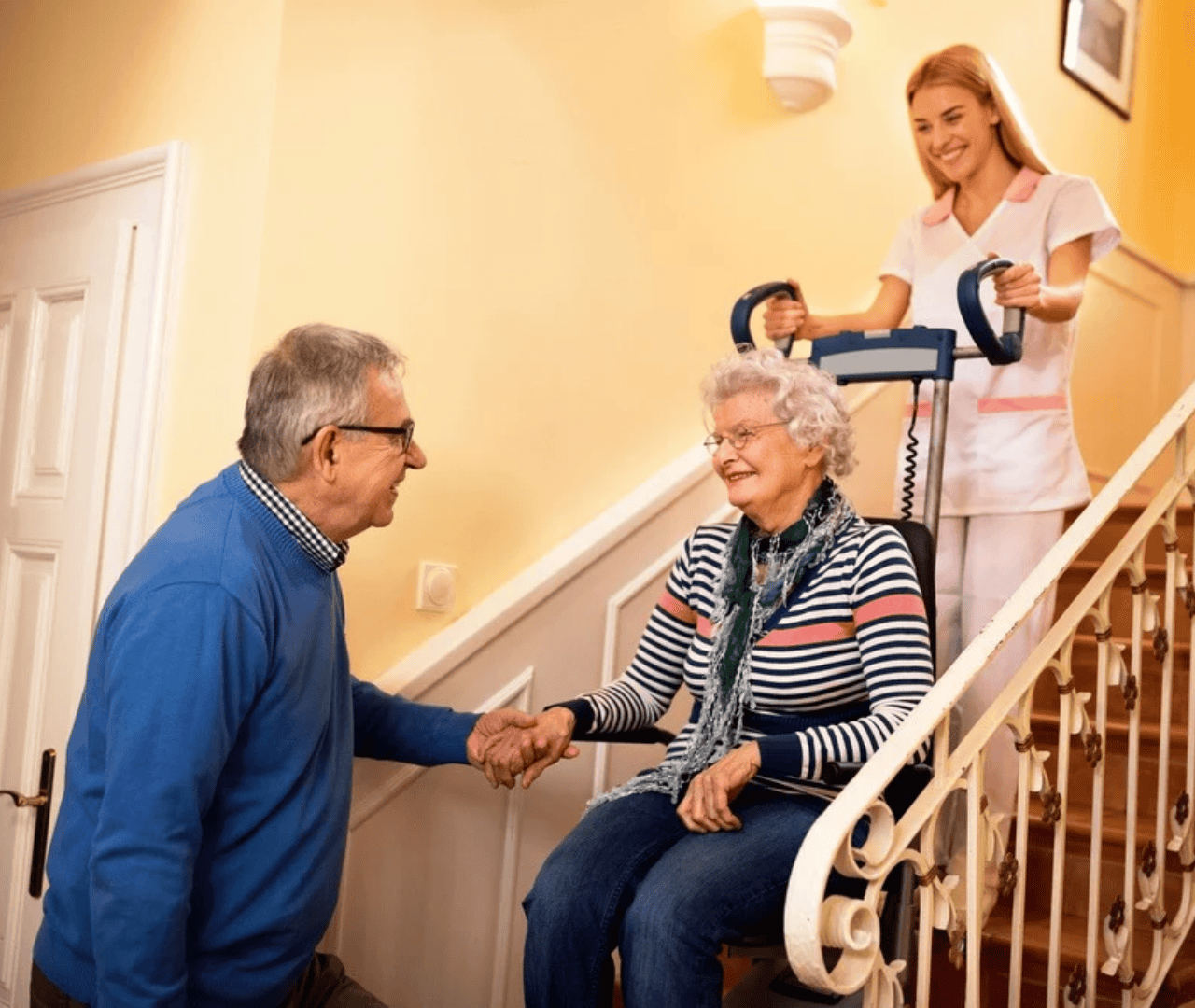
Families should consider a stairlift when an older adult or someone with mobility limitations begins having difficulty climbing stairs, experiences fatigue or discomfort on stairways, or avoids parts of the home because of stairs. During National Long Term Care Awareness Month in November, families can evaluate whether a stairlift could support independence, improve access between floors, and become part of a long-term aging-in-place plan. The right time to explore a stairlift is often before stair use becomes a major obstacle, allowing families to consider options without making rushed decisions.
Why Is National Long Term Care Awareness Month Important?
National Long Term Care Awareness Month encourages individuals and families to think about future care needs before a crisis occurs.
Long-term care planning can involve healthcare, personal assistance, housing, finances, transportation, and home accessibility.
For older adults who want to remain in their homes, mobility can be an important consideration.
A home that was easy to navigate for many years may become more challenging as physical abilities change.
November provides an opportunity to review whether stairs, entrances, bathrooms, and other areas of the home continue to meet the person’s needs.
What Is a Stairlift?
A stairlift is a powered mobility device that carries an appropriate user up and down a staircase while seated.
The equipment typically includes a seat, rail, motor, controls, and safety features.
Stairlifts can be designed for different staircase configurations, including straight and curved stairways.
Some models include folding seats, armrests, and footrests to reduce the space occupied when the equipment is not in use.
However, not every stairlift is suitable for every staircase or individual.
Professional assessment is important before selecting equipment.
What Signs Suggest It May Be Time to Consider a Stairlift?
Families may notice gradual changes in how an older adult uses the stairs.
Possible signs include:
- Holding tightly to handrails
- Stopping frequently to rest
- Experiencing discomfort while climbing
- Avoiding upstairs rooms
- Becoming unusually tired after using stairs
- Having difficulty carrying items between floors
- Feeling unsteady on steps
- Needing increasing assistance on stairways
These observations do not automatically mean a stairlift is necessary.
New or worsening mobility problems should also be discussed with an appropriate healthcare professional.
Can a Stairlift Help Someone With Arthritis?
Arthritis can affect joints involved in climbing stairs, including the knees, hips, and ankles.
For some people, repeated stair climbing may become uncomfortable or physically demanding.
A stairlift may provide an alternative way to travel between floors.
However, arthritis affects people differently.
Someone must still be able to get onto and off the stairlift appropriately and operate the equipment as intended.
A healthcare professional or occupational therapist can help determine whether a stairlift fits the person’s abilities and mobility needs.
How Can Stairlifts Support Aging in Place?
Aging in place generally means continuing to live in familiar surroundings as needs change.
For someone living in a two-story home, stairs may eventually limit access to bedrooms, bathrooms, laundry areas, or other important spaces.
A stairlift may help an appropriate user continue accessing these areas.
This can be especially meaningful when moving to a single-story home is not practical or preferred.
However, a stairlift should be considered alongside other accessibility needs, including bathroom arrangements, entrances, lighting, and available caregiver support.
When Might a Stairlift Not Be the Right Solution?
A stairlift is not appropriate for every mobility situation.
Some individuals may have difficulty transferring onto the seat, maintaining a suitable seated position, or operating the controls.
Others may use wheelchairs and be unable to transfer independently or with appropriate assistance.
In these situations, a different accessibility solution or a change in living arrangements may need to be considered.
A stairlift should never be selected solely because stairs have become difficult.
The individual’s overall abilities and the home environment must be evaluated.
What Should Families Know About Straight and Curved Stairlifts?
Stairlifts are available for different staircase designs.
Straight stairlifts generally serve staircases without turns or intermediate curves.
Curved stairlifts are designed for stairways with bends, turns, or more complicated layouts.
Curved systems often require customized rail configurations.
The correct equipment depends on the staircase’s dimensions, available clearance, landings, and other structural considerations.
A qualified stairlift professional can assess the property and explain which options may be suitable.
Can a Stairlift Reduce Physical Demands on Family Caregivers?
Family caregivers sometimes assist older relatives while they navigate stairs.
This can become physically demanding, particularly when someone has balance difficulties or needs substantial support.
For an appropriate user, a stairlift may reduce the need for certain assisted stair-climbing activities.
However, caregivers should not assume that a stairlift eliminates the need for supervision or assistance.
Some individuals may still need help with transfers, positioning, or equipment operation.
Caregiver training and an appropriate mobility plan remain important.
What Safety Features Should Families Consider?
Modern stairlifts may include features such as seat belts, obstruction sensors, swivel seats, and controls designed for seated operation.
Available features vary by manufacturer and model.
Families should ask about:
- Weight capacity
- Seat and footrest dimensions
- Transfer requirements
- Emergency stopping procedures
- Battery operation during power outages
- Maintenance needs
- Warranty coverage
- Local service availability
No stairlift can guarantee that someone will never fall or experience an accident.
Correct equipment selection, installation, training, and maintenance are essential.
How Much Does a Stairlift Cost?
Stairlift costs vary depending on the staircase, equipment, installation requirements, and selected features.
Straight stairlifts are often less complex to install than customized curved systems, but actual prices depend on the property and product.
Families should request a detailed written estimate explaining equipment, installation, warranties, maintenance, and possible additional charges.
They may also want to ask whether financing or other assistance programs are available.
Coverage through insurance or assistance programs should never be assumed without confirming current eligibility and requirements.
Should Families Install a Stairlift Before Mobility Becomes Severely Limited?
Planning early may provide more options.
If an older adult is beginning to struggle with stairs but can still use them, families may have time to evaluate the home, discuss medical concerns, compare equipment, and consider alternatives.
Waiting until someone can no longer access essential areas of the home may create pressure to make quick decisions.
However, installing a stairlift before it is needed is not automatically the right choice.
The decision should reflect current abilities, expected needs, professional recommendations, and financial circumstances.
How Can Long-Term Care Planning Include Other Home Modifications?
A stairlift may address one accessibility challenge, but families should evaluate the home more broadly.
Other potential improvements include:
- Accessible entrances
- Properly designed ramps
- Residential porch lifts
- Bathroom grab bars
- Improved lighting
- Clear walking paths
- Appropriate mobility equipment
An occupational therapist or qualified accessibility professional may help families identify priorities.
How Can November Encourage Families to Plan Ahead?
National Long Term Care Awareness Month provides a reminder that mobility needs can change gradually.
Families can use November to discuss whether an older loved one is comfortable using stairs and whether the current home will continue meeting their needs.
For some households, a stairlift may provide a practical way to maintain access between floors. For others, a different modification or care arrangement may be more appropriate.
The most useful approach is to evaluate needs early, involve the older adult in decisions, and obtain professional guidance before purchasing equipment.
By making thoughtful accessibility decisions, families may help older adults maintain greater independence, comfort, and access to the parts of their homes that matter most.
Legal Disclaimer: This post is strictly for educational use and should not be construed as professional advice (medical, legal, financial, or otherwise).