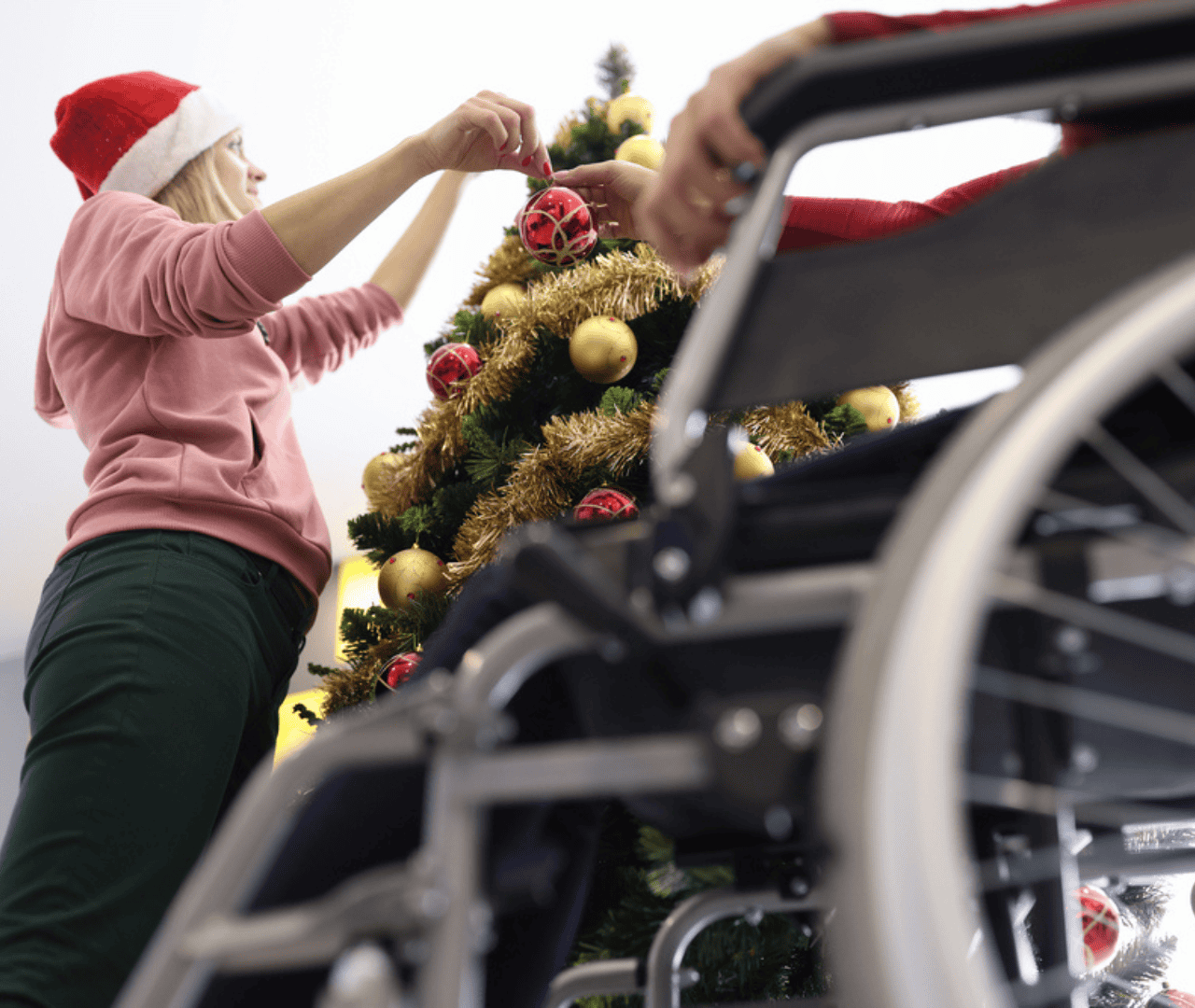
Christmas gatherings can be safer and more comfortable for guests with limited mobility when families make simple accessibility improvements before the holiday celebration. Clearing walkways, improving lighting, removing tripping hazards, and providing accessible seating can help guests move around more easily. For homes with stairs or raised entrances, mobility solutions such as wheelchair ramps, stairlifts, and residential porch lifts may also improve access. Planning ahead helps older adults and people with disabilities participate in holiday activities with greater comfort, confidence, and independence.
Why Is Accessibility Important During Christmas Gatherings?
Christmas is a time for families and friends to come together, share meals, and enjoy traditions.
However, holiday decorations, crowded rooms, and unfamiliar spaces can create challenges for guests with limited mobility.
Older adults and people with disabilities may have difficulty navigating stairs, narrow walkways, or uneven surfaces.
Accessibility improvements help create a welcoming environment where everyone can participate.
Families should consider each guest’s mobility needs before making changes to their homes.
How Can Families Make Entrances More Accessible?
The entrance is one of the first areas families should inspect before hosting a Christmas gathering.
Steps, raised thresholds, and slippery walkways can make entering a home difficult for wheelchair users and people who use walkers.
Helpful improvements include:
- Keeping pathways free from decorations and obstacles
- Providing adequate outdoor lighting
- Checking for uneven surfaces
- Removing snow, ice, and wet leaves
- Ensuring entrance doors open fully
- Providing appropriate accessibility equipment when needed
Families should also consider whether guests have enough space to enter and exit comfortably.
Can Wheelchair Ramps Improve Holiday Accessibility?
Wheelchair ramps provide a sloped pathway between different elevations.
They may help guests using wheelchairs or certain mobility aids enter homes where steps create barriers.
A properly designed ramp should have an appropriate slope, stable surface, and suitable landing areas.
Depending on the design, handrails and edge protection may also be necessary.
Families should avoid using improvised boards or unstable materials as temporary ramps.
Portable ramps should only be used when they are suitable for the location, mobility equipment, and manufacturer’s intended application.
Professional guidance can help determine whether a ramp is appropriate.
When Might a Residential Porch Lift Be Helpful?
Some homes have raised entrances that require several steps.
When there is not enough space for a properly designed wheelchair ramp, a residential porch lift may be an option.
Also called a vertical platform lift, this equipment moves a person vertically between different levels.
It may provide access for wheelchair users who cannot safely navigate entrance steps.
However, porch lifts require suitable space, appropriate safety features, and professional installation.
Families should plan accessibility improvements well before Christmas rather than attempting rushed installations.
How Can Stairlifts Help Guests in Multi-Level Homes?
Holiday gatherings sometimes take place in homes where living rooms, dining areas, or bathrooms are located on different floors.
For guests who have difficulty climbing stairs, a stairlift may provide another way to move between levels.
A stairlift uses a motorized chair that travels along a rail installed beside a staircase.
It may help eligible individuals avoid the physical effort of climbing stairs.
However, guests must be able to sit safely and transfer onto and off the lift.
A stairlift should not be used by someone who has not been assessed as suitable for the equipment or who cannot operate it safely with appropriate assistance.
Why Should Families Remove Indoor Tripping Hazards?
Christmas decorations can make a home festive, but they may also create obstacles.
Extension cords, loose rugs, gift bags, and decorative displays can interfere with safe movement.
Before guests arrive, families should:
- Remove loose rugs from busy walkways
- Keep electrical cords away from walking areas
- Avoid placing decorations near stairs
- Clear pathways between rooms
- Keep gifts and packages away from entrances
- Provide enough room for wheelchairs and walkers
These changes can help reduce avoidable hazards while allowing guests to enjoy holiday decorations.
How Can Better Lighting Improve Safety?
December brings shorter daylight hours in the Northern Hemisphere, and many Christmas gatherings continue into the evening.
Poor lighting can make steps, thresholds, and obstacles harder to see.
Families should check lighting around entrances, hallways, staircases, and bathrooms.
Nightlights may be helpful in areas guests use after dark.
Outdoor pathways should also be well illuminated.
Lighting should be bright enough to support visibility without creating uncomfortable glare.
What Seating Arrangements Work Best for Guests With Limited Mobility?
Comfortable seating can make holiday gatherings more enjoyable.
Some guests may have difficulty sitting in low chairs or standing from soft furniture.
Families can provide sturdy chairs with supportive backs and armrests.
Seating should be arranged so guests can move between the dining table and other areas without navigating crowded spaces.
Wheelchair users should have appropriate space at tables and gathering areas.
Hosts should avoid assuming that every guest needs the same seating arrangement.
Asking about individual preferences can help create a more comfortable experience.
How Can Families Make Bathrooms More Accessible?
Bathroom access is an important part of holiday planning.
Guests with limited mobility may have difficulty navigating narrow doorways, slippery floors, or bathrooms without appropriate support.
Families should consider:
- Keeping bathroom pathways clear
- Providing adequate lighting
- Removing loose floor mats
- Ensuring essential supplies are within reach
- Checking that grab bars are securely installed where needed
- Making sure mobility equipment can fit through doorways
Temporary suction-cup grab bars should not be assumed to provide reliable weight-bearing support.
Guests who require accessible bathroom facilities should have suitable arrangements available.
Why Is Winter Weather an Important Consideration?
Christmas celebrations often occur during cold or wet weather.
Rain, snow, and ice can create slippery conditions on sidewalks, ramps, porches, and driveways.
Families should inspect outdoor surfaces before guests arrive.
Snow and ice should be addressed using methods appropriate for the surface material.
Walkways should remain clear throughout the gathering.
If an entrance becomes unsafe, guests should not be encouraged to use it until the hazard has been resolved.
How Can Families Support Guests Who Need Transfer Assistance?
Some guests may require assistance moving between a wheelchair, chair, or other seating surface.
Hosts should never assume that manual lifting is safe.
Guests who regularly use transfer equipment should follow their established care plans.
Ceiling lifts and other mechanical transfer devices may be appropriate in certain homes, but they require suitable equipment and trained operators.
Family members should not attempt unfamiliar lifting techniques or use equipment without proper instruction.
Respectful communication is essential when offering assistance.
Why Should Hosts Ask About Accessibility Needs Before Christmas?
One of the simplest ways to prepare for an inclusive gathering is to communicate with guests in advance.
Families can ask whether visitors need step-free access, additional seating space, or other accommodations.
These conversations should be respectful and focused on practical needs.
Guests should have opportunities to explain what works best for them.
Planning ahead can prevent last-minute difficulties and help everyone feel included.
How Can Christmas Accessibility Improvements Support Year-Round Independence?
Many accessibility improvements made for Christmas can benefit household members throughout the year.
Better lighting, clear walkways, accessible entrances, and appropriate mobility equipment may make everyday activities more manageable.
Families may also discover that a permanent ramp, stairlift, or porch lift would help address ongoing accessibility challenges.
A professional home accessibility assessment can identify suitable improvements based on individual needs.
Christmas provides a meaningful opportunity to recognize these challenges and consider longer-term solutions.
By preparing entrances, improving indoor pathways, arranging comfortable seating, and addressing mobility barriers, families can create safer and more welcoming holiday gatherings.
The most important goal is to help guests with limited mobility participate in Christmas traditions with dignity, comfort, and independence.
Legal Disclaimer: This post is strictly for educational use and should not be construed as professional advice (medical, legal, financial, or otherwise).