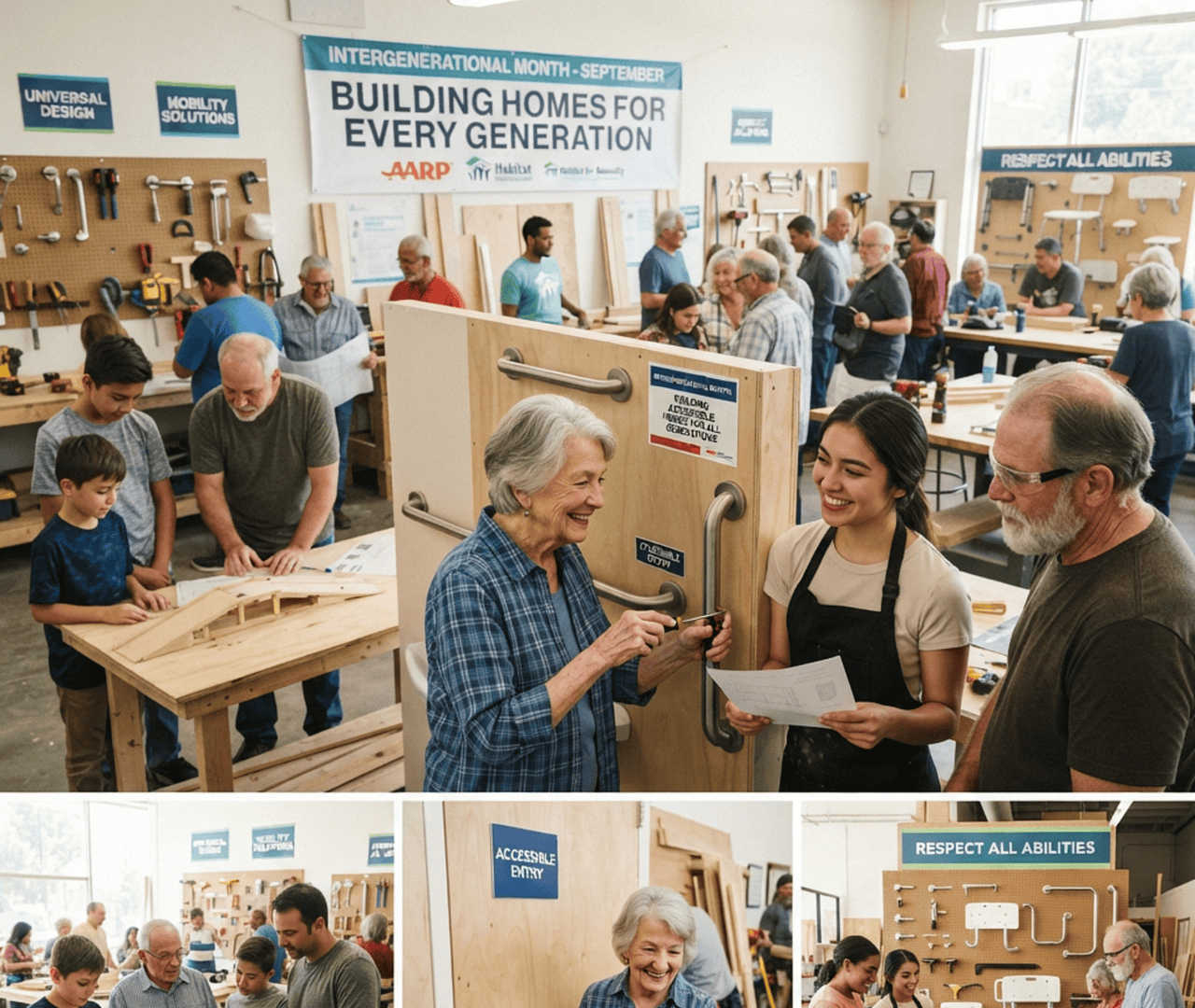
Intergenerational Month can encourage families to create more accessible homes by showing how thoughtful home design can support children, parents, grandparents, and other family members with different mobility needs. Features such as wheelchair ramps, stairlifts, wider pathways, better lighting, and accessible bathrooms can make daily life easier while helping family members of different ages live comfortably under one roof.
As families spend more time together across generations, a home may need to serve people with very different abilities. Planning accessibility early can help families create a safer and more flexible environment without waiting for a major mobility change.
What Is an Intergenerational Home?
An intergenerational home is a household where people from different generations live together or regularly share the same space.
This may include:
- Grandparents
- Parents
- Adult children
- Young children
- Extended family members
Each person may have different needs. A thoughtfully designed home can make shared spaces easier for everyone to use.
Why Does Accessibility Benefit Everyone?
Accessibility is not only for people who use wheelchairs or other mobility equipment. Many features can make everyday activities easier for the entire household.
An accessible home can provide:
- Easier movement
- Better safety
- Greater independence
- More comfortable daily routines
- Easier caregiving
- Greater flexibility as needs change
Planning for accessibility can benefit families today and in the future.
Consider a Wheelchair Ramp
Steps at an entrance can be difficult for older adults, people using wheelchairs, and anyone recovering from an injury.
A properly designed wheelchair ramp can make entering and leaving the home easier.
It can also help with:
- Walkers
- Wheelchairs
- Strollers
- Mobility equipment
- Moving household items
Families should consider the home’s layout and applicable safety requirements when planning a ramp.
Make Stairs Easier to Navigate
Stairs can become challenging as mobility changes. A stairlift may provide another way to move between floors for individuals who have difficulty using stairs.
When considering a stairlift, families should review:
- Stairway layout
- Available space
- User needs
- Installation requirements
- Emergency planning
- Long-term accessibility goals
Professional assessment can help determine whether a stairlift is appropriate.
Improve Hallways and Doorways
Clear pathways make movement easier for people of different ages and abilities.
Families can review:
- Hallway width
- Doorway access
- Furniture placement
- Floor transitions
- Loose rugs
- Electrical cords
Keeping pathways open can make it easier for older adults, children, caregivers, and visitors to move safely through the home.
Create a More Accessible Bathroom
Bathrooms are another important area for intergenerational accessibility.
Families may consider:
- Grab bars
- Non-slip surfaces
- Better lighting
- Accessible shower options
- Easy-to-use fixtures
- Appropriate seating
These features can make everyday routines more comfortable while supporting changing mobility needs.
Improve Lighting Throughout the Home
Good lighting can make a home easier to navigate.
Consider improving lighting around:
- Stairs
- Hallways
- Entrances
- Bathrooms
- Bedrooms
- Kitchen areas
- Outdoor pathways
Nightlights can also make nighttime movement easier for family members of different ages.
Design Spaces for Multiple Generations
An intergenerational home should balance the needs of everyone living there.
Families can create:
- Comfortable shared spaces
- Quiet areas for older adults
- Child-friendly spaces
- Accessible bedrooms
- Easy-to-reach storage
- Flexible furniture arrangements
A flexible layout allows the home to adapt as family needs change.
Encourage Family Participation
Accessibility planning works best when everyone has an opportunity to share their ideas.
Ask family members:
- Which areas are difficult to use?
- What changes would make daily routines easier?
- Which rooms are used most often?
- What accessibility needs may develop in the future?
- How can shared spaces work better?
Including multiple generations can lead to practical solutions that benefit the whole household.
Prepare for Changing Mobility Needs
Mobility needs can change because of age, injury, recovery, or other circumstances. Families do not have to wait for a major change before considering accessibility.
Planning ahead can include:
- Reviewing current barriers
- Identifying priority improvements
- Researching mobility solutions
- Improving lighting
- Clearing pathways
- Planning future modifications
Early planning gives families more time to make thoughtful decisions.
Connect Accessibility With Healthy Aging
Accessible homes can support healthy aging by making it easier for older adults to participate in daily activities.
A supportive home may help seniors:
- Move around more confidently
- Remain involved in family activities
- Complete appropriate daily tasks
- Spend time with loved ones
- Maintain greater independence
Accessibility is one part of creating a supportive environment for aging at home.
Make Outdoor Areas More Accessible
Accessibility should not stop at the front door.
Families can review:
- Driveways
- Walkways
- Patios
- Garden paths
- Outdoor steps
- Entry areas
Keeping outdoor pathways clear and well lit can make it easier for different generations to enjoy time outside together.
Think About the Future
An accessible home can be a long-term investment in family flexibility.
Instead of designing a home around one person’s current needs, families can consider how spaces might be used as circumstances change.
This can help households prepare for:
- Aging family members
- Temporary mobility limitations
- Visiting relatives
- Changing caregiving needs
- Different stages of family life
Thoughtful planning can make a home useful for many years.
Final Thoughts
Intergenerational Month provides a valuable opportunity for families to think about how their homes can better support people of different ages and abilities. Wheelchair ramps, stairlifts, accessible bathrooms, improved lighting, and clear pathways can make everyday life easier while supporting independence and family connection. By involving every generation in accessibility planning, families can create homes that are safer, more comfortable, and better prepared for changing needs.
Legal Disclaimer: This post is strictly for educational use and should not be construed as professional advice (medical, legal, financial, or otherwise).