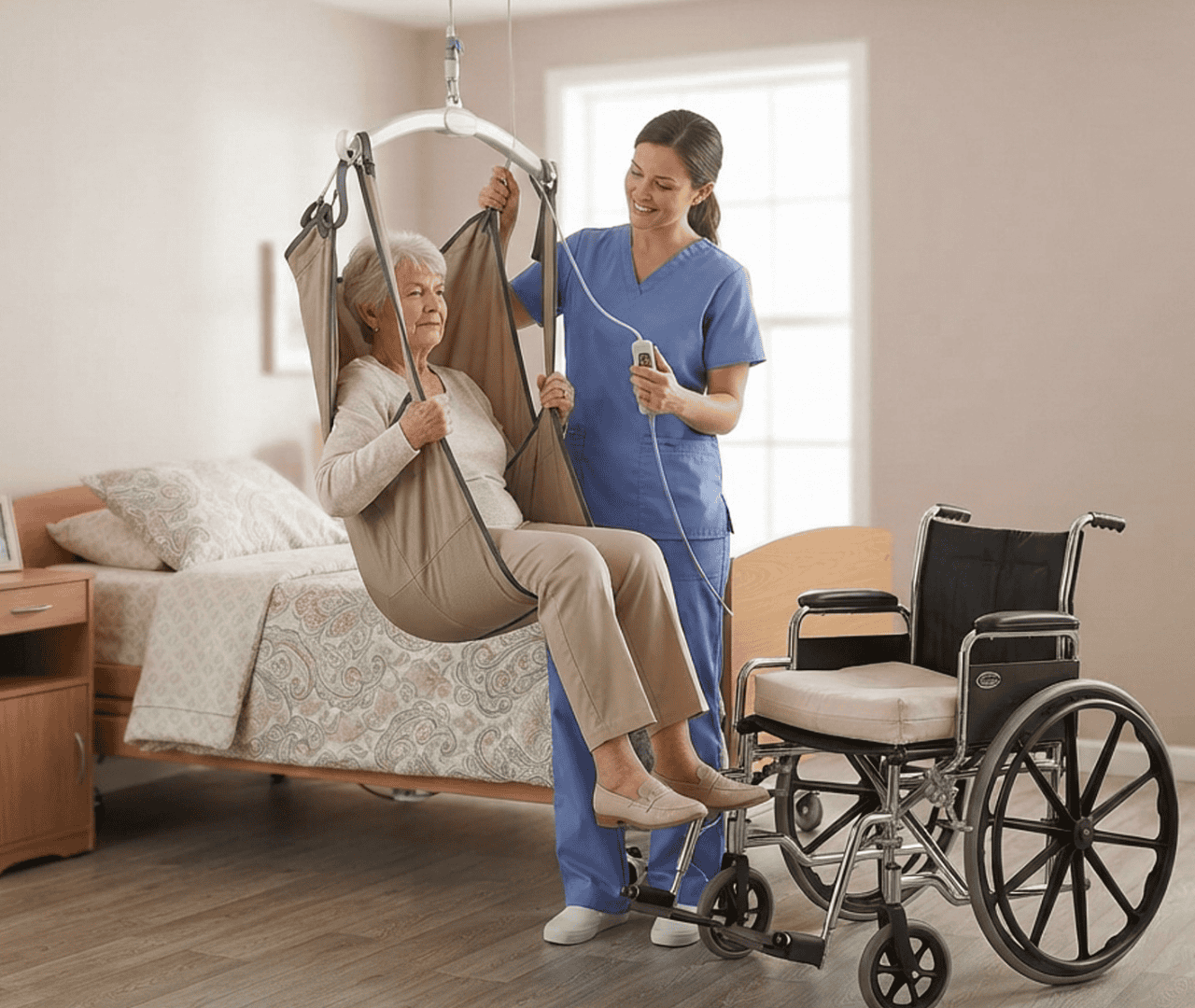
Ceiling lifts can make daily transfers easier for some older adults and people with limited mobility by providing powered assistance when moving between beds, wheelchairs, chairs, and other appropriate locations. These systems may reduce the physical demands of certain transfers on home care aides while improving comfort and support for the person receiving care. During Home Care Aide Week in November, families can recognize the importance of proper transfer equipment, caregiver training, and accessible home environments in supporting quality care.
What Is a Ceiling Lift?
A ceiling lift is a powered mobility device that moves along an overhead track installed in a home or care setting.
The system typically uses a motorized lifting unit and an appropriately selected sling to support a person during a transfer.
Depending on the equipment and track configuration, ceiling lifts may assist with movement between:
- Beds and wheelchairs
- Wheelchairs and suitable chairs
- Beds and appropriate bathing equipment
- Wheelchairs and toilets
- Other locations approved for the equipment
Ceiling lifts are different from stairlifts and porch lifts because they are designed primarily to assist with transfers rather than transport someone between floors.
Why Are Daily Transfers Challenging for Home Care Aides?
Helping someone move from one position or location to another can require considerable physical effort.
Some older adults have limited strength, balance, coordination, or ability to bear weight.
Caregivers may need to assist with several transfers throughout the day, including getting out of bed, using the bathroom, bathing, and returning to bed.
Without appropriate equipment and training, these activities can create physical strain for both the caregiver and the person receiving assistance.
A ceiling lift may reduce the need for certain manual lifting activities when it is suitable for the individual and used correctly.
How Can Ceiling Lifts Reduce Caregiver Strain?
Manual transfers can involve bending, reaching, supporting body weight, and working in awkward positions.
Repeated physical demands may contribute to caregiver fatigue or injury.
A properly selected ceiling lift uses powered assistance to handle much of the lifting involved in an approved transfer.
This may allow trained caregivers to focus more on positioning, communication, and guiding the transfer rather than physically lifting the person.
However, ceiling lifts do not eliminate every physical demand or risk.
Caregivers must still follow approved transfer procedures and understand when additional assistance is required.
Can Ceiling Lifts Improve Comfort for Older Adults?
Transfers can be uncomfortable or stressful for someone experiencing weakness, pain, stiffness, or limited mobility.
A properly fitted sling and appropriately operated ceiling lift may provide support during movement.
For some individuals, powered transfers may feel more controlled than certain manual methods.
However, comfort depends on the person’s condition, positioning, sling selection, and equipment operation.
A healthcare professional or qualified mobility specialist should help determine whether a ceiling lift is appropriate.
The individual’s preferences and ability to communicate discomfort should also be considered.
When Might a Ceiling Lift Be Needed at Home?
A ceiling lift may be considered when an individual requires substantial assistance with transfers.
Examples include situations involving:
- Significant mobility limitations
- Difficulty standing or bearing weight
- Reduced strength
- Certain neurological conditions
- Long-term physical disabilities
- Recovery needs requiring extensive transfer assistance
- Caregiver difficulty performing approved transfers
Not everyone with mobility limitations needs a ceiling lift.
Some individuals may be better served by other equipment or transfer techniques.
A professional assessment can help determine the most appropriate approach.
What Types of Ceiling Lift Systems Are Available?
Ceiling lift systems vary in design.
Some use a fixed track connecting specific transfer locations, while others use track configurations that allow movement across a larger area.
Certain systems are designed for use in one room, while others may connect multiple approved areas.
The correct arrangement depends on the home’s layout, the individual’s transfer needs, and structural considerations.
Families should not assume that any ceiling lift can be installed in any room.
Professional evaluation is necessary to determine whether the structure can support the proposed system.
Why Is Proper Sling Selection Important?
The sling is a critical part of a ceiling lift system.
Slings come in different designs and sizes to accommodate various transfer needs.
The appropriate sling depends on factors such as:
- Body size and weight
- Physical abilities
- Head and trunk support needs
- Transfer destination
- Positioning requirements
- Lift compatibility
- Manufacturer instructions
An unsuitable sling may create serious risks.
Families and caregivers should use only approved, compatible equipment and follow professional guidance for sling selection and positioning.
How Can Ceiling Lifts Support Bathroom Transfers?
Bathroom activities may require frequent transfers between wheelchairs, toilets, bathing equipment, and other surfaces.
For someone with substantial mobility limitations, these transfers can be challenging.
A ceiling lift may assist with certain bathroom transfers when the equipment, room layout, and care plan support its use.
However, bathrooms may require special track configurations and consideration of moisture, electrical requirements, and available space.
An occupational therapist and qualified installer can help evaluate suitable arrangements.
What Training Do Home Care Aides Need?
A ceiling lift should never be treated as equipment that anyone can operate without instruction.
Home care aides who use these systems need appropriate training based on the equipment, care plan, agency policies, and applicable requirements.
Training may include:
- Inspecting the lift and sling
- Confirming weight limits
- Selecting approved attachments
- Positioning the sling correctly
- Operating the controls
- Communicating during transfers
- Following emergency procedures
- Recognizing when additional assistance is necessary
Caregivers should not perform transfers beyond their training or the approved care plan.
Can Ceiling Lifts Help Older Adults Remain at Home?
For some people with significant mobility limitations, the ability to complete necessary transfers is an important part of remaining at home.
A ceiling lift may make certain daily care routines more manageable when properly selected and operated.
It may also reduce some of the physical demands placed on family caregivers and professional home care aides.
However, successful aging in place often requires additional planning.
Accessible bathrooms, appropriate beds, wheelchairs, adequate space, caregiver availability, and medical support may also be necessary.
Why Is Home Care Aide Week a Good Time to Review Transfer Needs?
Home Care Aide Week, recognized during November, highlights the valuable assistance home care aides provide to older adults and people with disabilities.
It also encourages families and care organizations to consider whether caregivers have the equipment, training, and support needed for daily responsibilities.
If transfers have become more difficult, families should not wait until someone is injured before seeking guidance.
A physical therapist, occupational therapist, or other qualified healthcare professional can assess transfer needs and recommend appropriate solutions.
How Can Ceiling Lifts Support Better Daily Care?
Ceiling lifts may offer meaningful benefits when someone needs substantial assistance moving between everyday locations.
By providing powered lifting support, they may reduce certain manual lifting demands, improve transfer consistency, and help trained caregivers provide assistance more comfortably.
Home Care Aide Week is an opportunity to recognize that quality care depends not only on compassionate caregivers but also on appropriate equipment, training, and planning.
Families considering a ceiling lift should seek professional assessments, confirm structural and equipment requirements, and make sure everyone involved understands approved transfer procedures.
When matched to individual needs, ceiling lifts can become a useful part of an accessible home environment that supports daily care, caregiver well-being, and the dignity of the person receiving assistance.
Legal Disclaimer: This post is strictly for educational use and should not be construed as professional advice (medical, legal, financial, or otherwise).