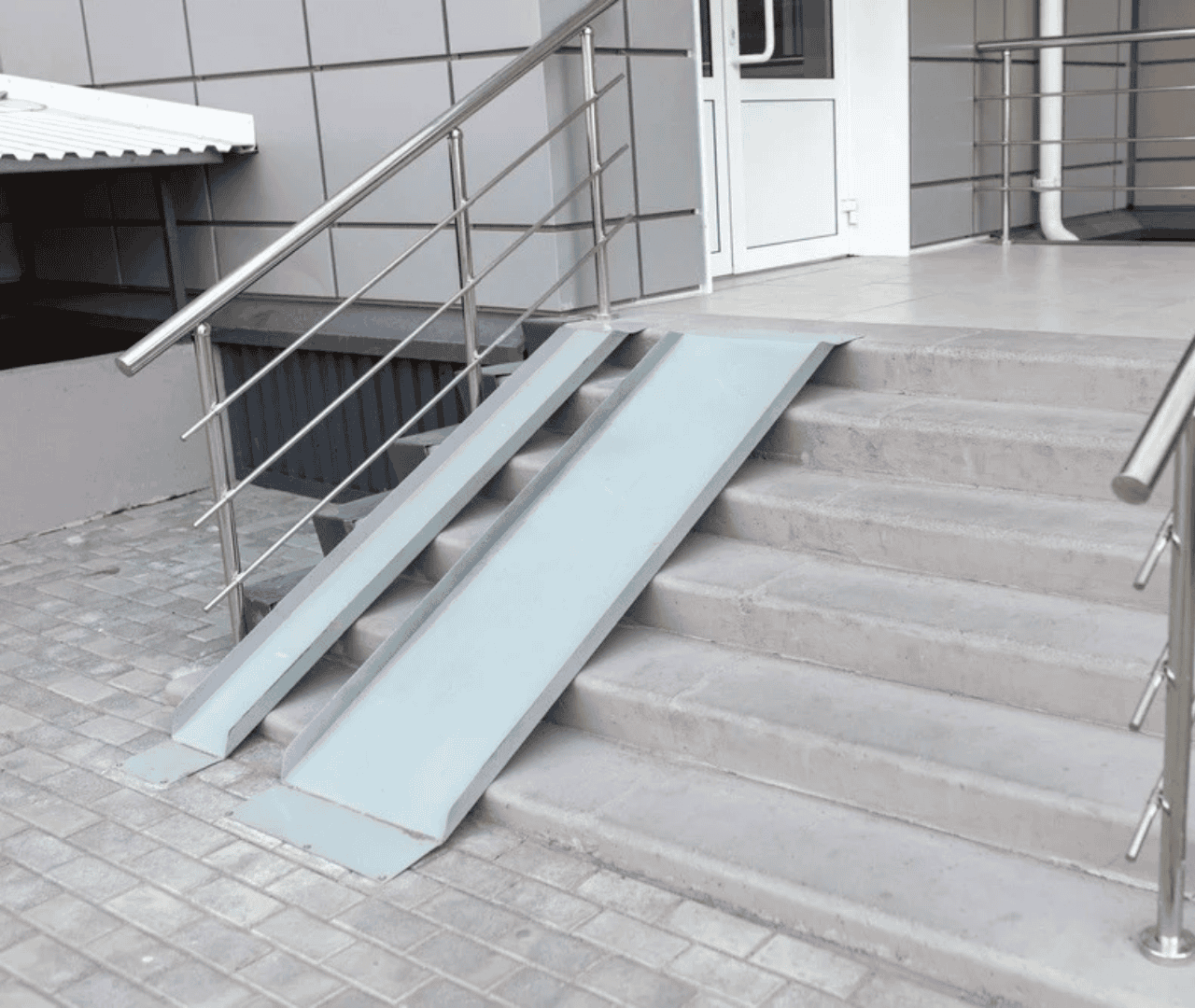
A residential porch lift can make entering and leaving home safer and more manageable for some older adults and people with mobility limitations, particularly when stairs have become difficult or when someone uses a wheelchair. Also called a vertical platform lift, this equipment provides a powered platform that moves between different elevations. During National Home Health Care Month in November, families can consider whether a porch lift or another accessibility improvement could help support recovery, everyday mobility, and greater independence at home.
What Is a Residential Porch Lift?
A residential porch lift is a powered accessibility device designed to transport an appropriate user, often with a wheelchair or other compatible mobility equipment, between different heights.
Unlike a stairlift, which generally uses a seat that travels along a staircase, a porch lift moves vertically on a platform.
These lifts are commonly considered for entrances with several steps, raised porches, or other changes in elevation.
Depending on the model and installation, a porch lift may provide access between ground level and an elevated entrance without requiring the user to climb stairs.
When Might Someone Need a Porch Lift?
A porch lift may be worth considering when an individual has ongoing difficulty entering or leaving home because of stairs.
Common situations include:
- Using a wheelchair for everyday mobility
- Having difficulty climbing entrance steps
- Experiencing mobility limitations after hospitalization
- Needing assistance with outdoor access
- Having a home entrance that cannot accommodate a suitable ramp
- Experiencing progressive mobility changes
- Requiring more accessible entry for medical appointments
The decision should depend on the person’s actual mobility needs and the home’s layout.
A healthcare professional or qualified accessibility specialist can help determine whether a porch lift is appropriate.
How Can a Porch Lift Support Recovery at Home?
Some older adults receive home health services after surgery, illness, injury, or hospitalization.
Skilled home health care may include nursing, physical therapy, occupational therapy, or other medically necessary services, depending on the individual’s circumstances.
During recovery, leaving home for medical appointments or other necessary activities may be difficult when entrance stairs create an obstacle.
For an appropriate user, a porch lift may provide a more accessible route between the home and ground level.
However, the lift does not replace rehabilitation, medical treatment, or professional recommendations about mobility and activity.
Why Is National Home Health Care Month a Good Time to Review Entrances?
National Home Health Care Month in November recognizes the importance of care delivered in people’s homes.
It also offers an opportunity for families to consider whether the home environment supports changing health and mobility needs.
An entrance that worked well for years may become difficult after an illness or change in physical ability.
Families can evaluate whether the older adult can comfortably reach the front door, navigate steps, use mobility equipment, and leave the home when necessary.
Identifying accessibility concerns early may provide more time to consider appropriate solutions.
How Does a Porch Lift Compare With a Ramp?
Both ramps and porch lifts may improve access, but they work differently.
A ramp provides a sloped route between elevations.
A porch lift uses a powered platform to move vertically.
Ramps require sufficient space for an appropriate slope, landings, and other design features. When an entrance is significantly elevated, a properly designed ramp may require considerable space.
A porch lift may be considered when the available space makes a suitable ramp impractical.
However, porch lifts require electrical power, regular maintenance, and consideration of equipment operation and emergency procedures.
A qualified accessibility professional can explain the advantages and limitations of each option for a particular property.
What Should Families Consider Before Installation?
A residential porch lift should be selected based on both the user’s needs and the physical characteristics of the home.
Important considerations include:
- Height between landing levels
- Available installation space
- Weight capacity
- Wheelchair or mobility device dimensions
- Platform size
- Entrance and doorway clearance
- Weather exposure
- Electrical requirements
- Applicable building codes and permits
- Maintenance and service availability
Families should also consider whether the person can operate the lift appropriately or requires assistance.
Professional assessment is important before purchasing equipment.
Can a Porch Lift Reduce Physical Demands on Caregivers?
Family caregivers may sometimes feel pressured to help an older adult climb steps or maneuver a wheelchair over an inaccessible entrance.
These situations can place physical demands on both the caregiver and the person receiving assistance.
A properly selected porch lift may reduce the need for certain physically demanding activities involving entrance steps.
However, caregivers may still need training in equipment operation, wheelchair positioning, and appropriate assistance.
Caregivers should never attempt to carry someone in a wheelchair up or down stairs without an appropriate professional plan and equipment.
What Safety Features Should Families Look For?
Residential porch lifts may include features such as platform gates, barriers, emergency stop controls, obstruction sensors, and other protective systems.
The exact features depend on the model and applicable requirements.
Families should ask an accessibility professional about:
- Appropriate platform protection
- Safe entry and exit
- Emergency stopping procedures
- Operation during power outages
- Weather protection
- Routine inspections
- Maintenance requirements
No accessibility device can guarantee complete safety.
Proper installation, user training, and maintenance are important parts of responsible equipment ownership.
How Can Weather Affect Porch Lift Use?
Outdoor porch lifts may be exposed to rain, snow, ice, moisture, and changing temperatures.
In many regions, November marks the beginning of colder or wetter weather.
Families should select equipment intended for the installation environment and follow the manufacturer’s recommendations for outdoor use.
Walkways and landings around the lift should also be kept accessible and appropriately maintained.
Weather-related maintenance needs vary by location and equipment model.
Can a Porch Lift Help Someone Age in Place?
Aging in place means continuing to live in familiar surroundings as needs change.
For some older adults, entrance stairs become one of the biggest barriers to remaining active outside the home.
A porch lift may make it easier to leave for medical appointments, family gatherings, shopping, or other activities when the individual can use the equipment appropriately.
Improved access may also support participation in community life.
However, a porch lift is only one part of an aging-in-place plan.
Bathroom accessibility, indoor mobility, lighting, personal care needs, and available caregiver support may also require attention.
When Should Families Seek Professional Advice?
Families should seek guidance before choosing a porch lift, especially when an older adult’s mobility has recently changed.
An occupational therapist, physical therapist, or appropriate healthcare professional may help evaluate the individual’s mobility and transfer abilities.
A qualified accessibility specialist can assess the property and recommend suitable equipment.
These professionals may help determine whether a porch lift, ramp, stairlift, or another solution better meets the person’s needs.
How Can National Home Health Care Month Encourage Better Accessibility Planning?
National Home Health Care Month reminds families that successful care at home often depends on more than medical services alone.
The physical environment can influence how easily someone moves through everyday routines and accesses necessary appointments and activities.
For individuals who have difficulty navigating entrance stairs, a residential porch lift may provide a practical accessibility option.
By reviewing mobility needs, obtaining professional assessments, selecting appropriate equipment, and maintaining accessible entrances, families may create a home environment that better supports recovery, independence, and everyday participation.
Planning ahead can also help families avoid making rushed accessibility decisions during a health or mobility crisis.
Legal Disclaimer: This post is strictly for educational use and should not be construed as professional advice (medical, legal, financial, or otherwise).