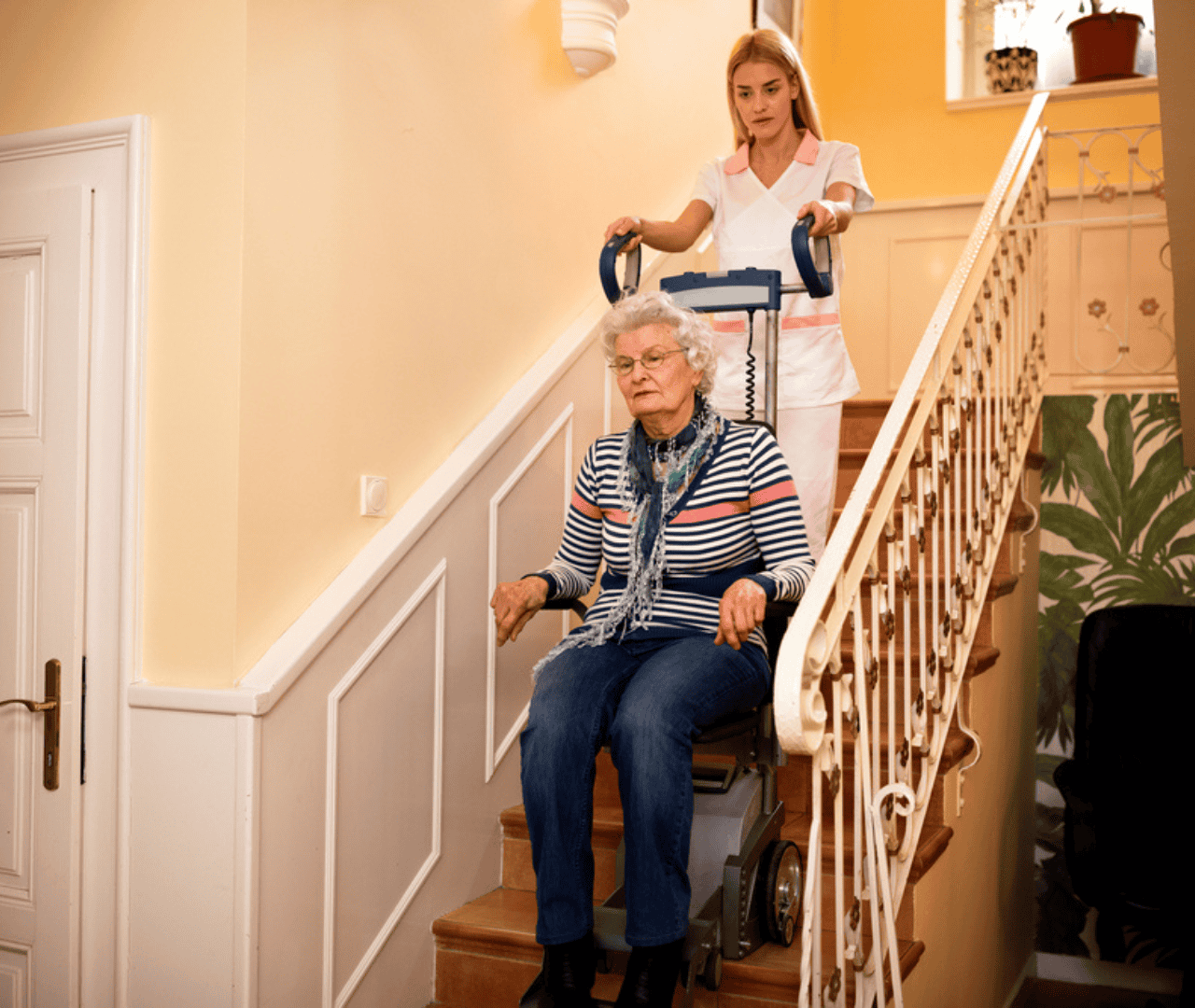
International Day of Older Persons can promote aging in place by encouraging families to consider practical changes that make a home easier to use as mobility needs change. Observed each year on October 1, the day recognizes older adults and the importance of dignity, participation, and independence. For some people, a stairlift can remove a major barrier in a multilevel home and make it easier to continue using bedrooms, bathrooms, and living areas without climbing every step.
What Does Aging in Place Mean?
Aging in place generally means continuing to live in a familiar home or community as a person gets older, while receiving appropriate services and support as needed.
For many older adults, the home represents much more than a place to live. It may contain years of memories and provide easy access to familiar neighbors, friends, shops, religious communities, and healthcare providers.
However, a home that worked well at age 50 may present challenges later in life.
Common concerns can include:
- Stairs between floors
- Steps at entrances
- Narrow walkways
- Poor lighting
- Slippery bathroom surfaces
- Difficult-to-reach storage
- Changes in balance or strength
- Limited mobility
International Day of Older Persons is a useful time to consider whether the home continues to support the older adult’s needs.
Why Can Stairs Become a Barrier to Aging in Place?
Stairs require strength, balance, coordination, and joint movement.
An older adult may begin having difficulty with stairs because of changes in mobility, joint discomfort, weakness, or another health concern. Carrying laundry, groceries, or other objects on stairs may create additional challenges.
When stairs become difficult, people may start avoiding entire areas of their homes.
For example, someone might sleep downstairs because the bedroom is on the second floor. Another person might avoid a basement laundry area because using the stairs has become too difficult.
These changes can affect how comfortably a person can continue living at home.
How Can a Stairlift Help?
A stairlift is a powered chair that travels along a rail installed beside a staircase. The user sits on the chair while traveling between levels.
For an appropriate user, this can reduce the need to physically climb each stair.
A stairlift may help provide easier access to:
- Upstairs bedrooms
- Bathrooms
- Living spaces
- Basements
- Laundry areas
- Other frequently used rooms
By making more of the home accessible, a stairlift may support an older adult’s ability to continue established routines.
Can Stairlifts Support Greater Independence?
For some older adults, yes.
Independence does not necessarily mean doing everything without assistance. It can mean having appropriate tools and support that allow a person to participate in everyday life.
If an older adult must depend on someone every time they need to reach another floor, a suitable stairlift may provide greater freedom to move between levels.
This may help a person maintain routines such as getting ready in an upstairs bedroom, using a preferred bathroom, or spending time in different areas of the house.
Individual abilities vary, so professional guidance may be appropriate when determining whether someone can safely operate a stairlift.
What Should Families Consider Before Choosing a Stairlift?
Not every staircase or stairlift is the same.
Before purchasing equipment, families should consider the user’s abilities, the home’s layout, and possible future needs.
Useful questions include:
- Is the staircase straight or curved?
- Can the person sit and transfer safely?
- Can the controls be operated comfortably?
- Is there enough space at the top and bottom?
- What weight capacity is required?
- What safety features are included?
- What happens during a power outage?
- Will other people still be able to use the stairs?
- What maintenance is required?
- Is professional installation provided?
A qualified accessibility or mobility professional can evaluate the staircase and recommend equipment designed for the specific situation.
What Other Home Changes Can Support Aging in Place?
A stairlift may address one important barrier, but families should consider the entire home.
Other accessibility improvements might include:
- Better lighting
- Additional handrails
- Appropriate grab bars
- Clearer walking paths
- Accessible entrances
- Ramps where appropriate
- Bathroom modifications
- Easier-to-reach storage
- Changes to frequently used furniture
Some improvements are relatively simple. Others require professional assessment and installation.
An occupational therapist may also help identify challenges with everyday activities and suggest ways the home environment could better support the individual.
Why Is October a Good Time to Review the Home?
International Day of Older Persons occurs at the beginning of October, making it a useful seasonal reminder to prepare for fall and winter.
Shorter daylight hours may make stairways, entrances, and outdoor paths harder to see. Rain, fallen leaves, snow, or ice can create additional concerns depending on the climate.
Families can use October to inspect:
- Interior staircases
- Exterior steps
- Handrails
- Lighting
- Walkways
- Entrances
- Existing accessibility equipment
This is also a good opportunity to ask whether an older adult’s mobility has changed during the past year.
Can a Stairlift Replace Medical or Mobility Care?
No. A stairlift is an accessibility solution, not medical treatment.
New or worsening difficulty with walking, balance, strength, or joint movement should be discussed with an appropriate healthcare professional.
Physical therapists, occupational therapists, physicians, and other qualified professionals may provide guidance based on the individual’s needs.
The goal should be to combine appropriate professional care with a home environment that supports everyday activities.
How Can International Day of Older Persons Encourage Long-Term Planning?
International Day of Older Persons can remind families that planning for aging does not always have to begin after a crisis.
Reviewing accessibility earlier may provide more time to compare options, discuss preferences, and make thoughtful decisions.
For someone who wants to remain in a multilevel home, stairs may eventually become an important part of that discussion. A stairlift may provide a practical solution when it is properly selected for the person and the home.
Aging in place is ultimately about more than remaining at the same address. It is about creating an environment that continues to support daily routines, personal choices, comfort, and independence.
By using International Day of Older Persons as a yearly reminder to review home accessibility, older adults and their families can identify barriers and consider practical changes that may help make aging in place possible for longer.
Legal Disclaimer: This post is strictly for educational use and should not be construed as professional advice (medical, legal, financial, or otherwise).