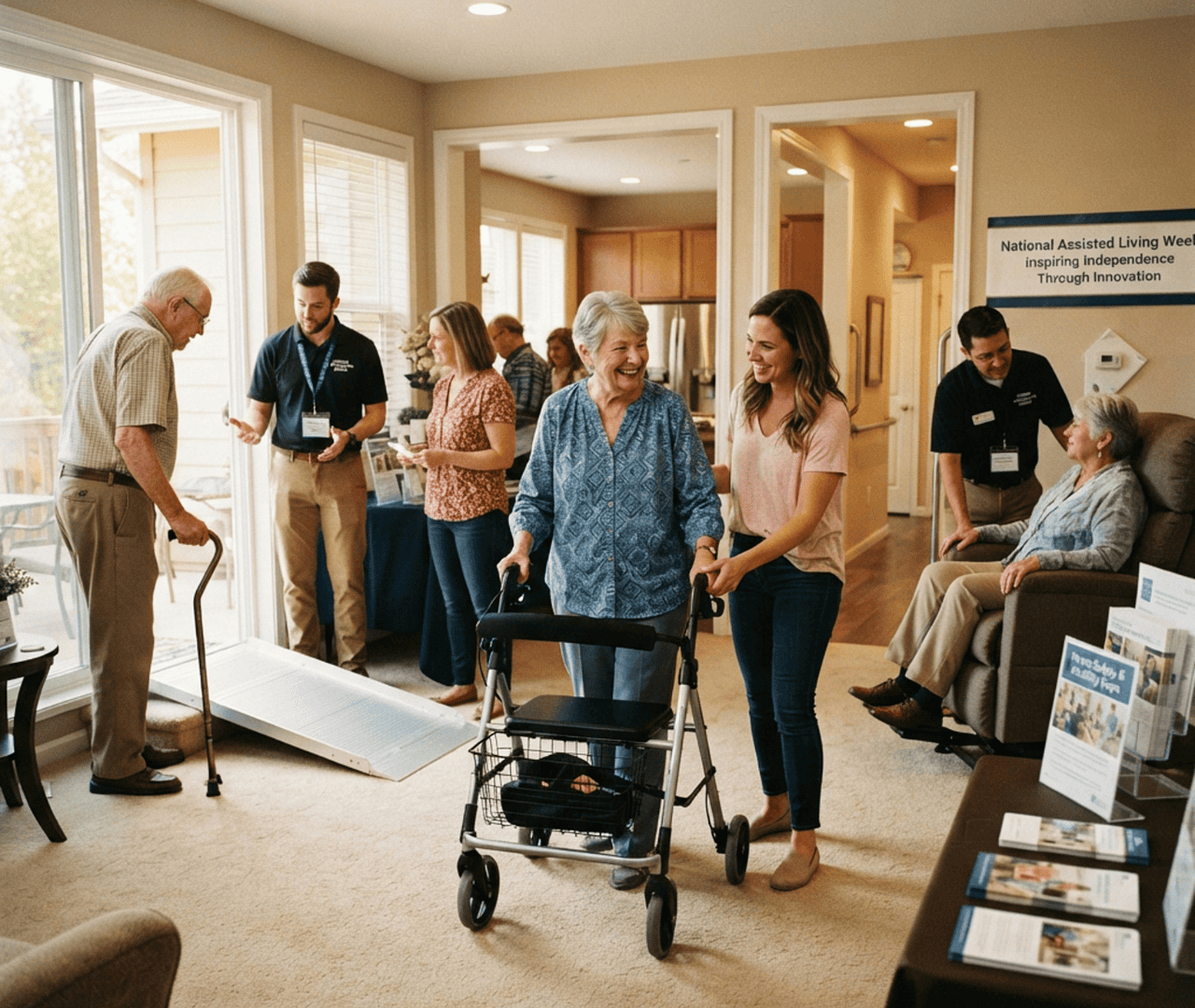
National Assisted Living Week can inspire families to explore better mobility solutions at home by encouraging them to create spaces that support comfort, accessibility, and independence. While assisted living communities are designed around the needs of older adults, families can also apply similar ideas at home by improving entrances, stairways, bathrooms, and everyday pathways.
For many families, the goal is not simply to make a home accessible today. It is to create a flexible environment that can continue supporting an older adult as their needs change.
Why Should Families Think About Mobility Early?
Mobility needs can change gradually. A staircase that feels manageable today may become difficult later, while a front entrance with several steps can become a challenge for someone using a wheelchair or walker.
Planning ahead gives families time to:
- Identify difficult areas
- Compare accessibility options
- Improve everyday convenience
- Prepare for changing needs
- Support greater independence
- Create a more comfortable home
Early planning can also reduce the pressure of making quick decisions later.
What Can Families Learn From Assisted Living Environments?
Assisted living communities often focus on accessibility, convenient layouts, clear pathways, and easy access to common areas.
Families can bring some of these principles into the home by considering:
- Open walkways
- Accessible entrances
- Safer stairways
- Well-lit rooms
- Comfortable bathrooms
- Easy-to-reach storage
- Flexible living spaces
The goal is to make important areas of the home easier to use.
Could a Wheelchair Ramp Improve Home Access?
Steps at an entrance can create challenges for wheelchair users and people using walkers or other mobility equipment.
A properly designed wheelchair ramp can provide an easier route into and out of the home. It can also make visits more convenient for family members who use mobility equipment.
When planning a ramp, families should consider the available space, entrance design, slope, surface, and applicable safety requirements.
How Can Stairlifts Help With Multi-Level Homes?
Stairs can be one of the biggest mobility challenges in a multi-level home.
A stairlift may provide an alternative way to move between floors for an individual who has difficulty using stairs.
Families considering this option should evaluate:
- Staircase configuration
- Available space
- User comfort
- Installation requirements
- Long-term accessibility needs
A professional assessment can help determine whether this type of solution is suitable.
Can Ceiling Lifts Support Easier Transfers?
Some older adults require assistance when moving between locations such as a bed and chair. Ceiling lift systems may be considered when transfer support is part of a broader home accessibility plan.
These systems can be designed around certain areas of the home and may help organize caregiving tasks.
Because equipment needs vary, families should obtain appropriate professional guidance before selecting or installing a mobility system.
Make Bathrooms More Accessible
Bathrooms should be included in every home mobility review.
Families can consider improvements such as:
- Grab bars
- Accessible shower features
- Better lighting
- Non-slip surfaces
- Appropriate seating
- Easy-to-use fixtures
The right improvements depend on the individual’s abilities and the bathroom’s existing design.
Keep Pathways Clear
Sometimes the simplest improvements can make a noticeable difference.
Families can:
- Remove unnecessary furniture
- Secure loose rugs
- Organize electrical cords
- Keep hallways clear
- Improve lighting
- Move frequently used items within easy reach
Clear pathways can make it easier for seniors and caregivers to move throughout the home.
Don’t Forget Outdoor Areas
Mobility planning should include the areas surrounding the home.
Check:
- Driveways
- Walkways
- Front steps
- Patios
- Garden paths
- Outdoor lighting
Keeping these areas clear and well maintained can make it easier for seniors to enjoy outdoor activities and enter or leave the home.
Let Seniors Help Choose the Solution
Accessibility improvements should be based on the actual needs of the person using them.
Families can ask:
- Which areas are most difficult?
- What activities have become harder?
- Which rooms are used most often?
- What changes would make the home easier to navigate?
- What solutions feel comfortable?
Including seniors in the conversation helps ensure that improvements are practical and meaningful.
Think About Caregiver Convenience
Mobility solutions can also make daily caregiving more manageable.
An accessible home may provide:
- Easier movement between rooms
- Better access to essential areas
- More organized caregiving routines
- Improved equipment access
- Greater flexibility for family caregivers
A home should support both the older adult and the people assisting them.
Prepare for the Future
National Assisted Living Week can serve as a reminder to think beyond immediate needs.
Families can create a simple accessibility plan by:
- Identifying current barriers.
- Prioritizing the most important areas.
- Researching suitable solutions.
- Considering future needs.
- Reviewing improvements regularly.
This approach can help families make thoughtful decisions over time.
Final Thoughts
National Assisted Living Week is a good opportunity to think about how the principles of accessible senior living can be applied at home. Wheelchair ramps, stairlifts, ceiling lifts, bathroom improvements, better lighting, and clear pathways can help create a home that is easier to navigate. By planning early and involving older adults in mobility decisions, families can create a more flexible environment that supports comfort, accessibility, and independence through different stages of life.
Legal Disclaimer: This post is strictly for educational use and should not be construed as professional advice (medical, legal, financial, or otherwise).