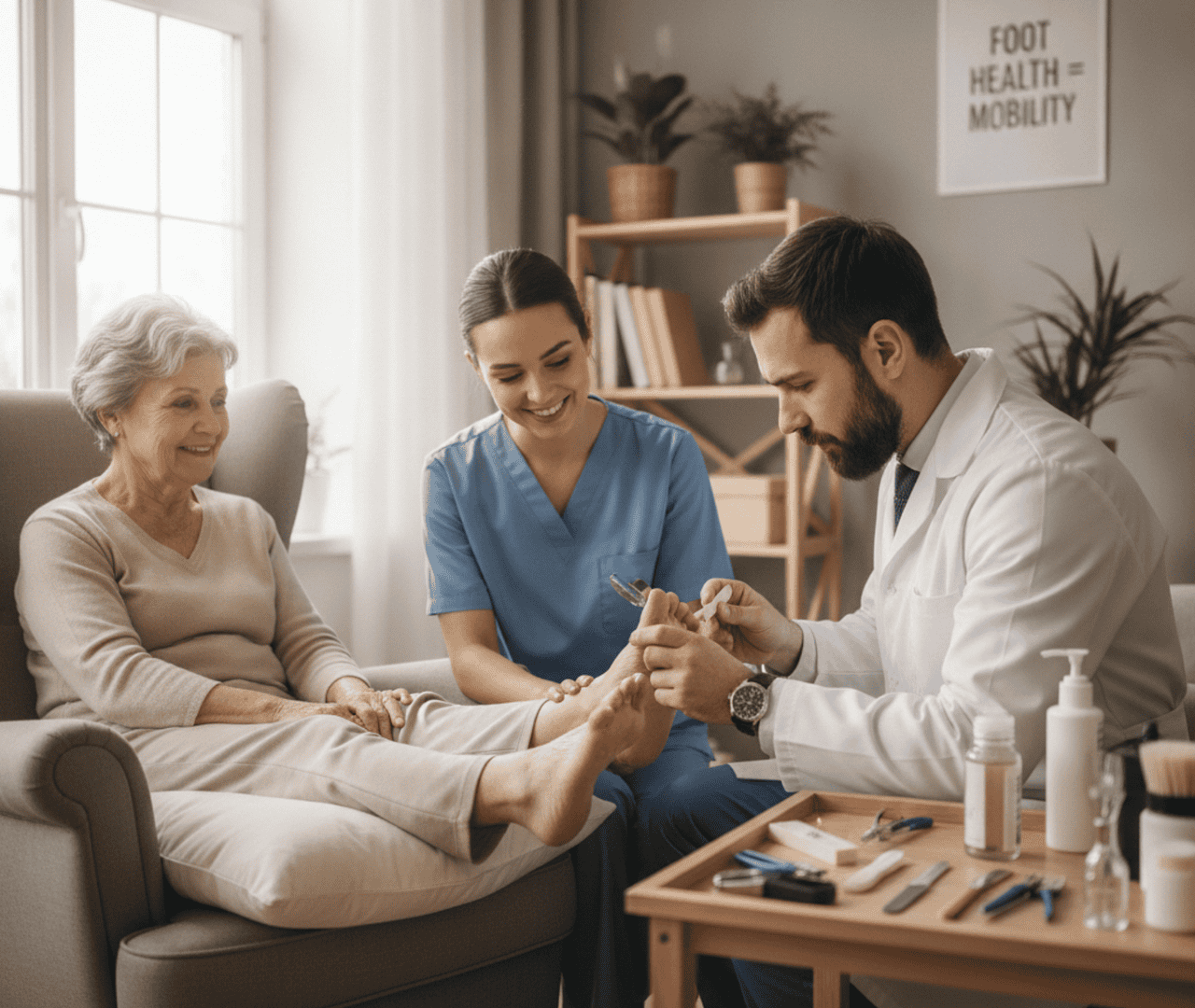
Caregivers should focus on foot health because healthy feet help older adults stay mobile, reduce the risk of falls, improve comfort, and support overall well-being. Regular foot care can help seniors remain active and independent while preventing small problems from becoming serious health concerns.
As people age, foot problems become more common. Dry skin, thick toenails, poor circulation, and conditions like arthritis or diabetes can affect balance and walking. Caregivers who pay attention to foot health can help seniors move safely and enjoy a better quality of life.
Why Foot Health Is Important
The feet support the entire body. When foot pain or discomfort develops, it can affect posture, balance, and confidence while walking.
Good foot care can help:
- Reduce the risk of falls
- Improve balance and stability
- Prevent infections
- Relieve pain and discomfort
- Support daily movement
- Encourage greater independence
Healthy feet make everyday activities like walking, shopping, or spending time outdoors much easier.
Common Foot Problems in Older Adults
Many seniors experience foot conditions that need regular attention.
These may include:
- Dry or cracked skin
- Thick or brittle toenails
- Corns and calluses
- Bunions
- Arthritis
- Swollen feet and ankles
- Poor circulation
- Diabetic foot complications
Early care can prevent these issues from becoming more serious.
Daily Foot Care Tips
Simple daily habits can make a big difference.
Caregivers can help by:
- Washing feet with warm water and mild soap
- Drying carefully, especially between the toes
- Applying moisturizer to prevent dry skin
- Checking for cuts, redness, or swelling
- Keeping toenails trimmed safely
- Encouraging clean socks every day
Regular foot checks are especially important for seniors with diabetes or reduced sensation in their feet.
Choose Comfortable Footwear
Proper shoes provide support and reduce the chance of injury.
Look for shoes that offer:
- A comfortable fit
- Non-slip soles
- Good arch support
- A wide toe box
- Low heels
- Breathable materials
Shoes that are too tight or too loose can increase the risk of falls and foot pain.
Encourage Safe Physical Activity
Regular movement helps keep feet and legs strong.
Suitable activities may include:
- Walking
- Gentle stretching
- Chair exercises
- Balance exercises
- Light strength training
Always choose activities that match the senior’s health needs and physical abilities.
Watch for Warning Signs
Caregivers should contact a healthcare professional if they notice:
- Persistent foot pain
- Open sores
- Swelling that does not improve
- Skin discoloration
- Signs of infection
- Difficulty walking
- Sudden changes in foot shape
Prompt treatment can prevent more serious complications.
Support Good Nutrition
Healthy eating also supports foot health.
A balanced diet can help:
- Improve circulation
- Maintain healthy bones
- Support muscle strength
- Promote skin healing
- Reduce inflammation
Encourage seniors to drink enough water throughout the day, especially during the summer months when dehydration is more common.
Connect Foot Care to the Season
Summer is a good time to pay extra attention to foot health. Warmer weather often means more walking, outdoor activities, and lightweight footwear. Caregivers should remind seniors to wear supportive shoes outdoors, protect their feet from hot surfaces, and stay hydrated to support healthy circulation.
During colder months, warm socks and properly fitted shoes can help keep feet comfortable while reducing the risk of slips on wet or icy surfaces.
Recognize Health Observances
Foot care fits well with several health awareness campaigns, including Healthy Aging Month, Falls Prevention Awareness Week, and American Diabetes Month. These observances encourage older adults and caregivers to focus on preventive care that supports mobility, independence, and overall health.
They also provide a great opportunity for senior care agencies to educate families through blogs, newsletters, and community events.
Encourage Regular Foot Exams
Routine foot exams are an important part of preventive care.
A healthcare provider or podiatrist can:
- Identify early foot problems
- Treat nail conditions
- Recommend proper footwear
- Monitor circulation
- Help prevent diabetic foot complications
Regular checkups can help seniors stay active and avoid unnecessary discomfort.
Final Thoughts
Caregivers play an important role in protecting foot health and supporting better mobility. Simple daily care, comfortable footwear, regular activity, healthy nutrition, and routine foot checks can reduce pain, prevent falls, and help older adults remain active. By making foot care part of everyday routines and connecting it to seasonal safety and healthy aging awareness, caregivers can support greater comfort, confidence, and independence throughout the year.


