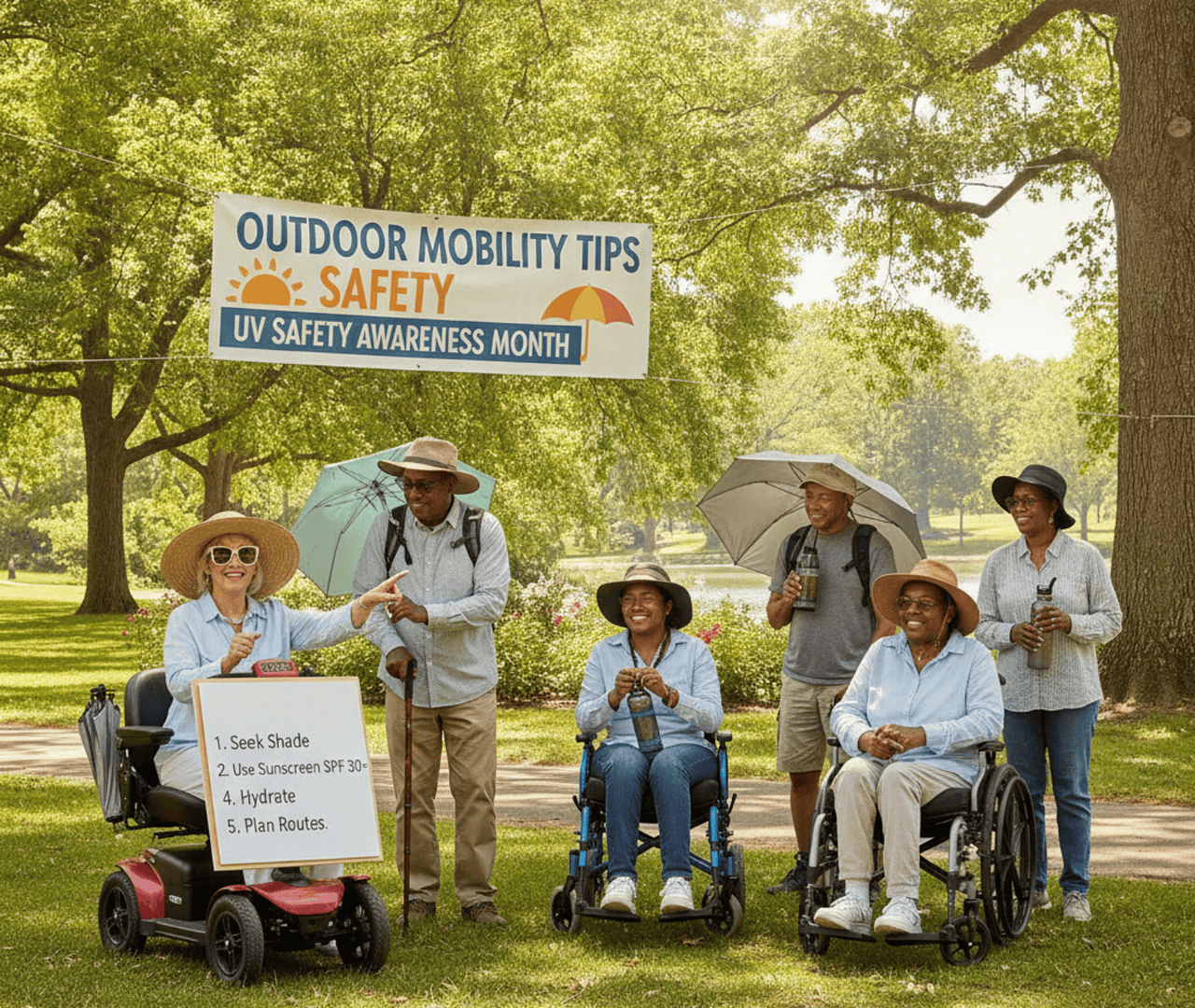
The best outdoor mobility tips during UV Safety Awareness Month include planning activities during cooler hours, wearing sun-protective clothing, staying hydrated, using sunscreen, and choosing mobility aids that provide comfort and safety outdoors. These simple steps can help older adults and individuals with mobility challenges stay active while reducing exposure to harmful ultraviolet (UV) rays.
UV Safety Awareness Month is observed each July and serves as an important reminder to protect skin and overall health during periods of increased sun exposure. For people who enjoy outdoor walks, community events, exercise, or recreational activities, taking precautions can help make outdoor mobility safer and more enjoyable throughout the summer.
Why UV Safety Matters for Outdoor Mobility
Spending time outdoors offers many health benefits, including physical activity, fresh air, and social engagement. However, prolonged exposure to UV rays can increase the risk of sunburn, heat-related illness, skin damage, and other health concerns.
People who use mobility devices or have limited mobility may spend extended periods outdoors during appointments, community activities, or exercise routines. Taking preventive measures can help reduce risks while supporting an active lifestyle.
Benefits of safe outdoor activity include:
- Improved physical health
- Better mood and mental wellness
- Increased independence
- Enhanced social interaction
- Greater overall quality of life
Balancing outdoor activity with UV protection is an important part of summer wellness.
Schedule Activities During Safer Hours
One of the most effective ways to reduce UV exposure is to avoid peak sunlight hours whenever possible.
Generally, UV rays are strongest between:
- 10:00 a.m. and 4:00 p.m.
Consider scheduling outdoor activities during:
- Early morning hours
- Late afternoon or early evening
- Shaded community spaces
Walking, exercising, or attending outdoor events during cooler times of the day can also help reduce the risk of overheating.
For seniors and individuals with health conditions, avoiding extreme heat may improve comfort and endurance during outdoor activities.
Wear Sun-Protective Clothing
Clothing provides an additional layer of protection against harmful UV rays.
Helpful clothing choices include:
- Long-sleeved lightweight shirts
- Long pants made from breathable fabrics
- Wide-brimmed hats
- UV-protective sunglasses
- Clothing designed with UV protection
Light-colored and moisture-wicking fabrics can help keep the body cooler while offering sun protection.
A wide-brimmed hat can help shield the face, ears, and neck from direct sunlight, especially during longer outdoor outings.
Apply Sunscreen Correctly
Sunscreen is one of the most important tools for UV protection.
When spending time outdoors:
- Use broad-spectrum sunscreen
- Choose SPF 30 or higher
- Apply sunscreen before going outside
- Reapply every two hours
- Reapply after sweating heavily
Do not forget commonly missed areas such as:
- Ears
- Neck
- Hands
- Feet
- Scalp if exposed
Caregivers can assist individuals who may have difficulty applying sunscreen independently.
Stay Hydrated Throughout the Day
Summer heat can increase the risk of dehydration, especially for older adults and individuals with certain medical conditions.
Hydration tips include:
- Drinking water before outdoor activities
- Carrying a reusable water bottle
- Taking regular hydration breaks
- Limiting sugary beverages
- Monitoring for signs of dehydration
Possible signs of dehydration include:
- Dizziness
- Dry mouth
- Fatigue
- Headache
- Dark-colored urine
Staying hydrated helps support energy levels, mobility, and overall health during outdoor activities.
Choose Safe and Accessible Walking Routes
Not all outdoor environments provide the same level of safety for individuals with mobility needs.
Before heading outdoors, consider routes that offer:
- Smooth walking surfaces
- Shaded pathways
- Rest areas and benches
- Accessible entrances and exits
- Well-maintained sidewalks
Parks, community walking trails, and accessible recreational spaces often provide comfortable environments for outdoor movement.
Planning routes in advance can help reduce physical strain and improve confidence.
Check Mobility Equipment Before Going Outdoors
Mobility devices play an important role in maintaining independence. Before outdoor activities, it is helpful to inspect equipment to ensure it is functioning properly.
Check:
- Wheelchair tires
- Walker stability
- Scooter battery levels
- Brakes and safety features
- Seat cushions and supports
Hot pavement and direct sunlight can sometimes affect equipment surfaces, making them uncomfortable to touch.
A quick safety inspection can help prevent unexpected issues during outings.
Take Advantage of Shade and Cooling Areas
Shade can significantly reduce UV exposure and improve comfort during outdoor activities.
Look for:
- Covered walkways
- Trees and shaded parks
- Outdoor shelters
- Covered seating areas
- Community cooling centers
Taking breaks in shaded areas helps lower body temperature and reduce sun exposure.
For longer outings, planning rest stops ahead of time can make outdoor activities more enjoyable and sustainable.
Watch for Signs of Heat-Related Illness
Heat-related illnesses can affect anyone, but older adults and people with chronic health conditions may be at greater risk.
Warning signs may include:
- Excessive sweating
- Dizziness
- Weakness
- Nausea
- Rapid heartbeat
- Confusion
If symptoms develop:
- Move to a cooler location
- Drink water if appropriate
- Rest immediately
- Seek medical attention if symptoms worsen
Recognizing these signs early can help prevent serious health complications.
Enjoy Outdoor Activities Safely During Summer
UV Safety Awareness Month is an excellent time to explore outdoor activities while practicing healthy sun protection habits.
Popular summer activities may include:
- Walking with friends
- Visiting local parks
- Gardening
- Outdoor fitness classes
- Community events
- Nature observation
Staying active outdoors can support physical health, emotional well-being, and social engagement when proper precautions are taken.
Families and caregivers can help by encouraging safe habits and assisting with planning when needed.
Why UV Safety Awareness Month Is Important
UV Safety Awareness Month promotes education about protecting skin and overall health during the summer season. It encourages individuals of all ages to make informed decisions about sun exposure and outdoor activities.
For people with mobility challenges, UV safety is an important part of maintaining independence and wellness. Small preventive steps can make outdoor experiences safer and more comfortable throughout the year.
Conclusion
The best outdoor mobility tips during UV Safety Awareness Month include avoiding peak sun hours, wearing protective clothing, using sunscreen, staying hydrated, checking mobility equipment, and choosing accessible outdoor spaces. By following these simple strategies, seniors and individuals with mobility needs can continue enjoying outdoor activities while protecting their health during the summer season. Safe outdoor mobility supports independence, encourages physical activity, and helps people stay connected with their communities.