• Skip to main content
  • Skip to footer
  • Pacific Mobility Center Stairlifts and More - We Keep You Moving!
  • We Keep You Moving!
  • Call Us Today!
  • 760-471-8884
  • 866-786-2966

Pacific Mobility Center

Stairlifts - Lifts - Mobility Products

  • Stairlifts
    • Bruno Elan Stairlift
    • Bruno Elite – Curved Rail Stairlifts
    • Bruno Elite – Straight Rail Stairlift
    • Bruno Outdoor Curved Stairlifts
    • Bruno Outdoor Straight Stairlifts
    • Stairlift Rentals
  • Products
  • Gallery
    • Photo Gallery
    • Video Gallery
  • FAQ
  • About
    • About Us
    • Contact
    • Locations
    • Service Area
    • Testimonials
    • Reviews
    • Newsletter Subscription and Archives
  • Coupons
  • Blog

safety

Aging Gracefully at Home: Enhancing Senior Mobility with Stairlifts

February 27, 2024 By ASHWDM VA

As we age, the desire to maintain independence and continue living comfortably in our homes remains a priority. For many seniors, navigating stairs becomes a challenging aspect of daily life. However, thanks to advancements in assistive technology, aging at home gracefully is not only possible but increasingly convenient. In this article, we will delve into the role of stairlifts in promoting senior mobility, allowing individuals to age with dignity and independence within the familiar confines of their homes.

Understanding the Challenge:

As individuals age, mobility can be significantly affected by various factors such as arthritis, muscle weakness, and joint pain. Stairs, once an inconspicuous part of the home, can transform into formidable barriers, limiting access to different levels and compromising the overall quality of life. The challenge of stairs often triggers safety concerns, leading many seniors to explore solutions that facilitate easy and secure navigation within their homes.

The Stairlift Solution:

Stairlifts have emerged as a transformative solution for seniors facing mobility challenges related to stairs. These devices are designed to transport individuals up and down staircases effortlessly, providing a safe and comfortable means of accessing different levels of the home. The user-friendly design and customizable features make stairlifts a practical addition for those seeking to age in place.

Promoting Independence:

One of the key benefits of installing a stairlift is the preservation of independence. Seniors can maintain autonomy and freedom within their homes without the need for constant assistance. The ability to move between floors without relying on family members or caregivers fosters a sense of self-sufficiency, contributing to a positive and dignified aging experience.

Safety First:

Safety is a paramount concern for seniors, and stairlifts are specifically engineered with this in mind. Equipped with secure harnesses, intuitive controls, and reliable braking systems, stairlifts ensure a smooth and safe journey up and down stairs. This eliminates the risk of falls or injuries associated with navigating stairs independently, providing peace of mind for both seniors and their loved ones.

Customized Comfort:

Modern stairlifts are designed with user comfort in mind. They come with customizable features such as adjustable seating, armrests, and footrests to accommodate individual needs. Additionally, the compact design of these devices ensures minimal disruption to the aesthetics of the home. Seniors can tailor the stairlift to their preferences, creating a personalized and comfortable experience.

Installation and Integration:

Installing a stairlift is a relatively straightforward process, and the devices are designed to seamlessly integrate into various types of staircases. Whether your home has a straight staircase or a curved one, there are stairlift models available to suit different architectural configurations. The installation process is typically quick and minimally invasive, allowing seniors to start enjoying the benefits of increased mobility in their homes promptly.

Financial Considerations:

While the initial cost of a stairlift may raise concerns for some, it’s essential to view it as an investment in long-term independence and safety. Many seniors find that the expense is justified when compared to the potential costs of assisted living or relocating to a single-story residence. Additionally, some insurance plans or government programs may provide assistance or coverage for mobility aids, helping to alleviate the financial burden.

Enhancing Mental Well-being:

The psychological impact of maintaining access to all areas of one’s home should not be underestimated. Stairlifts contribute significantly to the mental well-being of seniors by reducing feelings of isolation and dependence. Knowing that they can move freely throughout their homes fosters a positive mindset, reinforcing the sense of control and agency in their lives.

The Emotional Aspect:

The decision to install a stairlift often involves thoughtful discussions within families. For many seniors, accepting assistance or incorporating mobility aids can be emotionally charged. Open communication and understanding are crucial during this process. Explaining the benefits and emphasizing the positive impact on daily life can help alleviate any apprehensions, fostering a supportive environment for embracing the technology.

Conclusion:

Aging gracefully at home is a shared aspiration for many seniors, and the availability of assistive technologies such as stairlifts plays a pivotal role in turning this dream into a reality. By addressing the challenges associated with stairs, these devices empower seniors to maintain their independence, enhance safety, and navigate their homes with ease. As we continue to explore innovative solutions for aging in place, the role of stairlifts stands out as a beacon of hope, ensuring that seniors can embrace the comforts of home for years to come.

ASHWDM VA
ASHWDM VA

Filed Under: aging, agingdisability Tagged With: agingracefully, mobility, mobility challenged, safety

Technological Innovations in Accessibility

May 1, 2017 By Jeff Conner

A disability is any physical, sensory, or cognitive impairment that makes daily activities more difficult. Many people are born with a disability. Others acquire a disability later in life, from an accident, an illness, or the aging process. Many older individuals are diagnosed with chronic conditions that lead to functional or cognitive disabilities. Pacific Mobility Center specializes in products that give those with disabilities freedom and independence.

Over a billion people globally have some form of disability: 360 million people worldwide have moderate to profound hearing loss; 285 million people are visually impaired (39 million of whom are blind) and 75 million people need a wheelchair (of which, only 5-15 percent actually have access to one).

In recent decades, new and innovative technologies have helped lower the barriers that people with disabilities encounter in their daily lives, helping them with tasks that able-bodied people take more or less for granted, such as speaking, travelling, reading, and writing. These new technologies can be classified as assistive, adaptive, or accessible.

Assistive technology

Assistive technology is technology designed specifically to improve a disabled person’s functional capabilities, and includes a wide range of devices and services, including IT-enabled prosthetics and implants, custom computer interfaces, and accessible communication tools. Adaptive technology provides a mechanism that allows people with disabilities to use technology that would otherwise be inaccessible to them. Text-to-speech technology, for example, helps users with vision impairments to be able to “read” materials that are written. Computer screen readers and screen magnifiers help make computer output accessible for visually impaired users. Accessible technology helps remove barriers and make the world more accessible for people with disabilities. Speech recognition software, for example, has many uses such as dictation or automated telephone systems; however, the technology can also provide independence for quadriplegics by allowing them to control a computer with their voice. Consumer Electronics Shows annually feature these types of products.

While there remains a long way to go before all new technologies are made accessible to people with disabilities, in recent years there has been a great deal of progress. Mainstream technologies are becoming increasingly adaptable, and specialist technologies have, in many cases. become increasingly affordable.

Some examples of innovative new products that further help disabled people function more easily, while acquiring more independence, include:

• Dot: the world’s first Braille smartwatch
• Talkitt: an innovative application that translates unintelligible pronunciation into understandable speech
• The Sesame Phone: designed to be used with small head movements, tracked by its front-facing camera
• Uni: a tool that detects hand and finger gestures that it converts into text
• The Finger Reader: a wearable tool that can scan a text and give real-time audio feedback of the words it detects
• Be My Eyes: an application that connects blind people with volunteers from around the world who can help with simple tasks
• AXS map: an app that carries information about wheelchair-accessible ramps and restrooms in public places
• Transcence: an app that converts spoken words into text in real time for group messaging
• Liftware: a self-stabilizing handle on which one can attach an eating utensil like a fork or spoon for patients who suffer from Parkinson’s disease or other forms of motion disorders that causes hand tremors.

Some other new and/or emerging technologies include:

• Driverless cars
• Smart glasses that include facial recognition software which interprets facial expressions and tells the wearer how the person in front of them is feeling. This could be particularly useful for people Asperger’s Syndrome, for instance, who struggle to interpret facial expressions unassisted
• Prosthetic limbs that allow wearers to “feel” touched objects, while offering better control and efficiency
• All terrain wheelchairs, capable of scaling uneven surfaces
• Smart belts that can detect when a person is falling in order to deploy air cushions prior to impact
• Medical exoskeletons which can be used to assist people who have trouble walking
• Smart canes that can alert a user’s relative is there is any unusual use or movements of the cane

Contact Pacific Mobility Center with any questions about how you and/or your loved ones can benefit from the best accessibility products available today: Stairlifts, Residential Porch Lifts, Vehicle Lifts, Ceiling Lifts, Shower Buddy, Electric Door Opener, Ramps, Scooters, Lift Chairs, Wheel Chairs, Power Electric Wheel Chairs, Walkers, Turning Automotive Seats, Automotive Hand Controls, Pool Lifts and Other Aids to Daily Living.

Jeff Conner
Jeff Conner

President, Husband, Father, Grandfather Graduate of UC Davis- Bio Sci Major- Go Aggies! Jeff has extensive experience in all of Pacific Mobility’s products and services, and specializes in accessibility products as well as stairlifts, ceiling lifts and custom wheel chairs. His hobbies include spending time with family, gardening, mountain biking, exercising and off road motorcycle riding.

24 years as Owner/President of Pacific Mobility Center – selling, installing, and servicing stairlifts, porch lifts, ceiling lifts, pool lifts, handicap ramping, specialty wheelchairs, scooters, power wheel chairs, and other power mobility devices
Certified Environmental Access Consultant since 2008
Licensed General Contractor since 1998
Certified Aging in Place Specialist since 2016
Board Member for Home Access Professionals
Member of Association of Members of the Accessibility Equipment Industry (AEMA)

www.linkedin.com/in/jeff-conner-14085616/

Filed Under: Blog Posts Tagged With: disability, disabled, driving aids, elderly, grab bars, grab rails, innovation, manual wheelchair, medicare, mobility, mobility assistive equipment, mobility challenged, mobility impaired, power wheel, safety, scooter, senior citizens, stairlift, stairlifts, technology, wheelchair

Driving Adaptations

December 1, 2015 By Jeff Conner

In this day and age, travelingby automobile is virtually a necessity for the majority of American adults. Most of us use our cars daily to commute to and from work, to go shopping and complete other chores, to chauffeur our children to their activities, to visit our friends and family members, or merely to get away for relaxation or vacation.

And the good news is that modern technology has offered people with physical impairments, who might not believe they can navigate a car safely, the opportunity to remain independent and mobile. Almost every automobile manufacturer, as well as a vast number of after-market product suppliers, has created a wide variety of automobile adaptations that can place almost every impaired, disabled, or mobility-challenged adult behind the wheel and on the road.

For example, pedal adaptations are available for individuals who have lost the use of their right leg and cannot utilize the standard accelerator. Left foot accelerators can be fitted to the left of the brake so that accelerating with the left foot becomes possible. For individuals who cannot reach the pedals at all when driving, pedal extenders can bring them closer to the driving seat.

For individuals who have lost the use of both legs, there are many ways in which a car’s traditional pedal functions – braking and accelerating – can be accomplished with hand controls. Push-pull hand controls allow the driver to operate the brake and accelerator functions by pushing and pulling a lever. There are various hand controls available from most manufacturers and suppliers, but the basic function is the same across most models. They range from more basic mechanical push/pull systems to electronic or air compression systems. Most can be fitted with “cutting” devices which automatically cut the accelerator when the brake is applied. And some can even be mounted on different locations inside the car. Some variations of the electronic hand control system include:

• The Trigger Accelerator – With a trigger accelerator you pull with your finger to accelerate, and push away to brake.
• The Over Ring Accelerator – The over ring accelerator is fitted in front of the steering wheel. You push it down toward the steering wheel to accelerate.
• The Under Ring Accelerator – The under ring accelerator is fitted behind the steering wheel. You pull it towards the steering wheel to accelerate.
• The Ghost Ring Accelerator – The ghost ring accelerator is fitted behind the steering wheel. You control the speed by using your fingers in side to side movements.
• The Twist Grip Accelerator – The twist grip accelerator is comparable to the hand grip accelerator on a motorbike. You twist it to accelerate and push it forward to operate the brake.

The bottom line is this: there is absolutely no reason for a disabled, but otherwise competent, adult to believe that he or she cannot safely operate an automobile. Here at Pacific Mobility, we can help you choose the most appropriate driving adaptation to meet your needs. Call or visit us today and allow our mobility experts to get you into the driver’s seat.

Jeff Conner
Jeff Conner

President, Husband, Father, Grandfather Graduate of UC Davis- Bio Sci Major- Go Aggies! Jeff has extensive experience in all of Pacific Mobility’s products and services, and specializes in accessibility products as well as stairlifts, ceiling lifts and custom wheel chairs. His hobbies include spending time with family, gardening, mountain biking, exercising and off road motorcycle riding.

24 years as Owner/President of Pacific Mobility Center – selling, installing, and servicing stairlifts, porch lifts, ceiling lifts, pool lifts, handicap ramping, specialty wheelchairs, scooters, power wheel chairs, and other power mobility devices
Certified Environmental Access Consultant since 2008
Licensed General Contractor since 1998
Certified Aging in Place Specialist since 2016
Board Member for Home Access Professionals
Member of Association of Members of the Accessibility Equipment Industry (AEMA)

www.linkedin.com/in/jeff-conner-14085616/

Filed Under: Blog Posts Tagged With: auto hand controls, driving, driving aids, mobility, mobility assistive equipment, mobility challenged, mobility impaired, safety

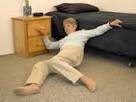
Help I’ve Fallen and I Can’t Get Up.

October 30, 2015 By Jeff Conner

I've fallen

The catchphrase “Help, “I’ve fallen, and I can’t get up!” was made famous many years ago in a television commercial for a medical alarm company called LifeCall. LifeCall sold pendants that seniors and disabled individuals could wear around their necks and use to make emergency medical calls after a fall or other accident left them immobile and unable to reach a telephone.

Although the commercial portrayed a potentially dangerous situation for a senior, and one that could have dire consequences, the phrase found its way into the popular culture as a comedic punch line, undercutting the serious nature of the circumstances that lead to 35 million falls each year by Americans over the age of 65.

In fact, seniors in this country are hospitalized for fall-related injuries five times more than they are for injuries from all other causes. The U.S. Centers for Disease Control (CDC) lists falls as the leading cause of accidental death for seniors. And considering that one half of all people who fall require assistance from someone else to get up, it’s no wonder that a senior living alone has the odds stacked against him or her.

The New England Journal of Medicine reports that after a fall or other emergency, 90 percent of people who get help within one hour can continue to live independently, but after 12 hours without any help, 90 percent are no longer capable of living alone at home. According to the Yale University School of Medicine, nearly one half of the older adults who incur a serious injury never fully recover and many lose their ability to function independently for the rest of their lives.

While fragile seniors run a very high risk of falling due to the degeneration of muscle strength and loss of balance over the years, anyone of any age can become the victim of a heart attack. And if someone who suffers from cardiac arrest falls and cannot get help, or get to a hospital within an hour or so, their chances for survival are greatly diminished. Each year, 1.5 million Americans have heart attacks; one third of them are fatal.

At Pacific Mobility, we sell products that help seniors and others get the help they need if they’ve fallen and can’t get up, or are faced with any other urgent situation, such as a fire, a home intrusion, or a CO gas emergency. Getting assistance in a timely manner can make a major difference in preserving one’s quality of life; indeed, personal 911 call systems can help save a life, or the life of a loved one.

Call or visit us today and let us show you our full line of personal call systems. The truth is, there’s nothing funny about somebody who falls and can’t get up.

Jeff Conner
Jeff Conner

President, Husband, Father, Grandfather Graduate of UC Davis- Bio Sci Major- Go Aggies! Jeff has extensive experience in all of Pacific Mobility’s products and services, and specializes in accessibility products as well as stairlifts, ceiling lifts and custom wheel chairs. His hobbies include spending time with family, gardening, mountain biking, exercising and off road motorcycle riding.

24 years as Owner/President of Pacific Mobility Center – selling, installing, and servicing stairlifts, porch lifts, ceiling lifts, pool lifts, handicap ramping, specialty wheelchairs, scooters, power wheel chairs, and other power mobility devices
Certified Environmental Access Consultant since 2008
Licensed General Contractor since 1998
Certified Aging in Place Specialist since 2016
Board Member for Home Access Professionals
Member of Association of Members of the Accessibility Equipment Industry (AEMA)

www.linkedin.com/in/jeff-conner-14085616/

Filed Under: Blog Posts Tagged With: elderly, safety, senior citizens

Hand Rail Systems Can Make the Home More Safe

October 19, 2015 By Jeff Conner

grab rail

While many seniors prefer to live in their homes for as long as possible, most homes are not designed for maximum safety. As people age, their balance, stability and muscle strength tend to wane. This diminishing vitality, coupled with a concomitant decrease in visual acuity, is the cause of many home accidents. Indeed, falls are the number one cause of injury among seniors, responsible for almost three million emergency room visits and more than 25,000 deaths in Canada and the U.S., annually.

One type of home modification that can help make the home safer is a handrail system. There are three major reasons to install handrails:
• To support walking
• To support overall mobility
• To prevent falls

It is important to understand that railings and banisters are not handrails and should not be confused with them. Railings and banisters may provide some support, but they are generally not strong enough to prevent a fall should a person grab onto it in extremis. A true handrail must withstand at least 500 pounds of force.

In addition, according to the Americans with Disabilities Act, a handrail needs to be:
• 1¼” – 2″ in diameter
• Round (or equivalent)
• 1½” minimum from the wall
• At least 1½” above any horizontal protrusion
• Continuous on and between stairs, ramps, landings and horizontal extensions at the tops and bottoms of slopes

Handrails can be installed in many different areas of a house. For example, a handrail can be installed on the wall above the bath tub; in a shower or just outside it; next to a sink or toilet; alongside a bed; on a staircase; in a kitchen or work space, or anywhere else where a senior or anyone else who is mobility challenged, requires or desires one. Usually, they are made of metal, such as aluminum, but they can also be made of wood or heavy plastic.

More important than the actual handrail material is the strength of the bracket that attaches it to the wall.Therefore, it is highly advisable that handrail systems be installed by professionals using the appropriate fasteners and fixtures. Do-it-yourself installations may also be available, but instructions must be followed carefully when putting them up. Also, there may be cases where handrails would impede movement or create risks for the elderly if they are installed in an inappropriate location.

At Pacific Mobility, we can assist you in planning the best and most appropriate type of handrail system for your home. Our experienced staff can also install your handrails, providing you the best in safety and reliability.

Jeff Conner
Jeff Conner

President, Husband, Father, Grandfather Graduate of UC Davis- Bio Sci Major- Go Aggies! Jeff has extensive experience in all of Pacific Mobility’s products and services, and specializes in accessibility products as well as stairlifts, ceiling lifts and custom wheel chairs. His hobbies include spending time with family, gardening, mountain biking, exercising and off road motorcycle riding.

24 years as Owner/President of Pacific Mobility Center – selling, installing, and servicing stairlifts, porch lifts, ceiling lifts, pool lifts, handicap ramping, specialty wheelchairs, scooters, power wheel chairs, and other power mobility devices
Certified Environmental Access Consultant since 2008
Licensed General Contractor since 1998
Certified Aging in Place Specialist since 2016
Board Member for Home Access Professionals
Member of Association of Members of the Accessibility Equipment Industry (AEMA)

www.linkedin.com/in/jeff-conner-14085616/

Filed Under: Blog Posts, Product Information Tagged With: bathroom, crutches, disability, grab rails, mobility, mobility challenged, safety, senior citizens

Staying in the Home You Love vs. Moving to Assisted Living

September 18, 2015 By Jeff Conner

sb2-1-150x150

Most seniors, if given the choice, would choose to remain in their own home for as long as possible rather than move to an assisted living facility. In fact, one study puts the number as high as 90 percent. This is not a mystery. For most of us – seniors included – home is where we’re comfortable; where it’s safe and familiar. We get to sleep in our own bed, eat what and when we like, and have a certain amount of privacy.

By and large, an elderly person who remains at home has a greater measure of independence than a contemporary who lives in an assisted living situation and giving up one’s independence can be difficult. In fact, for some seniors, transitioning to an assisted living community can be psychologically devastating, as it portends the end of one of life’s chapters, and the beginning of an unknown experience out of one’s comfort zone.

However, some seniors who do choose to remain at home may experience social isolation and poor nutrition which can contribute to cognitive decline, health problems, depression, and a diminished quality of life – especially if some of the activities of daily living (ADLs), like dressing, bathing, cooking, cleaning, going up and down stairs, etc. become too difficult. These seniors must come to terms with the situation that is facing them. Either they can stay in the home they love, or they can make the move to assisted living.

Luckily, today, more and more seniors have the option of “aging in place,” as long as they are willing to make certain modifications in the way they live and to the houses in which they live.

For example, even if one is not completely healthy, with home-healthcare, seniors can have their medical needs attended to most satisfactorily without having to leave home. In fact, one study found that those seniors who received in-home care visited the doctor 25 percent fewer times than those that didn’t receive in-home care. Clients with Alzheimer’s or other dementia diseases made almost 50 percent less trips to the doctor. In addition, other in-home services such as housecleaning, non-medical care, shopping, transportation, and food services can help offset the need for an elderly individual to have to struggle with common, everyday chores.

Making the home more “senior-safe” is another tactic that will allow an elderly individual to remain longer in the home he or she loves. Some general home alterations include the widening of doorways, and the installation of grab bars in the bathroom and/or shower, bed rails, and some type of stairlift in homes that contain more than one story. For seniors restricted to a wheel chair, an outdoor ramp or porch lift can enable them go in and out safely and at will. In addition, home monitoring equipment can let family members keep an eye on an aged loved one from a distance.

None of this should suggest that a transfer to assisted living can’t be a viable option for some seniors. There are certainly some advantages for the elderly individual whose needs – both medical and mundane – can be attended to in a professionally operated assisted living facility staffed by competent and caring people. However, for those seniors who wish to stay at home, and know the necessary modifications that are available, aging in place is certainly easier to accomplish now than ever before.

At Pacific Mobility, we are the aging in place experts. Our staff has the knowledge and experience to help you design and implement your home modifications so that you can continue to remain in the home you love for as long as possible. Call us today for a free consultation.

Jeff Conner
Jeff Conner

President, Husband, Father, Grandfather Graduate of UC Davis- Bio Sci Major- Go Aggies! Jeff has extensive experience in all of Pacific Mobility’s products and services, and specializes in accessibility products as well as stairlifts, ceiling lifts and custom wheel chairs. His hobbies include spending time with family, gardening, mountain biking, exercising and off road motorcycle riding.

24 years as Owner/President of Pacific Mobility Center – selling, installing, and servicing stairlifts, porch lifts, ceiling lifts, pool lifts, handicap ramping, specialty wheelchairs, scooters, power wheel chairs, and other power mobility devices
Certified Environmental Access Consultant since 2008
Licensed General Contractor since 1998
Certified Aging in Place Specialist since 2016
Board Member for Home Access Professionals
Member of Association of Members of the Accessibility Equipment Industry (AEMA)

www.linkedin.com/in/jeff-conner-14085616/

Filed Under: Blog Posts, Product Information Tagged With: bathroom, disability, grab bars, grab rails, mobility, mobility challenged, safety, senior citizens

Making Bathrooms Safe for Seniors

August 1, 2015 By Jeff Conner

shower chair

We like to think that our bathrooms are safe and private places – places where accidents don’t generally happen. But it doesn’t take a lot for a bathroom to become a dangerous place for a frail or elderly senior. According to a recent study from the U.S. Centers for Disease Control and Prevention (CDC), nearly 200,000 Americans are treated in hospital emergency rooms, every year, for bathroom-related injuries. And since more than one in three persons over 65 fall each year, it’s safe to say that many of those who receive emergency treatment are elderly.

By and large, bathrooms have many hard and slippery surfaces, making them especially hazardous for individuals with mobility challenges, such as poor muscle strength or bad balance. But before one can make bathroom trouble spots safer for seniors, it’s important to know where and how bathroom accidents occur. Most bathroom falls occur while getting in and out of the tub or shower; sitting down and getting up from the toilet; and walking while attempting to use towel bars, sink tops, or other objects for support.

The first modification that can be made in a shower is getting rid of any lip that has to be stepped over getting in or out. If possible, a traditional shower stall can be replaced with a walk-in model. If that is not possible, or even if it is, grab bars should also be installed close to the shower opening to supply balance support. Another bar, or set of bars, should be installed in the shower, as well. A shower chair is an easy fix to supply stability as well as a place to rest for a senior who can’t stand for long periods. Another way to modify a shower for safety is to install a hand-held shower head with a long enough hose so that its user doesn’t have to stretch or bend.

Getting in and out of a bathtub can be very difficult for a frail senior. Here, again, well-placed grab bars can be helpful. For floor to tub transfers, a bath bench is another modification that can promote safety. Two of the bench’s legs are placed outside of the tub and the other two, within it. The user sits on the bench and swings his or her legs over the side, and then slides into the tub, without having to stand up. Of course, for both tubs and showers, non-slip mats are necessary inside, and non-slip rugs should be placed on the outside.

Toilets are another potential trouble spot, but there are several modifications that can be made. Raising the toilet seat several inches reduces the need to squat and the distance that has to be covered. Additional safety features include brackets or locking clamps that stabilize the seat on the toilet rim. Also, grab bars can be attached either to the wall near the toilet, or to the toilet, itself.

Of course, bathrooms should be well-lit, with towels, soap, and toiletries within easy reach. All surfaces, walls and floors, included, should be clean and free of any soap scum that makes them more slippery. Finally, the bathroom should be as free as possible of any fragile items or those that can fall and break.

At Pacific Mobility we provide all of the necessary safety items and equipment that can help make your bathroom safe for seniors. We can also help you make the best choices for any extensive bathroom modifications that you might wish to make. Call or visit us today.

Jeff Conner
Jeff Conner

President, Husband, Father, Grandfather Graduate of UC Davis- Bio Sci Major- Go Aggies! Jeff has extensive experience in all of Pacific Mobility’s products and services, and specializes in accessibility products as well as stairlifts, ceiling lifts and custom wheel chairs. His hobbies include spending time with family, gardening, mountain biking, exercising and off road motorcycle riding.

24 years as Owner/President of Pacific Mobility Center – selling, installing, and servicing stairlifts, porch lifts, ceiling lifts, pool lifts, handicap ramping, specialty wheelchairs, scooters, power wheel chairs, and other power mobility devices
Certified Environmental Access Consultant since 2008
Licensed General Contractor since 1998
Certified Aging in Place Specialist since 2016
Board Member for Home Access Professionals
Member of Association of Members of the Accessibility Equipment Industry (AEMA)

www.linkedin.com/in/jeff-conner-14085616/

Filed Under: Blog Posts, How To's Tagged With: bathroom, elderly, grab bars, grab rails, mobility, mobility challenged, safety, senior citizens

Long-term Living Facility vs. Aging in Place Modifications

May 27, 2015 By Jeff Conner

As the Baby Boom generation ages, the pelderly-people-294088__180opulation of American seniors will double in size over the next 25 or so years. And like countless seniors before them, these now elderly individuals will need to make decisions about their long-term care, especially if age, sickness, or disability makes it difficult, or even impossible, for them to care for themselves.

Many studies reveal that a majority of seniors would prefer to stay in their homes as long as they are able, but this is not always possible. However, when faced with having to move into an assisted living facility or a nursing home, the costs can be prohibitive for many families.

According to a recent report by Genworth Financial, the median price for a private room in a nursing home is now $91,250 a year. And although long-term care insurance policies are available to help cover costs, Medicare, the federal government’s health insurance program for citizens over 65, does not cover extended stays in long-term care facilities.

When it becomes preferable to keep an aging senior at home, either because of desire or financial constraints, it may also be necessary to make modifications in the home environment in the interests of safety and the peace of mind of that senior’s loved ones.

Some common home alterations include the widening of doorways, and the installation of ramps, grab bars in the bathroom and/or shower, bed rails, and some type of stairlift in homes that contain more than one story. And in many cases, the costs for these home improvements are a lot less than what a family might have to spend for long-term care in an institution.

The term, “Aging in Place” is now a popular way of describing the shift away from expensive institutionalized care and toward the more affordable choice of staying at home for as long as practicable. As this trend continues, more home care companies will come into existence offering services such as housekeeping, meal preparation, bathing, and transportation to medical appointments, among other tasks.

In addition, companies that provide home modification products and services will also proliferate in order to meet the growing need of seniors who decide to “age in place.” At Pacific Mobility, we excel at helping our customers make practical and cost-effective decisions about how they can make their homes safer and more accessible for aging seniors. Give us a call or stop by our showroom for a first-hand experience.

Jeff Conner
Jeff Conner

President, Husband, Father, Grandfather Graduate of UC Davis- Bio Sci Major- Go Aggies! Jeff has extensive experience in all of Pacific Mobility’s products and services, and specializes in accessibility products as well as stairlifts, ceiling lifts and custom wheel chairs. His hobbies include spending time with family, gardening, mountain biking, exercising and off road motorcycle riding.

24 years as Owner/President of Pacific Mobility Center – selling, installing, and servicing stairlifts, porch lifts, ceiling lifts, pool lifts, handicap ramping, specialty wheelchairs, scooters, power wheel chairs, and other power mobility devices
Certified Environmental Access Consultant since 2008
Licensed General Contractor since 1998
Certified Aging in Place Specialist since 2016
Board Member for Home Access Professionals
Member of Association of Members of the Accessibility Equipment Industry (AEMA)

www.linkedin.com/in/jeff-conner-14085616/

Filed Under: Blog Posts Tagged With: elderly, grab bars, grab rails, home modification, long-term care, medicare, mobility assistive equipment, safety, senior citizens

  • « Go to Previous Page
  • Page 1
  • Interim pages omitted …
  • Page 7
  • Page 8
  • Page 9
  • Page 10
  • Go to Next Page »

Footer

San Diego County Showroom

1355 Grand Ave Suite 102
San Marcos, CA 92078
Toll Free: 866-786-2966
Local: 760-471-8884

Riverside County Lift Sales

Pacific Mobility Center of Temecula
Toll Free: 866-786-2966
Local: 951-383-6845

Orange County Lift Sales

Pacific Mobility Center of Huntington Beach
Toll Free: 866-786-2966
Local: 714-907-4005

Office Hours

Monday-Thursday: 9:00am-5:00pm (closed 12:00-1:15 for lunch)

Friday: 8:30am-4:30pm (closed 12:00-1:15 for lunch)

Find Us on Social Media

Facebook Yelp BBB Angies List Twitter LinkedIn

Showroom Location


View Larger Map

  • Home
  • Coupons
  • Quote Request
  • About Us
  • Products
  • Careers
  • Blog
  • Gallery
  • FAQ
  • Contact
  • Service Area
  • Privacy Policy
  • Terms of Service
  • Disclaimer
  • Cookie Policy
  • Proposition 65 Warnings

Copyright © 2026 Pacific Mobility, All Rights Reserved.


Website by A Servant's Heart Web Design and Marketing

Schedule an Appointment

How can we help you?